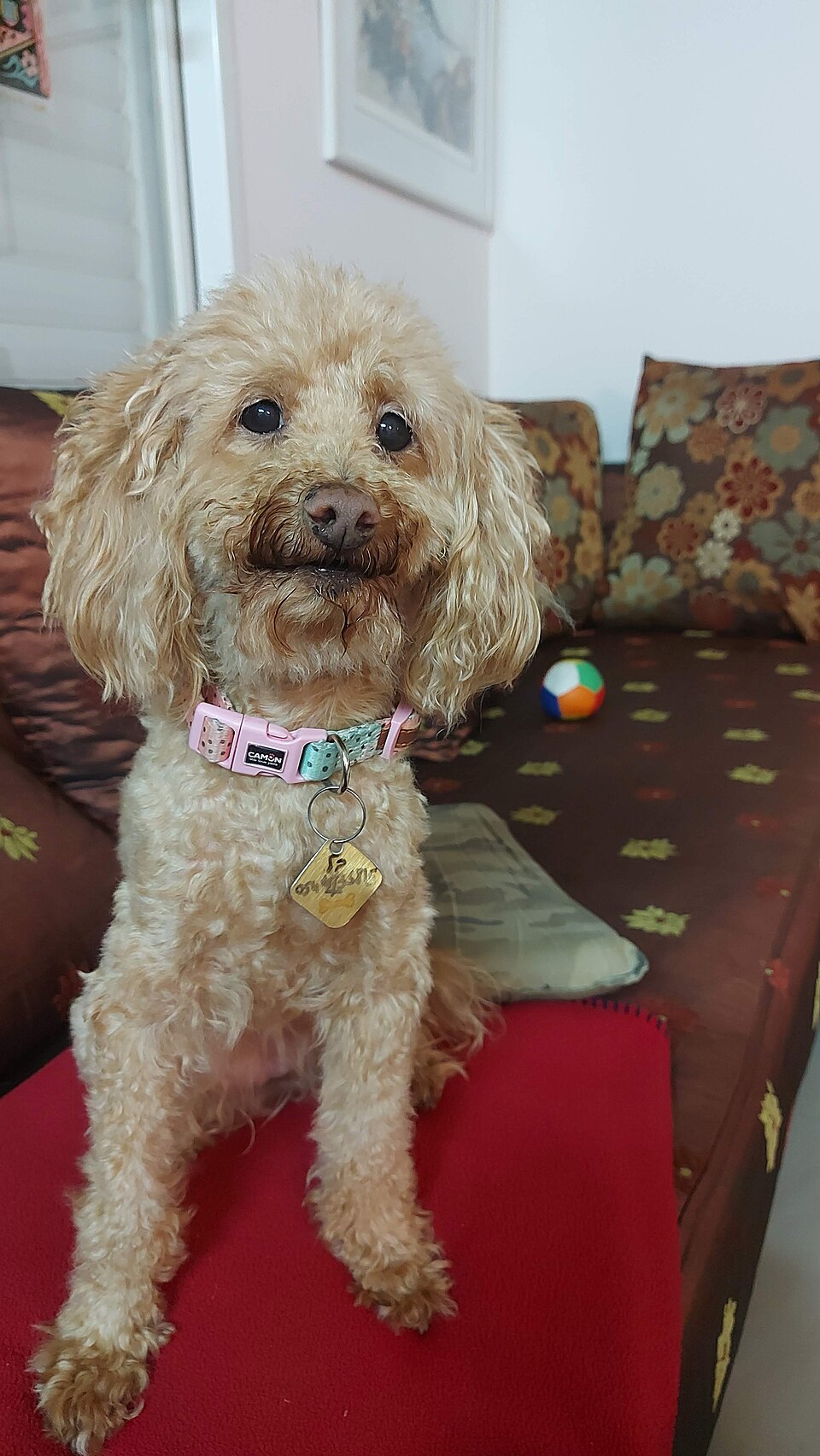
Poodle (Toy)
The Toy Poodle is the smallest of the three Poodle breeds on the Royal Kennel Club register, capped at 28 cm, and it was bred down as a companion in France before being…
About the Poodle (Toy)
The Toy Poodle is the smallest of the three Poodle breeds on the Royal Kennel Club register, capped at 28 cm, and it was bred down as a companion in France before being popularised worldwide during the twentieth century. Size is the only thing that separates it from its larger relatives, since the standard otherwise asks for the same dog.
Its coat is profuse, curly and harsh in texture, sheds very little and grows continuously, which commits an owner to clipping every six to eight weeks for the dog's whole life. Any solid colour is permitted. A Toy stud should be squarely built and in proportion, with sound legs and a proper Poodle head, because dogs bred merely for smallness lose type and soundness together. Treat anyone advertising sizes below the standard as something special with caution.
Kneecaps come first in a dog this size, so ask for a vet's patella assessment with a date on it. An annual eye certificate and the DNA test for prcd-PRA are both well established across the Poodle breeds and should be available. Ask about Legg-Calve-Perthes disease and about the teeth, which crowd in a small jaw and need care from the start. A question about tracheal collapse and about how the dog copes with exercise is also worth putting.
Health & breeding
We check every hip, elbow, eye and DNA result you give us against the Royal Kennel Club’s public records by hand, and we record who checked it and when. The Royal Kennel Club’s public records may not include all the screening a dog has had, so a dog with no Royal Kennel Club record showing is not necessarily untested.
Breed Right’s summary — under The Royal Kennel Club Health Standard
Health tests for the Poodle (Toy)
This panel is Breed Right’s summary of the testing that matters for the breed under The Royal Kennel Club Health Standard. The Health Standard is the Royal Kennel Club’s guidance for breeders, not a registration rule. It describes tests to ask about — it is not a report on any individual dog. The Royal Kennel Club’s public records may not include all the screening a dog has had, so a dog with no Royal Kennel Club record showing is not necessarily untested.
Good Practice — the Royal Kennel Club’s minimum before breeding
The tests the Royal Kennel Club says breeders should, at a minimum, complete before breeding.
| Test | Type | Scheme | What’s involved |
|---|---|---|---|
| DNA test — prcd-PRA (Progressive Retinal Atrophy) | DNA test | Laboratory | The result printed on the laboratory certificate. |
Best Practice — further tests it recommends
Completing these as well as the Good Practice tests is what the Royal Kennel Club calls Best Practice.
| Test | Type | Scheme | What’s involved |
|---|---|---|---|
| Hip score (BVA/KC) | Screening scheme | BVA/KC | Total of both hips, 0–106. Lower is better. |
| Eye testing (BVA/KC/ISDS) | Screening scheme | BVA/KC/ISDS | Result printed on the eye certificate. |
Breed hip median
Breed median 11 (BVA Hip Dysplasia Scheme breed statistics 2025 — 5 years, 18 dogs scored — indicative only, from a small sample). Lower is better. Source · How hip scores work
At stud now
Poodle (Toy) stud dogs
No Poodle (Toy) studs are listed right now
When a Poodle (Toy) on the Royal Kennel Club Breed Register is listed at stud, it will appear here.
Also available
Poodle (Toy) litters
No Poodle (Toy) litters are listed right now
Litters appear here as breeders list them. Check back soon, or browse other breeds.