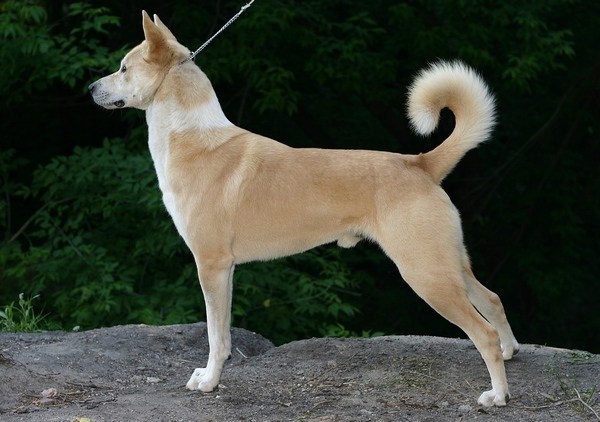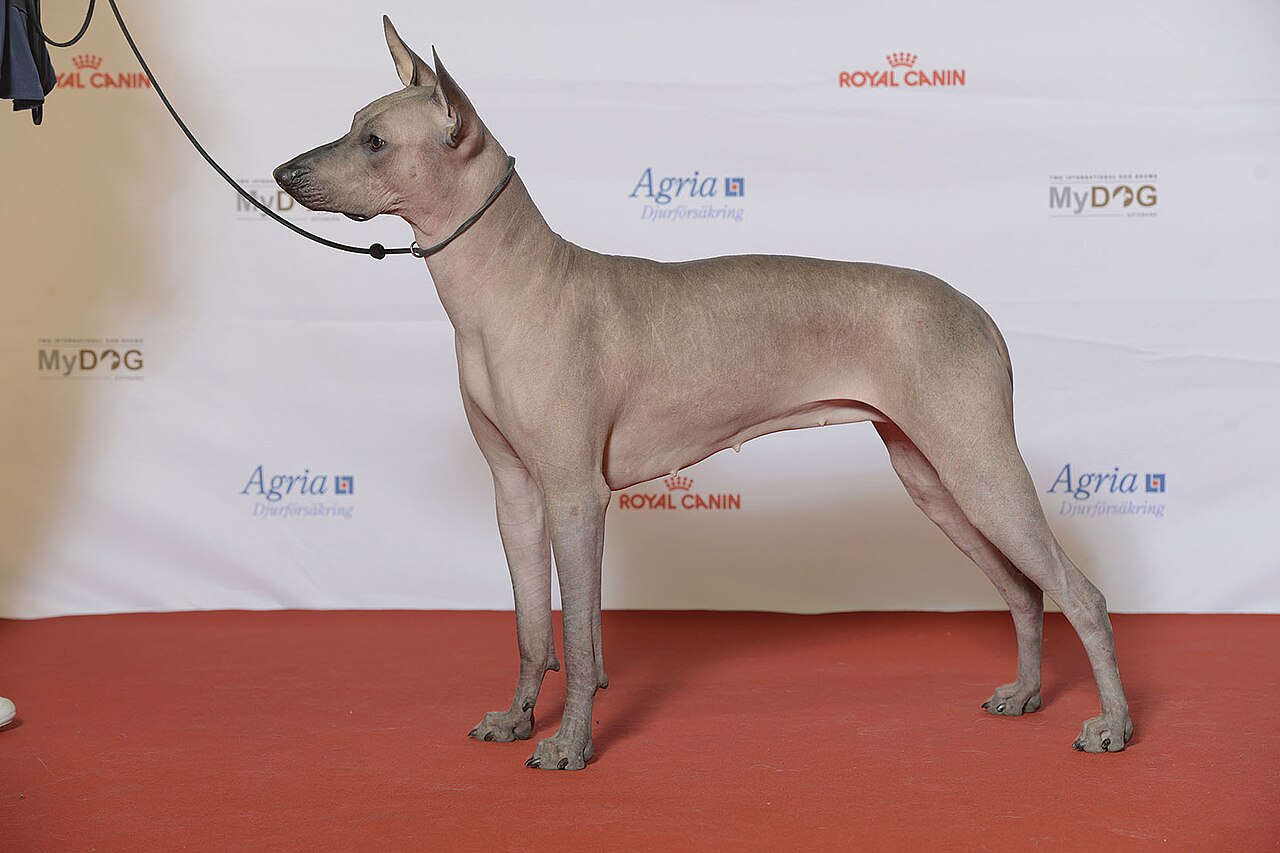
Xoloitzcuintle
The Xoloitzcuintle takes its name from Xolotl, the Aztec god said to have made the dog from a sliver of the bone of life, and itzcuintli, the Nahuatl word for dog. It is among the…
About the Xoloitzcuintle
The Xoloitzcuintle takes its name from Xolotl, the Aztec god said to have made the dog from a sliver of the bone of life, and itzcuintli, the Nahuatl word for dog. It is among the oldest dog types in the Americas, kept for company, for warmth against illness and in ritual, and it was never a working breed in the European sense.
Three sizes are registered, and each occurs in a hairless and a coated form. A hairless dog has smooth, close-fitting skin that feels warm to the hand, usually dark, and a little coarse hair may show on the forehead and at the tip of the tail. The outline is elegant and slightly longer than tall, the ears large and erect, and the whole animal should read as sound and athletic rather than fragile.
The practical health questions concern skin and joints. Ask what the stud's skin is like through the year, whether it needs sun protection in summer, and how often it is bathed, since over-washing causes as much trouble as neglect. A patella assessment, hip scoring and an eye examination are the scheme requests worth making. The hairless coat is governed by a gene that is lethal when doubled, so ask how the owner plans matings and whether coated dogs are used in the programme.
Health & breeding
We check every hip, elbow, eye and DNA result you give us against the Royal Kennel Club’s public records by hand, and we record who checked it and when. The Royal Kennel Club’s public records may not include all the screening a dog has had, so a dog with no Royal Kennel Club record showing is not necessarily untested.
Breed Right’s summary — under The Royal Kennel Club Health Standard
Health tests for the Xoloitzcuintle
This panel is Breed Right’s summary of the testing that matters for the breed under The Royal Kennel Club Health Standard. The Health Standard is the Royal Kennel Club’s guidance for breeders, not a registration rule. It describes tests to ask about — it is not a report on any individual dog. The Royal Kennel Club’s public records may not include all the screening a dog has had, so a dog with no Royal Kennel Club record showing is not necessarily untested.
Best Practice — further tests it recommends
Completing these as well as the Good Practice tests is what the Royal Kennel Club calls Best Practice.
| Test | Type | Scheme | What’s involved |
|---|---|---|---|
| Hip score (BVA/KC) | Screening scheme | BVA/KC | Total of both hips, 0–106. Lower is better. |
| Elbow grading (BVA/KC) | Screening scheme | BVA/KC | Grade 0–3. The dog is graded on the worse of the two elbows. |
| Eye testing (BVA/KC/ISDS) | Screening scheme | BVA/KC/ISDS | Result printed on the eye certificate. |
At stud now
Xoloitzcuintle stud dogs
No Xoloitzcuintle studs are listed right now
When a Xoloitzcuintle on the Royal Kennel Club Breed Register is listed at stud, it will appear here.
Also available
Xoloitzcuintle litters
No Xoloitzcuintle litters are listed right now
Litters appear here as breeders list them. Check back soon, or browse other breeds.