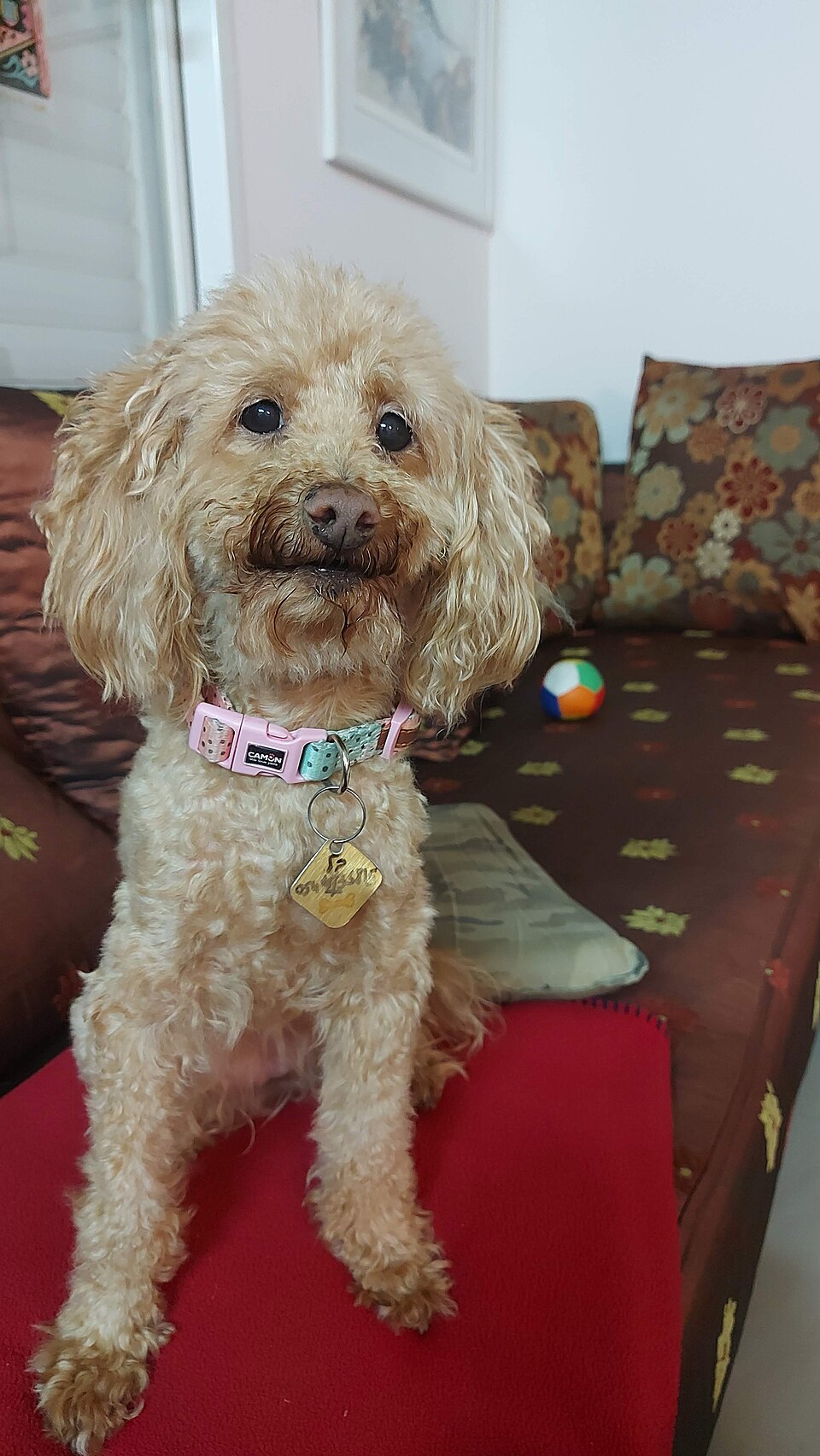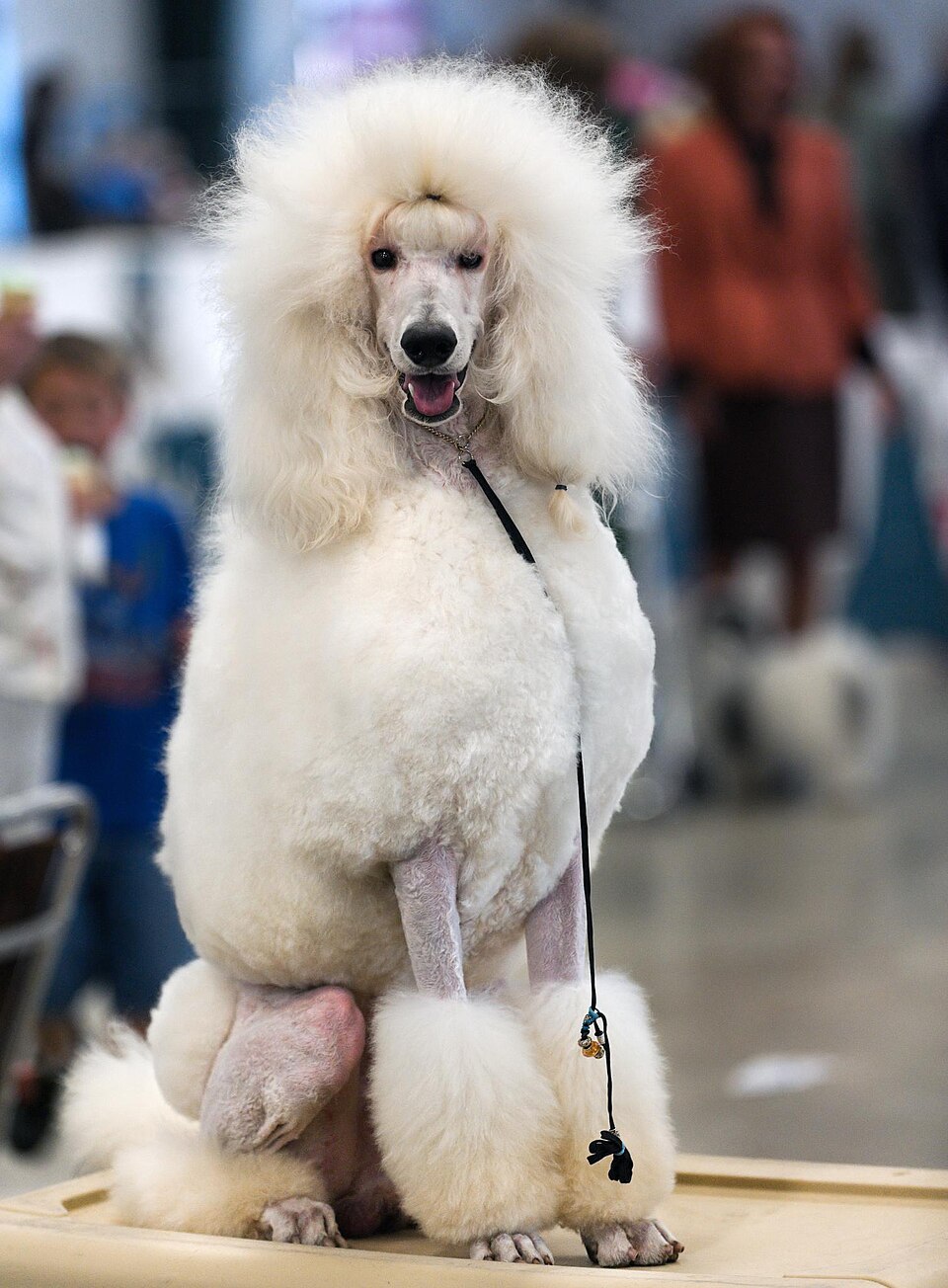
Poodle (Standard)
The Standard Poodle is the original Poodle and a gundog by history, bred in Germany and France to retrieve waterfowl, with a clip designed to keep the joints and chest warm in…
About the Poodle (Standard)
The Standard Poodle is the original Poodle and a gundog by history, bred in Germany and France to retrieve waterfowl, with a clip designed to keep the joints and chest warm in cold water while leaving the legs free to swim. It is among the most intelligent of all breeds and far more athletic than the show clip suggests.
Dogs stand over 38 cm and usually about 45 to 60 cm, with a dense, curly, non-shedding coat in any solid colour. Standards are lively, trainable and sensitive, and a stud with a stable, confident temperament is important in a breed where nervousness can appear. The three Poodle sizes are separate breeds on the register and are not interbred.
Ask a Standard Poodle stud owner for hip scores and a current eye certificate, and for the DNA tests established in the breed: prcd-PRA, von Willebrand's disease type I, neonatal encephalopathy and degenerative myelopathy. Sebaceous adenitis, a skin disease, is screened by skin biopsy, and Addison's disease and bloat both run in the breed and deserve a question about the family.
Health & breeding
We check every hip, elbow, eye and DNA result you give us against the Royal Kennel Club’s public records by hand, and we record who checked it and when. The Royal Kennel Club’s public records may not include all the screening a dog has had, so a dog with no Royal Kennel Club record showing is not necessarily untested.
Breed Right’s summary — under The Royal Kennel Club Health Standard
Health tests for the Poodle (Standard)
This panel is Breed Right’s summary of the testing that matters for the breed under The Royal Kennel Club Health Standard. The Health Standard is the Royal Kennel Club’s guidance for breeders, not a registration rule. It describes tests to ask about — it is not a report on any individual dog. The Royal Kennel Club’s public records may not include all the screening a dog has had, so a dog with no Royal Kennel Club record showing is not necessarily untested.
Best Practice — further tests it recommends
Completing these as well as the Good Practice tests is what the Royal Kennel Club calls Best Practice.
| Test | Type | Scheme | What’s involved |
|---|---|---|---|
| DNA test — prcd-PRA (Progressive Retinal Atrophy) | DNA test | Laboratory | The result printed on the laboratory certificate. |
| DNA test — rcd4-PRA (Progressive Retinal Atrophy, rod-cone dysplasia 4) | DNA test | Laboratory | The result printed on the laboratory certificate. |
| DNA test — vWD1 (von Willebrand Disease type 1) | DNA test | Laboratory | The result printed on the laboratory certificate. |
| Hip score (BVA/KC) | Screening scheme | BVA/KC | Total of both hips, 0–106. Lower is better. |
| Eye testing (BVA/KC/ISDS) | Screening scheme | BVA/KC/ISDS | Result printed on the eye certificate. |
Breed club schemes listed in the Health Standard
Run by the breed club, not the Royal Kennel Club, which does not record their results. The Standard lists them as schemes to be aware of.
| Test | Type | Scheme | What’s involved |
|---|---|---|---|
| Sebaceous adenitis testing (breed club scheme) | Other | Breed club | Skin biopsy result under the club scheme. |
Breed hip median
Breed median 10 (BVA Hip Dysplasia Scheme breed statistics 2025 — 5 years, 565 dogs scored). Lower is better. Source · How hip scores work
At stud now
Poodle (Standard) stud dogs
No Poodle (Standard) studs are listed right now
When a Poodle (Standard) on the Royal Kennel Club Breed Register is listed at stud, it will appear here.
Also available
Poodle (Standard) litters
No Poodle (Standard) litters are listed right now
Litters appear here as breeders list them. Check back soon, or browse other breeds.