Mastiff
The Mastiff is the old English guarding dog of estates and gatehouses, described in Britain centuries before any breed register existed, and it is among the heaviest dogs in the…
About the Mastiff
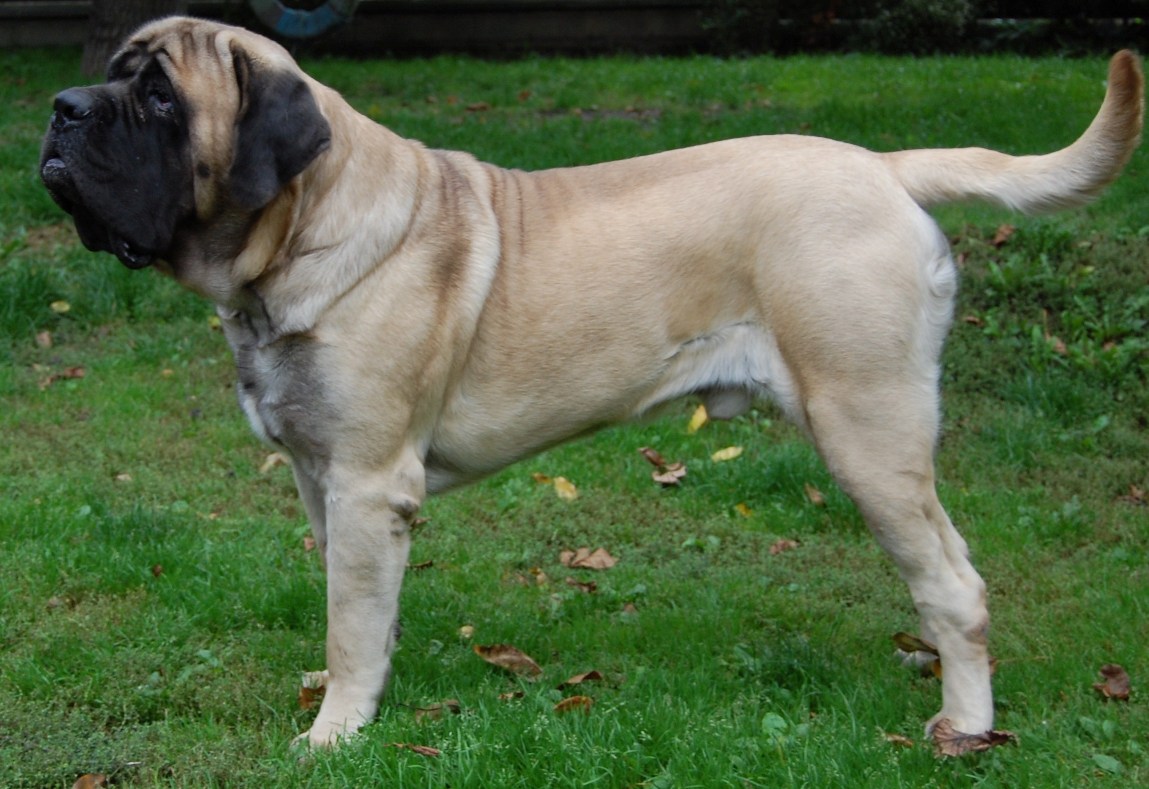
The Mastiff is the old English guarding dog of estates and gatehouses, described in Britain centuries before any breed register existed, and it is among the heaviest dogs in the world, with recorded weights over 90 kg. It was reduced to a handful of animals after the Second World War and rebuilt with imports from North America.
Dogs typically stand over 75 cm and weigh from 70 kg upwards, in apricot, silver fawn or dark fawn brindle, always with a black mask and black ears. The standard asks for a combination of grandeur and good nature, and the second half of that is the important one. A stud should be calm, tolerant of handling and sound on its legs; growth in puppies must be slow, and a lean, fit stud is a far better advertisement than one carrying condition.
The Mastiff has a dominant form of progressive retinal atrophy for which a DNA test is available, and because the gene is dominant a single copy is enough to cause the disease, so ask for the result along with a current eye certificate. Hip and elbow scores are the other scheme questions. Bloat is a serious risk at this size and cancer is common; the honest enquiry is how long the stud's parents and grandparents lived and what ended them.
Health & breeding
We check every hip, elbow, eye and DNA result you give us against the Royal Kennel Club’s public records by hand, and we record who checked it and when. The Royal Kennel Club’s public records may not include all the screening a dog has had, so a dog with no Royal Kennel Club record showing is not necessarily untested.
Breed Right’s summary — under The Royal Kennel Club Health Standard
Health tests for the Mastiff
This panel is Breed Right’s summary of the testing that matters for the breed under The Royal Kennel Club Health Standard. The Health Standard is the Royal Kennel Club’s guidance for breeders, not a registration rule. It describes tests to ask about — it is not a report on any individual dog. The Royal Kennel Club’s public records may not include all the screening a dog has had, so a dog with no Royal Kennel Club record showing is not necessarily untested.
Good Practice — the Royal Kennel Club’s minimum before breeding
The tests the Royal Kennel Club says breeders should, at a minimum, complete before breeding.
| Test | Type | Scheme | What’s involved |
|---|---|---|---|
| Hip score (BVA/KC) | Screening scheme | BVA/KC | Total of both hips, 0–106. Lower is better. |
| Elbow grading (BVA/KC) | Screening scheme | BVA/KC | Grade 0–3. The dog is graded on the worse of the two elbows. |
Best Practice — further tests it recommends
Completing these as well as the Good Practice tests is what the Royal Kennel Club calls Best Practice.
| Test | Type | Scheme | What’s involved |
|---|---|---|---|
| Eye testing (BVA/KC/ISDS) | Screening scheme | BVA/KC/ISDS | Result printed on the eye certificate. |
Breed hip median
Breed median 13 (BVA Hip Dysplasia Scheme breed statistics 2025 — 5 years, 46 dogs scored — indicative only, from a small sample). Lower is better. Source · How hip scores work
At stud now
Mastiff stud dogs
No Mastiff studs are listed right now
When a Mastiff on the Royal Kennel Club Breed Register is listed at stud, it will appear here.
Also available
Mastiff litters
No Mastiff litters are listed right now
Litters appear here as breeders list them. Check back soon, or browse other breeds.