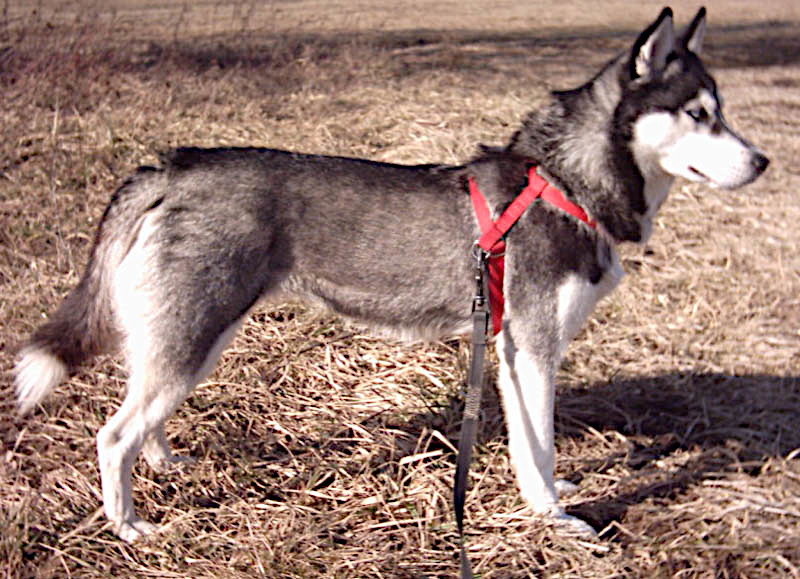
Siberian Husky
The Siberian Husky was bred by the Chukchi people of north-eastern Siberia to pull light loads over long distances in extreme cold, and everything about it follows from that: the…
About the Siberian Husky
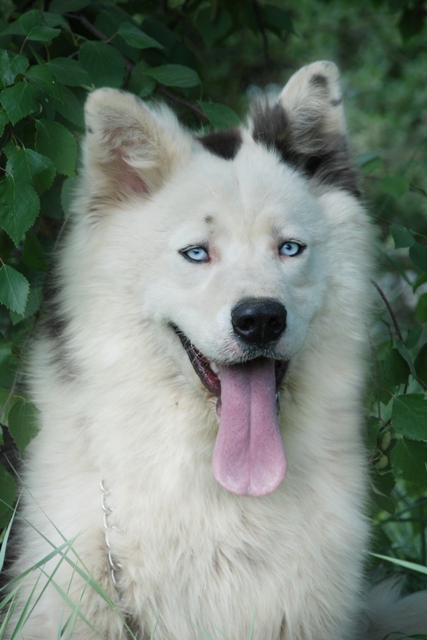
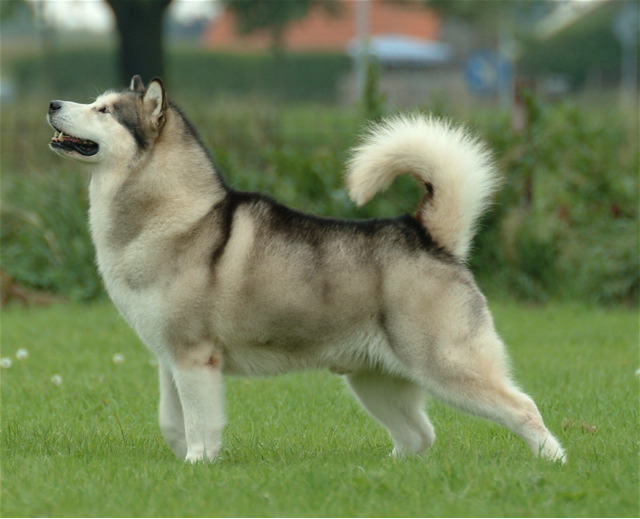
The Siberian Husky was bred by the Chukchi people of north-eastern Siberia to pull light loads over long distances in extreme cold, and everything about it follows from that: the efficient gait, the dense double coat, and an independence that makes recall training a lifelong project. It is friendly to everyone and useless as a guard.
Dogs stand about 53 to 60 cm, with a thick coat in almost any colour and striking markings; eyes may be brown, blue, or one of each. Huskies are escape artists, need secure fencing, and have a high prey drive. A stud should be sound, fit and good-tempered with other dogs, since the breed was bred to work in a team and aggression is a serious fault.
Eye disease is the breed's main screening question: ask for a current eye certificate, since hereditary cataract, corneal dystrophy and glaucoma all occur, and for DNA results for X-linked progressive retinal atrophy. Hip scores are worth asking about. Ask too about hypothyroidism, zinc-responsive dermatosis and epilepsy in the line, none of which has a simple test.
Health & breeding
We check every hip, elbow, eye and DNA result you give us against the Royal Kennel Club’s public records by hand, and we record who checked it and when. The Royal Kennel Club’s public records may not include all the screening a dog has had, so a dog with no Royal Kennel Club record showing is not necessarily untested.
Breed Right’s summary — under The Royal Kennel Club Health Standard
Health tests for the Siberian Husky
This panel is Breed Right’s summary of the testing that matters for the breed under The Royal Kennel Club Health Standard. The Health Standard is the Royal Kennel Club’s guidance for breeders, not a registration rule. It describes tests to ask about — it is not a report on any individual dog. The Royal Kennel Club’s public records may not include all the screening a dog has had, so a dog with no Royal Kennel Club record showing is not necessarily untested.
Good Practice — the Royal Kennel Club’s minimum before breeding
The tests the Royal Kennel Club says breeders should, at a minimum, complete before breeding.
| Test | Type | Scheme | What’s involved |
|---|---|---|---|
| Eye testing (BVA/KC/ISDS) | Screening scheme | BVA/KC/ISDS | Result printed on the eye certificate. |
| Gonioscopy (BVA/KC/ISDS) | Screening scheme | BVA/KC/ISDS | Grade 1–3 on the certificate; 1 is normal or mild. |
Best Practice — further tests it recommends
Completing these as well as the Good Practice tests is what the Royal Kennel Club calls Best Practice.
| Test | Type | Scheme | What’s involved |
|---|---|---|---|
| Hip score (BVA/KC) | Screening scheme | BVA/KC | Total of both hips, 0–106. Lower is better. |
Breed hip median
Breed median 6 (BVA Hip Dysplasia Scheme breed statistics 2025 — 5 years, 260 dogs scored). Lower is better. Source · How hip scores work
At stud now
Siberian Husky stud dogs
No Siberian Husky studs are listed right now
When a Siberian Husky on the Royal Kennel Club Breed Register is listed at stud, it will appear here.
Also available
Siberian Husky litters
No Siberian Husky litters are listed right now
Litters appear here as breeders list them. Check back soon, or browse other breeds.