Russian Black Terrier
The Russian Black Terrier was created from scratch at the Red Star military kennels near Moscow in the 1940s and 1950s, blending Giant Schnauzer, Airedale, Rottweiler and…
About the Russian Black Terrier
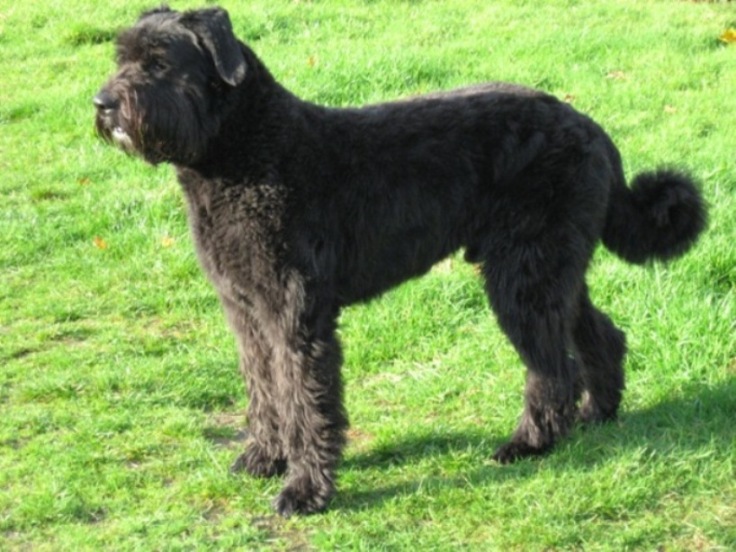
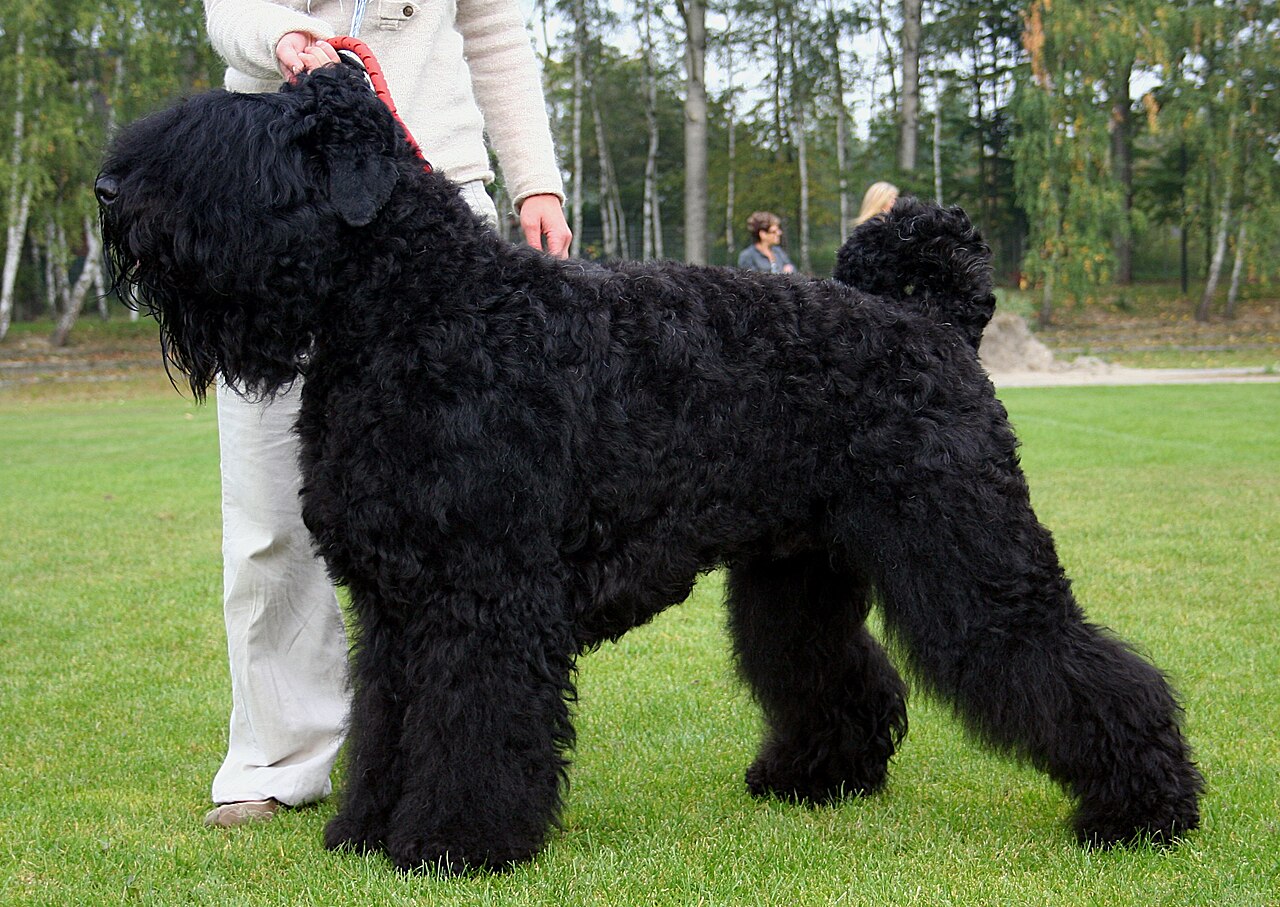
The Russian Black Terrier was created from scratch at the Red Star military kennels near Moscow in the 1940s and 1950s, blending Giant Schnauzer, Airedale, Rottweiler and Newfoundland among others into a large, hardy service dog able to work in extreme cold. Very few breeds have an origin so recent and so precisely documented.
Dogs stand 72 to 76 cm and weigh 50 to 60 kg, always black or black with scattered grey, under a harsh double coat with heavy beard and eyebrows that needs stripping or clipping and constant attention. This is a serious guarding breed that matures late and needs consistent training; a stud should be steady, controllable and comfortable being examined by someone it does not know.
Two DNA tests are used in this breed and both are worth requesting: hyperuricosuria, which predisposes a dog to urate stones, and juvenile laryngeal paralysis and polyneuropathy. Ask for hip and elbow scores under the BVA/KC schemes and a current eye certificate, as progressive retinal atrophy and hereditary cataract are recorded. Ask about bloat in the line and about how long the stud's parents lived.
Health & breeding
We check every hip, elbow, eye and DNA result you give us against the Royal Kennel Club’s public records by hand, and we record who checked it and when. The Royal Kennel Club’s public records may not include all the screening a dog has had, so a dog with no Royal Kennel Club record showing is not necessarily untested.
Breed Right’s summary — under The Royal Kennel Club Health Standard
Health tests for the Russian Black Terrier
This panel is Breed Right’s summary of the testing that matters for the breed under The Royal Kennel Club Health Standard. The Health Standard is the Royal Kennel Club’s guidance for breeders, not a registration rule. It describes tests to ask about — it is not a report on any individual dog. The Royal Kennel Club’s public records may not include all the screening a dog has had, so a dog with no Royal Kennel Club record showing is not necessarily untested.
Good Practice — the Royal Kennel Club’s minimum before breeding
The tests the Royal Kennel Club says breeders should, at a minimum, complete before breeding.
| Test | Type | Scheme | What’s involved |
|---|---|---|---|
| Hip score (BVA/KC) | Screening scheme | BVA/KC | Total of both hips, 0–106. Lower is better. |
| Elbow grading (BVA/KC) | Screening scheme | BVA/KC | Grade 0–3. The dog is graded on the worse of the two elbows. |
Best Practice — further tests it recommends
Completing these as well as the Good Practice tests is what the Royal Kennel Club calls Best Practice.
| Test | Type | Scheme | What’s involved |
|---|---|---|---|
| DNA test — prcd-PRA (Progressive Retinal Atrophy) | DNA test | Laboratory | The result printed on the laboratory certificate. |
| DNA test — HUU (Hyperuricosuria) | DNA test | Laboratory | The result printed on the laboratory certificate. |
| DNA test — JLPP (Juvenile Laryngeal Paralysis and Polyneuropathy) | DNA test | Laboratory | The result printed on the laboratory certificate. |
Breed hip median
Breed median 14 (BVA Hip Dysplasia Scheme breed statistics 2025 — 5 years, 29 dogs scored — indicative only, from a small sample). Lower is better. Source · How hip scores work
At stud now
Russian Black Terrier stud dogs
No Russian Black Terrier studs are listed right now
When a Russian Black Terrier on the Royal Kennel Club Breed Register is listed at stud, it will appear here.
Also available
Russian Black Terrier litters
No Russian Black Terrier litters are listed right now
Litters appear here as breeders list them. Check back soon, or browse other breeds.