Leonberger
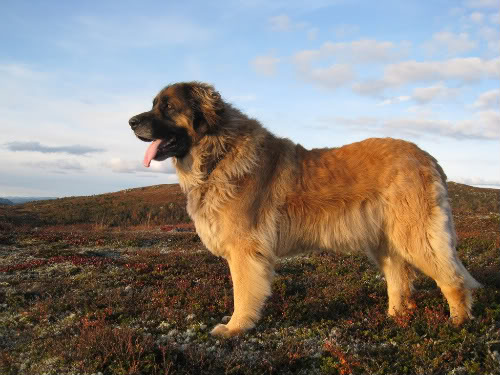
The Leonberger was created in the town of Leonberg in Germany in the 1840s, reputedly to resemble the lion on the town crest, from Newfoundland, St Bernard and Pyrenean stock. It…
About the Leonberger
The Leonberger was created in the town of Leonberg in Germany in the 1840s, reputedly to resemble the lion on the town crest, from Newfoundland, St Bernard and Pyrenean stock. It nearly died out twice in the world wars and was rebuilt from a handful of dogs, which is why the gene pool deserves respect when planning a mating.
Dogs stand about 72 to 80 cm, with a water-resistant double coat in lion-yellow, red, sandy or brown, and a black mask. The standard asks for a self-assured, calm temperament with a willingness to work, and Leonbergers are used in water rescue. A stud should be sound in movement despite the size, and unmistakably steady in temperament.
The Leonberger has two DNA tests specific to the breed for inherited polyneuropathy, LPN1 and LPN2, plus a test for leukoencephalomyelopathy; a serious stud owner will have all three. Add hip and elbow scores and a current eye certificate. Because the breed was rebuilt from few dogs, ask about the coefficient of inbreeding for a proposed mating, and about longevity and cancer in the line.
Health & breeding
We check every hip, elbow, eye and DNA result you give us against the Royal Kennel Club’s public records by hand, and we record who checked it and when. The Royal Kennel Club’s public records may not include all the screening a dog has had, so a dog with no Royal Kennel Club record showing is not necessarily untested.
Breed Right’s summary — under The Royal Kennel Club Health Standard
Health tests for the Leonberger
This panel is Breed Right’s summary of the testing that matters for the breed under The Royal Kennel Club Health Standard. The Health Standard is the Royal Kennel Club’s guidance for breeders, not a registration rule. It describes tests to ask about — it is not a report on any individual dog. The Royal Kennel Club’s public records may not include all the screening a dog has had, so a dog with no Royal Kennel Club record showing is not necessarily untested.
Good Practice — the Royal Kennel Club’s minimum before breeding
The tests the Royal Kennel Club says breeders should, at a minimum, complete before breeding.
| Test | Type | Scheme | What’s involved |
|---|---|---|---|
| Hip score (BVA/KC) | Screening scheme | BVA/KC | Total of both hips, 0–106. Lower is better. |
| Elbow grading (BVA/KC) | Screening scheme | BVA/KC | Grade 0–3. The dog is graded on the worse of the two elbows. |
| Eye testing (BVA/KC/ISDS) | Screening scheme | BVA/KC/ISDS | Result printed on the eye certificate. |
| Gonioscopy (BVA/KC/ISDS) | Screening scheme | BVA/KC/ISDS | Grade 1–3 on the certificate; 1 is normal or mild. |
Best Practice — further tests it recommends
Completing these as well as the Good Practice tests is what the Royal Kennel Club calls Best Practice.
| Test | Type | Scheme | What’s involved |
|---|---|---|---|
| DNA test — LEMP (Leukoencephalomyelopathy, Leonberger) | DNA test | Laboratory | The result printed on the laboratory certificate. |
| DNA test — LPN1 (Leonberger Polyneuropathy 1) | DNA test | Laboratory | The result printed on the laboratory certificate. |
| DNA test — LPN2 (Leonberger Polyneuropathy 2) | DNA test | Laboratory | Dominant: clear or affected, no carrier state. |
| DNA test — LPPN3 (Laryngeal Paralysis and Polyneuropathy) | DNA test | Laboratory | The result printed on the laboratory certificate. |
Breed hip median
Breed median 7 (BVA Hip Dysplasia Scheme breed statistics 2025 — 5 years, 163 dogs scored). Lower is better. Source · How hip scores work
At stud now
Leonberger stud dogs
No Leonberger studs are listed right now
When a Leonberger on the Royal Kennel Club Breed Register is listed at stud, it will appear here.
Also available
Leonberger litters
No Leonberger litters are listed right now
Litters appear here as breeders list them. Check back soon, or browse other breeds.