Braque d'Auvergne
The Braque d'Auvergne comes from the volcanic uplands of central France, where shepherds and small farmers kept it as a one-dog hunting kennel: find, point and fetch, over ground…
About the Braque d'Auvergne
The Braque d'Auvergne comes from the volcanic uplands of central France, where shepherds and small farmers kept it as a one-dog hunting kennel: find, point and fetch, over ground too broken for a wide-ranging animal. The breed came close to disappearing in the Second World War and was rebuilt from a handful of survivors.
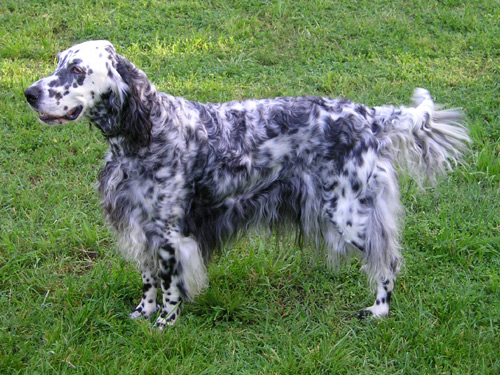
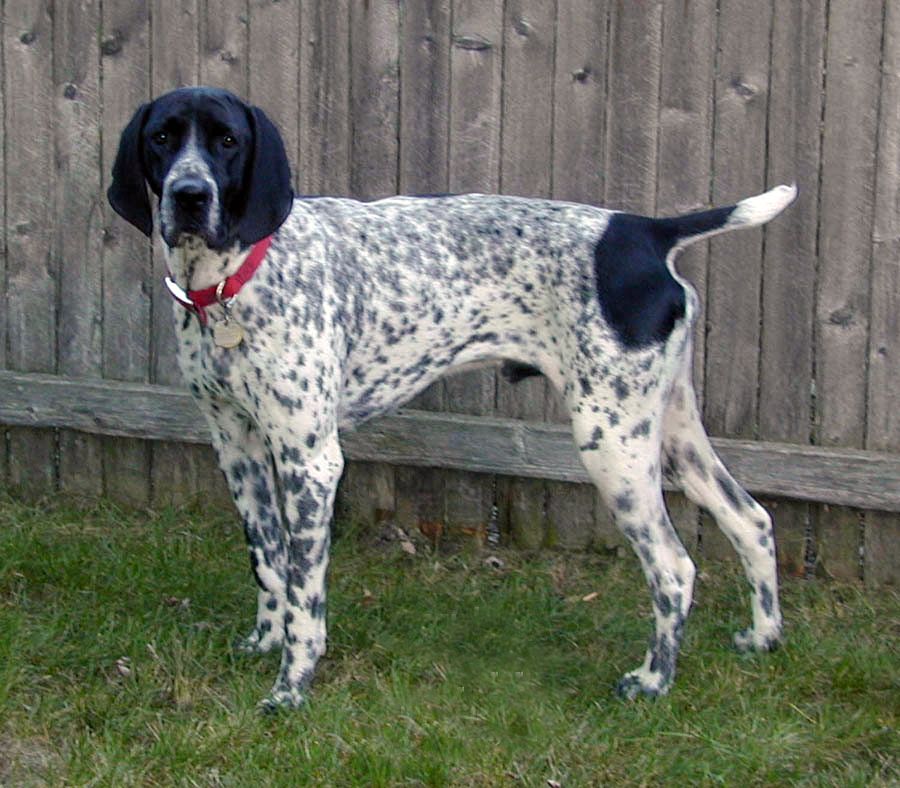
Its colouring is unmistakable, black ticked and flecked over white so densely that the dog reads as blue-grey at a distance, with a solid black head and, usually, white markings. Dogs stand about 57 to 63 cm. Handling is easy and the breed is notably calm indoors for a pointer, so a stud that is steady with strangers and around stock is the right sort.
There are very few of these dogs in Britain, and much of what a stud owner can tell you comes from French pedigrees. Ask for hip scores and a current eye certificate, and for elbow scores where the dog has been through the scheme. Beyond the paperwork, ask about longevity and cause of death among the grandparents, and about how closely related the proposed pair are, which counts for more in a rare breed than in a common one.
Health & breeding
We check every hip, elbow, eye and DNA result you give us against the Royal Kennel Club’s public records by hand, and we record who checked it and when. The Royal Kennel Club’s public records may not include all the screening a dog has had, so a dog with no Royal Kennel Club record showing is not necessarily untested.
Breed Right’s summary — under The Royal Kennel Club Health Standard
Health tests for the Braque d'Auvergne
This panel is Breed Right’s summary of the testing that matters for the breed under The Royal Kennel Club Health Standard. The Health Standard is the Royal Kennel Club’s guidance for breeders, not a registration rule. It describes tests to ask about — it is not a report on any individual dog. The Royal Kennel Club’s public records may not include all the screening a dog has had, so a dog with no Royal Kennel Club record showing is not necessarily untested.
Best Practice — further tests it recommends
Completing these as well as the Good Practice tests is what the Royal Kennel Club calls Best Practice.
| Test | Type | Scheme | What’s involved |
|---|---|---|---|
| Hip score (BVA/KC) | Screening scheme | BVA/KC | Total of both hips, 0–106. Lower is better. |
Breed hip median
Breed median 9 (BVA Hip Dysplasia Scheme breed statistics 2025 — 5 years, 16 dogs scored — indicative only, from a small sample). Lower is better. Source · How hip scores work
At stud now
Braque d'Auvergne stud dogs
No Braque d'Auvergne studs are listed right now
When a Braque d'Auvergne on the Royal Kennel Club Breed Register is listed at stud, it will appear here.
Also available
Braque d'Auvergne litters
No Braque d'Auvergne litters are listed right now
Litters appear here as breeders list them. Check back soon, or browse other breeds.