Hungarian Vizsla
The Hungarian Vizsla is a pointer-retriever from the Magyar plains, bred to find, point and bring back game across open country, and its russet-gold coat and lean outline make it…
About the Hungarian Vizsla
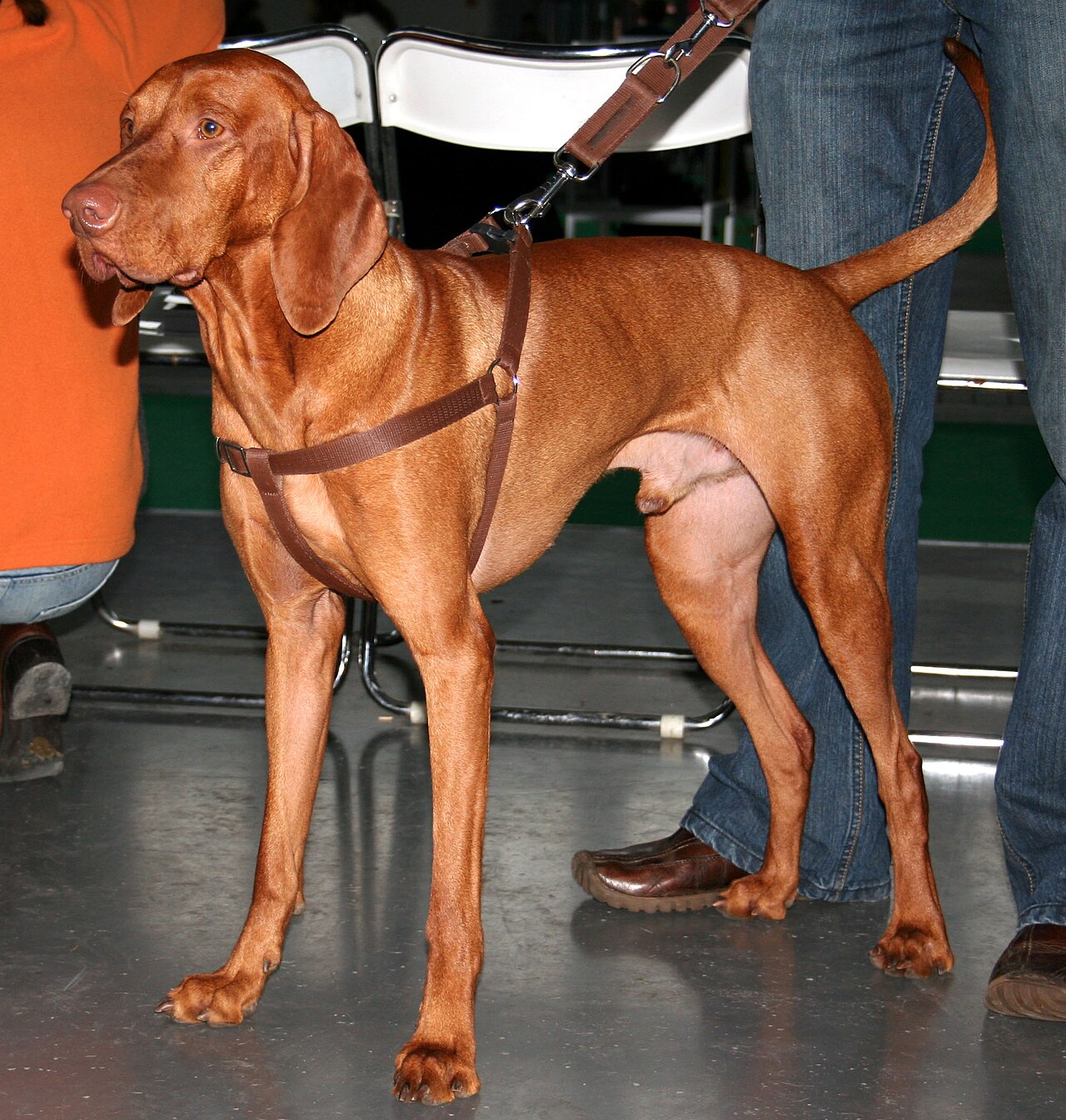
The Hungarian Vizsla is a pointer-retriever from the Magyar plains, bred to find, point and bring back game across open country, and its russet-gold coat and lean outline make it one of the most recognisable gundogs in the ring. It is also famously attached to its owner, earning the nickname of the velcro dog.
This is a sensitive breed that does badly with harsh handling and with boredom. A Vizsla stud should be sound, fit and steady in temperament, because nervousness passes down readily in the breed. Dogs stand roughly 58 to 64 cm, with a short, close coat that needs almost no grooming and offers little protection in cold water.
Health screening in the Vizsla is lighter on DNA tests than in some gundogs, so the questions are hip scores under the BVA/KC scheme and a current eye certificate. Beyond the paperwork, ask about immune-mediated disease in the line, including polymyositis and inflammatory conditions, and about epilepsy. A stud owner who knows the family history and will share it is worth more than one with a longer list of certificates and no answers.
Health & breeding
We check every hip, elbow, eye and DNA result you give us against the Royal Kennel Club’s public records by hand, and we record who checked it and when. The Royal Kennel Club’s public records may not include all the screening a dog has had, so a dog with no Royal Kennel Club record showing is not necessarily untested.
Breed Right’s summary — under The Royal Kennel Club Health Standard
Health tests for the Hungarian Vizsla
This panel is Breed Right’s summary of the testing that matters for the breed under The Royal Kennel Club Health Standard. The Health Standard is the Royal Kennel Club’s guidance for breeders, not a registration rule. It describes tests to ask about — it is not a report on any individual dog. The Royal Kennel Club’s public records may not include all the screening a dog has had, so a dog with no Royal Kennel Club record showing is not necessarily untested.
Good Practice — the Royal Kennel Club’s minimum before breeding
The tests the Royal Kennel Club says breeders should, at a minimum, complete before breeding.
| Test | Type | Scheme | What’s involved |
|---|---|---|---|
| Hip score (BVA/KC) | Screening scheme | BVA/KC | Total of both hips, 0–106. Lower is better. |
| Elbow grading (BVA/KC) | Screening scheme | BVA/KC | Grade 0–3. The dog is graded on the worse of the two elbows. |
| Eye testing (BVA/KC/ISDS) | Screening scheme | BVA/KC/ISDS | Result printed on the eye certificate. |
| Gonioscopy (BVA/KC/ISDS) | Screening scheme | BVA/KC/ISDS | Grade 1–3 on the certificate; 1 is normal or mild. |
Breed hip median
Breed median 11 (BVA Hip Dysplasia Scheme breed statistics 2025 — 5 years, 1,165 dogs scored). Lower is better. Source · How hip scores work
At stud now
Hungarian Vizsla stud dogs
No Hungarian Vizsla studs are listed right now
When a Hungarian Vizsla on the Royal Kennel Club Breed Register is listed at stud, it will appear here.
Also available
Hungarian Vizsla litters
No Hungarian Vizsla litters are listed right now
Litters appear here as breeders list them. Check back soon, or browse other breeds.