Boston Terrier
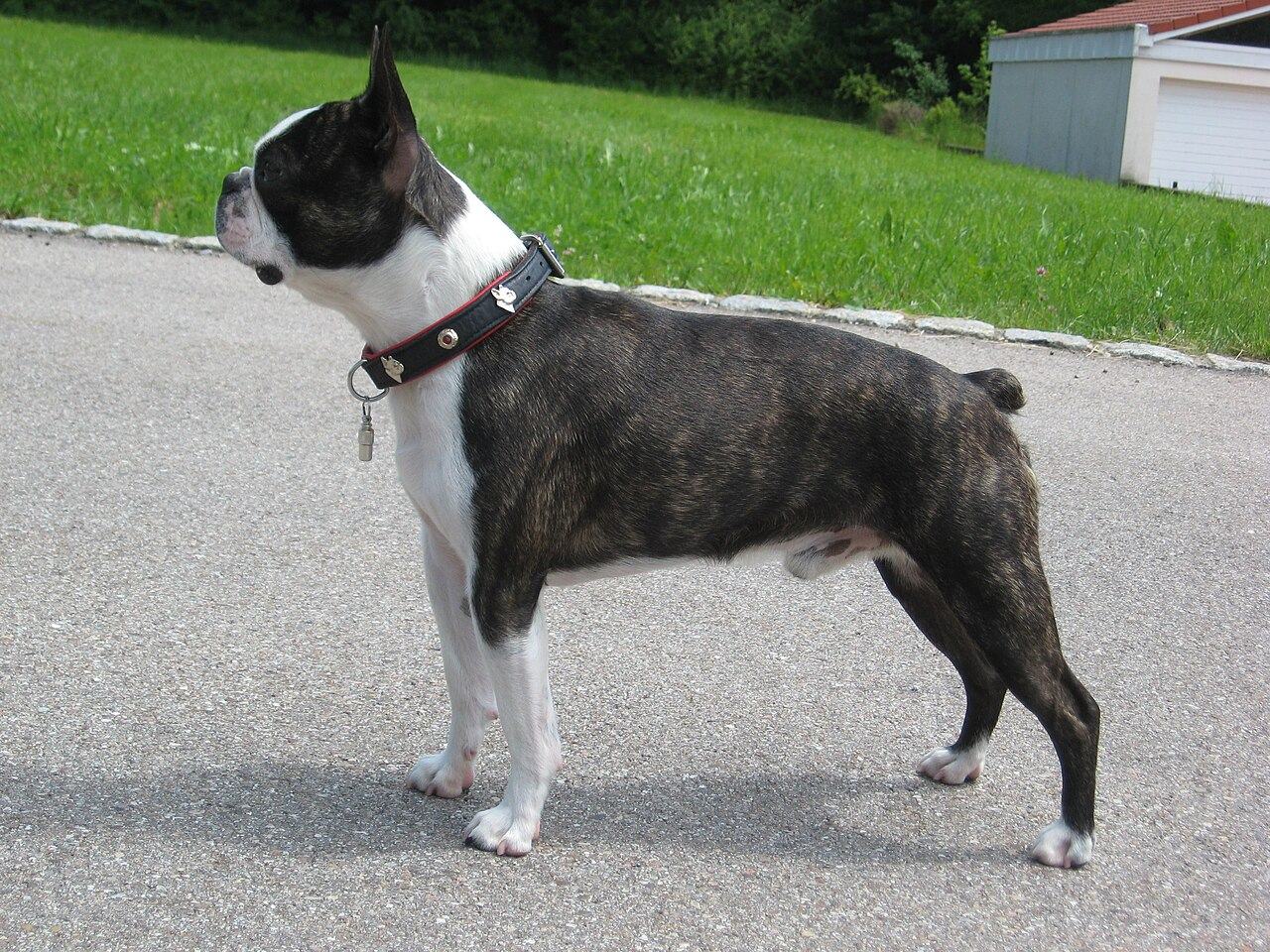
The Boston Terrier was created in Boston in the 1870s from bulldog and terrier crosses, and it was among the first breeds developed in the United States. The tuxedo markings…
About the Boston Terrier
The Boston Terrier was created in Boston in the 1870s from bulldog and terrier crosses, and it was among the first breeds developed in the United States. The tuxedo markings earned it the nickname of the American gentleman, and the breed's manners live up to it.
Dogs weigh about 6.8 to 11.4 kg in three weight classes, compact and square, with a short coat in brindle, seal or black with white markings. Bostons are affectionate, sociable and easy to live with; a stud with a moderate face and open nostrils is the one to look for in a brachycephalic breed, and a calm, outgoing temperament is worth more than any marking.
Ask a Boston Terrier stud owner for a current eye certificate, since the prominent eyes are exposed to injury and the breed has inherited cataract, for which a DNA test exists for the juvenile form. Patella examination and hip scores are worth asking for, and spinal X-rays for hemivertebrae in a screw-tailed breed. Ask about breathing at rest and about caesarean deliveries in the line, both common in the breed.
Health & breeding
We check every hip, elbow, eye and DNA result you give us against the Royal Kennel Club’s public records by hand, and we record who checked it and when. The Royal Kennel Club’s public records may not include all the screening a dog has had, so a dog with no Royal Kennel Club record showing is not necessarily untested.
Breed Right’s summary — under The Royal Kennel Club Health Standard
Health tests for the Boston Terrier
This panel is Breed Right’s summary of the testing that matters for the breed under The Royal Kennel Club Health Standard. The Health Standard is the Royal Kennel Club’s guidance for breeders, not a registration rule. It describes tests to ask about — it is not a report on any individual dog. The Royal Kennel Club’s public records may not include all the screening a dog has had, so a dog with no Royal Kennel Club record showing is not necessarily untested.
Good Practice — the Royal Kennel Club’s minimum before breeding
The tests the Royal Kennel Club says breeders should, at a minimum, complete before breeding.
| Test | Type | Scheme | What’s involved |
|---|---|---|---|
| Eye testing (BVA/KC/ISDS) | Screening scheme | BVA/KC/ISDS | Result printed on the eye certificate. |
Best Practice — further tests it recommends
Completing these as well as the Good Practice tests is what the Royal Kennel Club calls Best Practice.
| Test | Type | Scheme | What’s involved |
|---|---|---|---|
| DNA test — HC-HSF4-2 (Hereditary Cataract, SBT / Boston Terrier / French Bulldog form) | DNA test | Laboratory | The result printed on the laboratory certificate. |
| Breathing grading — BOAS (RKC Respiratory Function Grading Scheme) | Screening scheme | RKC | Grade 0–3; 0 is clinically unaffected. |
Breed hip median
Too few dogs of this breed have been scored (BVA Hip Dysplasia Scheme breed statistics 2025 — 5 years: 1 dog) to give a meaningful breed median. Source · How hip scores work
At stud now
Boston Terrier stud dogs
No Boston Terrier studs are listed right now
When a Boston Terrier on the Royal Kennel Club Breed Register is listed at stud, it will appear here.
Also available
Boston Terrier litters
No Boston Terrier litters are listed right now
Litters appear here as breeders list them. Check back soon, or browse other breeds.