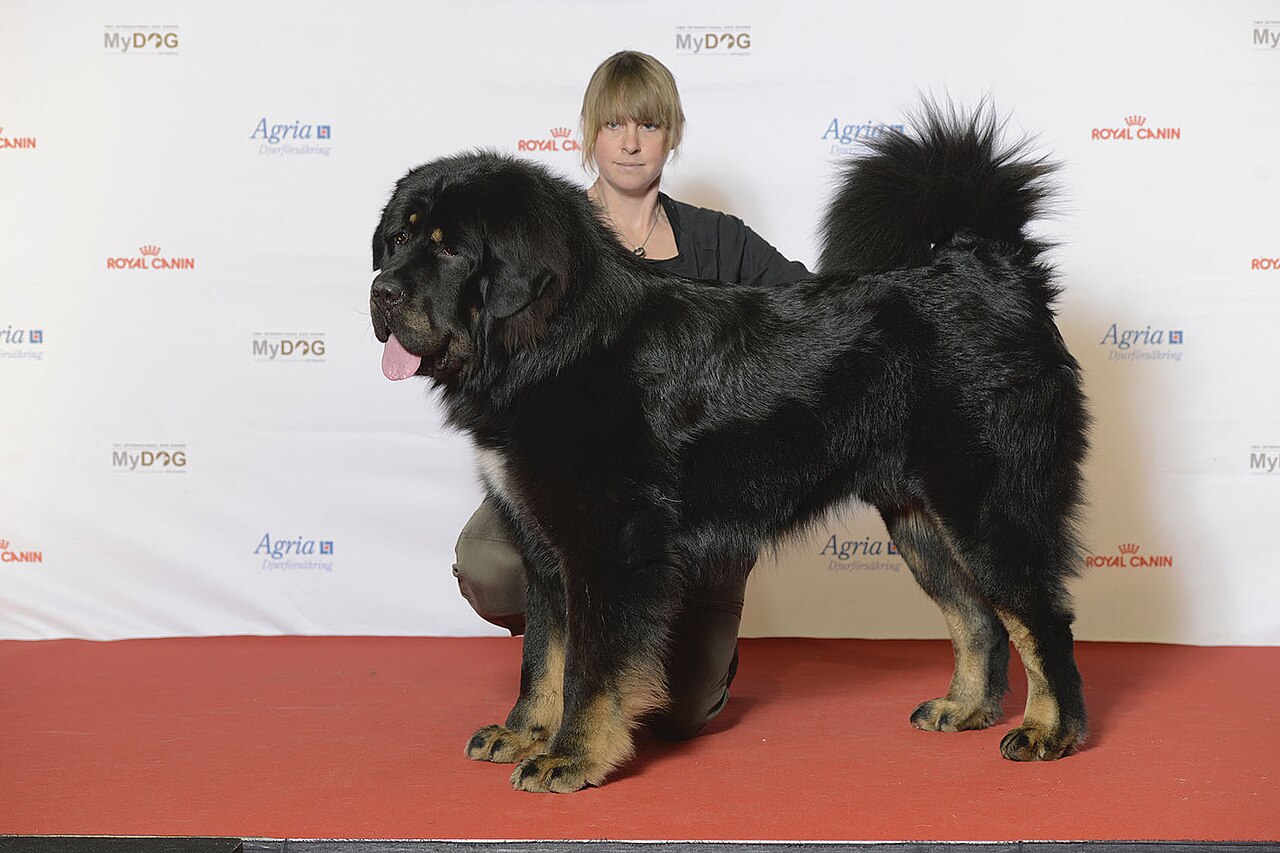
Tibetan Mastiff
The Tibetan Mastiff guarded monasteries, villages and flocks across the Himalayan plateau, chained by day and loose at night, left to make its own decisions, and it is one of very…
About the Tibetan Mastiff
The Tibetan Mastiff guarded monasteries, villages and flocks across the Himalayan plateau, chained by day and loose at night, left to make its own decisions, and it is one of very few breeds in which bitches come into season only once a year, in the autumn. That single annual cycle is a genuine planning consideration for anyone arranging a mating.
Dogs stand from 66 cm and are heavily coated, with a thick mane around the neck and shoulders, in black, black and tan, blue, gold or sable. The breed is nocturnal in habit, independent to the point of obstinacy, and will not be trained out of guarding. A stud should be confident, unhurried and safe to handle, because size combined with territorial instinct leaves no margin for a poor temperament.
Canine inherited demyelinative neuropathy is specific to this breed and has a DNA test that a stud owner should have used. Ask for hip and elbow scores under the BVA/KC schemes and for a current eye certificate, since entropion occurs in a heavily furnished head. Ask about hypothyroidism and about the ages relatives reached, and ask how the dog copes in a British summer under that coat.
Health & breeding
We check every hip, elbow, eye and DNA result you give us against the Royal Kennel Club’s public records by hand, and we record who checked it and when. The Royal Kennel Club’s public records may not include all the screening a dog has had, so a dog with no Royal Kennel Club record showing is not necessarily untested.
Breed Right’s summary — under The Royal Kennel Club Health Standard
Health tests for the Tibetan Mastiff
This panel is Breed Right’s summary of the testing that matters for the breed under The Royal Kennel Club Health Standard. The Health Standard is the Royal Kennel Club’s guidance for breeders, not a registration rule. It describes tests to ask about — it is not a report on any individual dog. The Royal Kennel Club’s public records may not include all the screening a dog has had, so a dog with no Royal Kennel Club record showing is not necessarily untested.
Good Practice — the Royal Kennel Club’s minimum before breeding
The tests the Royal Kennel Club says breeders should, at a minimum, complete before breeding.
| Test | Type | Scheme | What’s involved |
|---|---|---|---|
| Hip score (BVA/KC) | Screening scheme | BVA/KC | Total of both hips, 0–106. Lower is better. |
| Elbow grading (BVA/KC) | Screening scheme | BVA/KC | Grade 0–3. The dog is graded on the worse of the two elbows. |
Breed hip median
Breed median 11 (BVA Hip Dysplasia Scheme breed statistics 2025 — 5 years, 32 dogs scored — indicative only, from a small sample). Lower is better. Source · How hip scores work
At stud now
Tibetan Mastiff stud dogs
No Tibetan Mastiff studs are listed right now
When a Tibetan Mastiff on the Royal Kennel Club Breed Register is listed at stud, it will appear here.
Also available
Tibetan Mastiff litters
No Tibetan Mastiff litters are listed right now
Litters appear here as breeders list them. Check back soon, or browse other breeds.