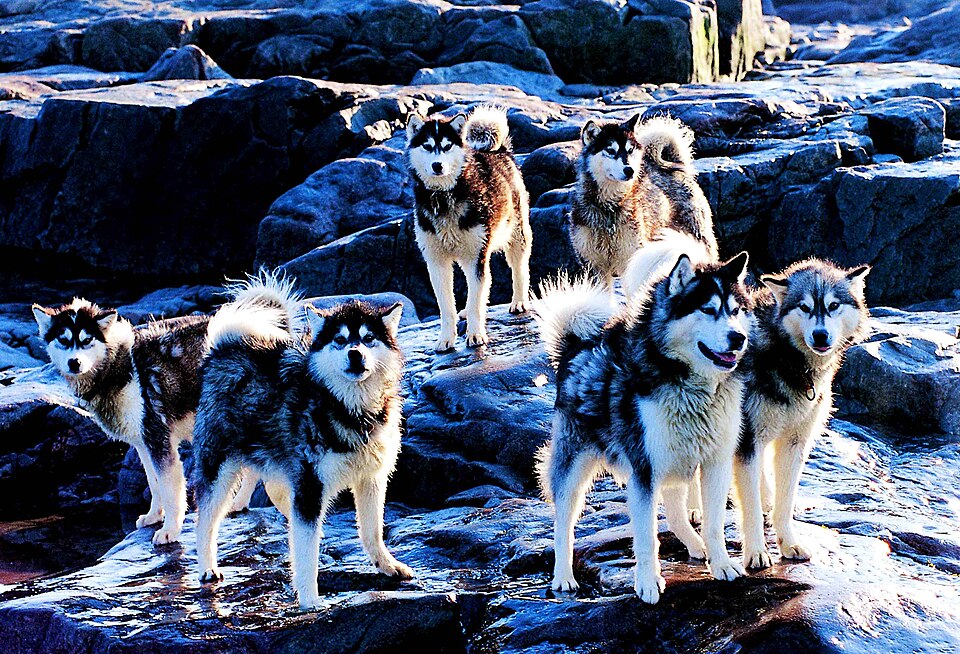
Canadian Eskimo Dog
The Canadian Eskimo Dog, the Qimmiq of the Inuit, hauled sledges and hunted seal and polar bear across the Canadian Arctic for a thousand years, and it came close to vanishing in…
About the Canadian Eskimo Dog
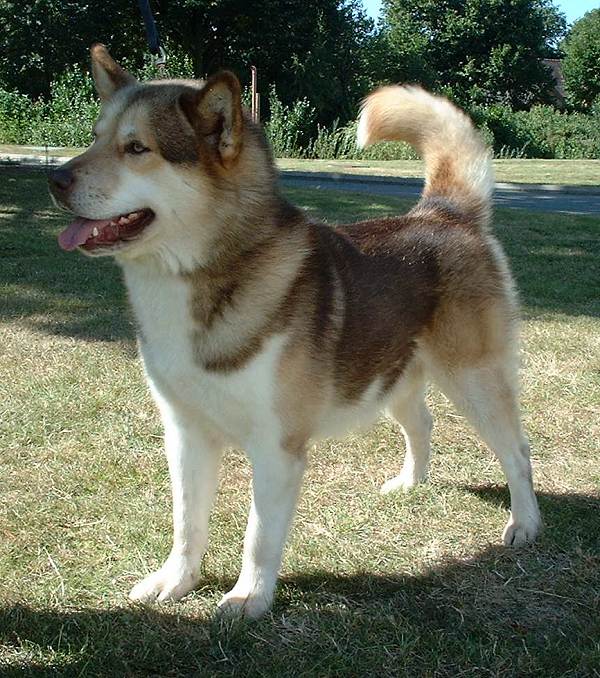
The Canadian Eskimo Dog, the Qimmiq of the Inuit, hauled sledges and hunted seal and polar bear across the Canadian Arctic for a thousand years, and it came close to vanishing in the twentieth century as snowmobiles replaced dog teams. It remains one of the rarest breeds the Royal Kennel Club recognises.
Dogs stand about 58 to 70 cm and weigh 30 to 40 kg, powerfully built, with a thick standing coat and a heavy neck mane, in any colour or combination. This is an unreconstructed working animal: strongly pack-ordered, noisy, high in prey drive and poorly suited to ordinary domestic life. A stud should be fit and manageable, and it is worth asking whether the dog actually works in harness.
With so few dogs in the breed, the coefficient of inbreeding for a proposed mating is the first thing to establish, and a stud owner who has already thought about it is the one to deal with. The scheme questions still apply: a hip score and a current eye certificate. Ask about the ages relatives reached, about any joint surgery in the line, and about how the stud's puppies have turned out in temperament.
Health & breeding
We check every hip, elbow, eye and DNA result you give us against the Royal Kennel Club’s public records by hand, and we record who checked it and when. The Royal Kennel Club’s public records may not include all the screening a dog has had, so a dog with no Royal Kennel Club record showing is not necessarily untested.
Breed Right’s summary — under The Royal Kennel Club Health Standard
Health tests for the Canadian Eskimo Dog
This panel is Breed Right’s summary of the testing that matters for the breed under The Royal Kennel Club Health Standard. The Health Standard is the Royal Kennel Club’s guidance for breeders, not a registration rule. It describes tests to ask about — it is not a report on any individual dog. The Royal Kennel Club’s public records may not include all the screening a dog has had, so a dog with no Royal Kennel Club record showing is not necessarily untested.
Best Practice — further tests it recommends
Completing these as well as the Good Practice tests is what the Royal Kennel Club calls Best Practice.
| Test | Type | Scheme | What’s involved |
|---|---|---|---|
| Hip score (BVA/KC) | Screening scheme | BVA/KC | Total of both hips, 0–106. Lower is better. |
| Eye testing (BVA/KC/ISDS) | Screening scheme | BVA/KC/ISDS | Result printed on the eye certificate. |
Breed hip median
Breed median 8 (BVA Hip Dysplasia Scheme breed statistics 2025 — 5 years, 21 dogs scored — indicative only, from a small sample). Lower is better. Source · How hip scores work
At stud now
Canadian Eskimo Dog stud dogs
No Canadian Eskimo Dog studs are listed right now
When a Canadian Eskimo Dog on the Royal Kennel Club Breed Register is listed at stud, it will appear here.
Also available
Canadian Eskimo Dog litters
No Canadian Eskimo Dog litters are listed right now
Litters appear here as breeders list them. Check back soon, or browse other breeds.