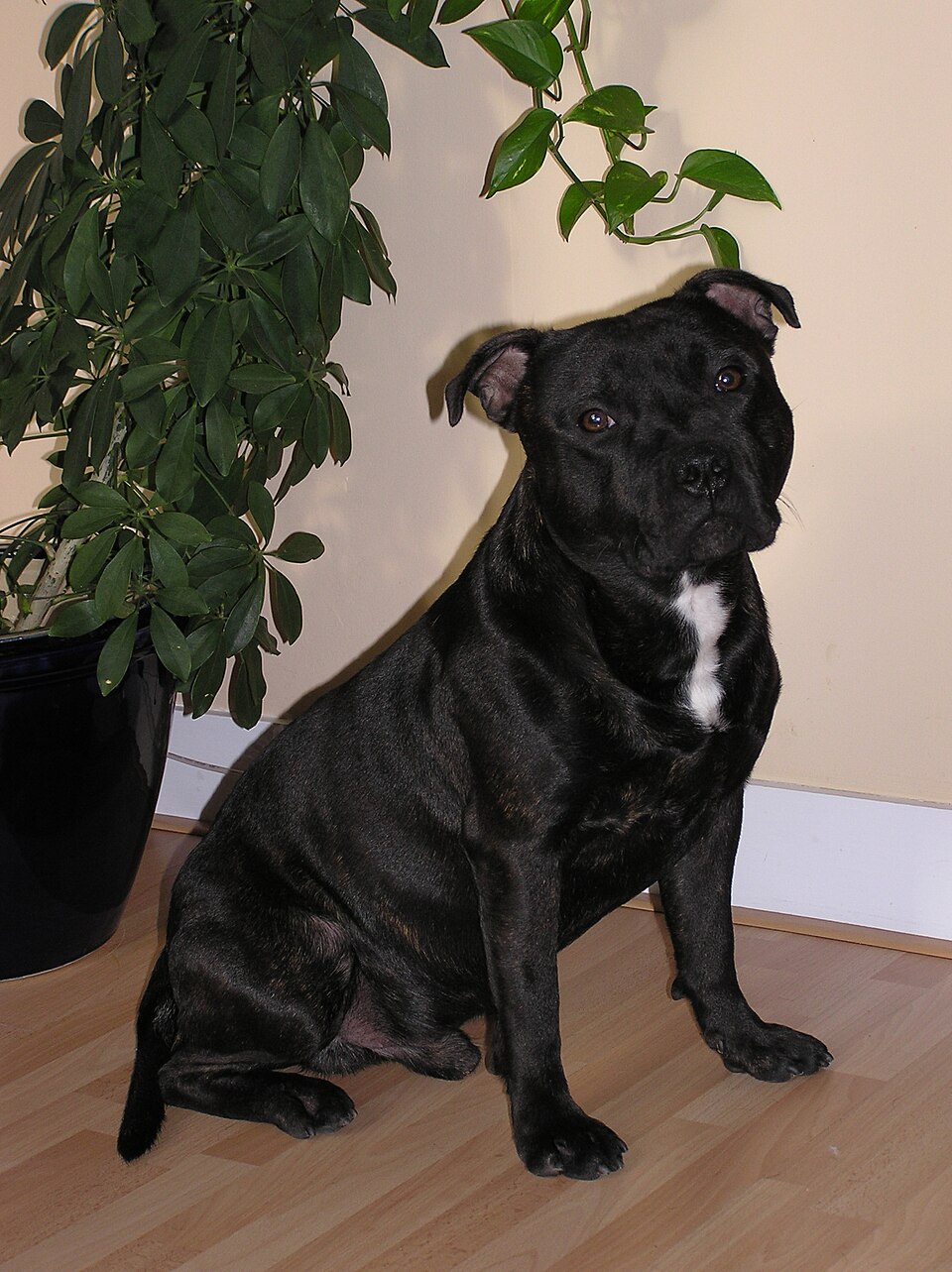
Staffordshire Bull Terrier
The Staffordshire Bull Terrier was bred in the Black Country from bulldog and terrier crosses, and the modern breed's reputation for devotion to people, and children in…
About the Staffordshire Bull Terrier
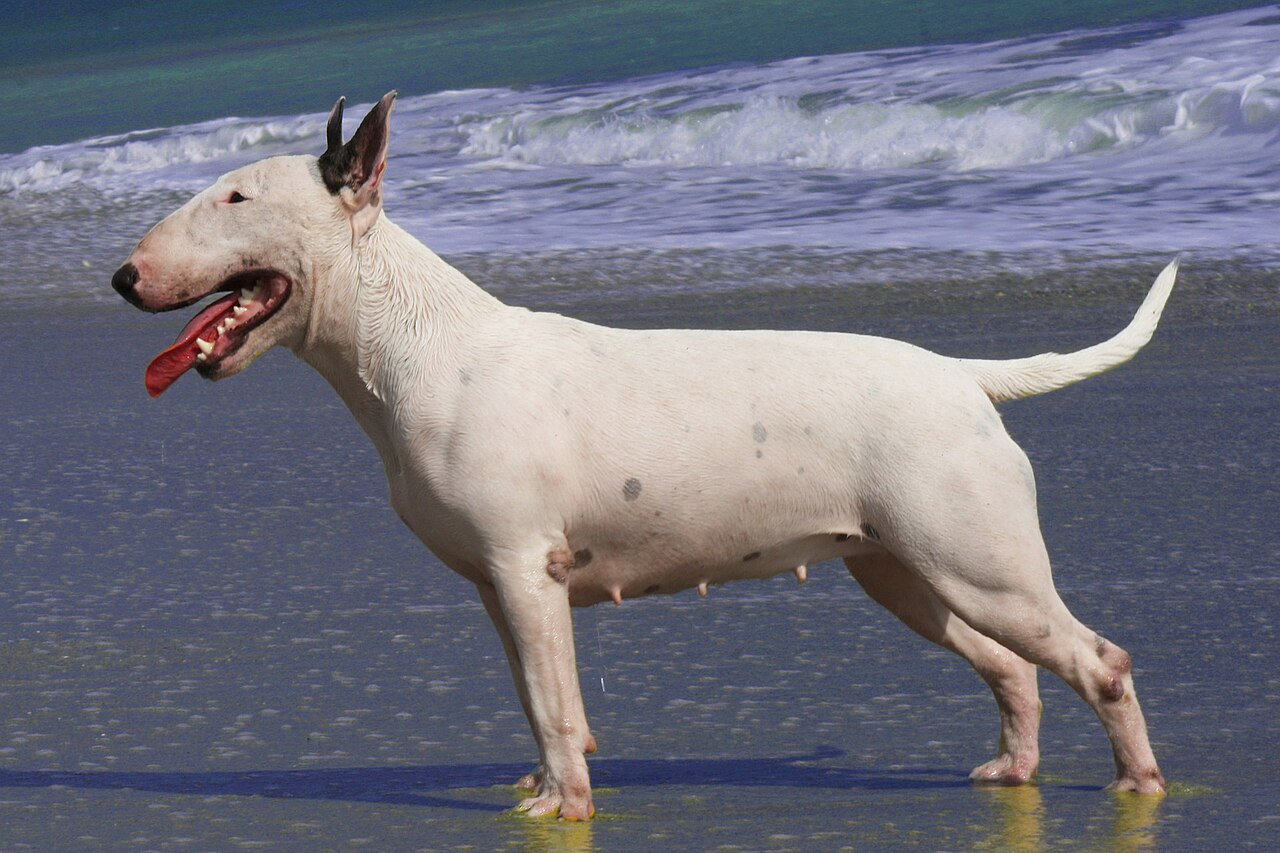
The Staffordshire Bull Terrier was bred in the Black Country from bulldog and terrier crosses, and the modern breed's reputation for devotion to people, and children in particular, is written into its standard. It is a muscular, athletic dog with a huge grin and a stubborn streak, and it has been one of Britain's most popular breeds for decades.
Dogs stand about 36 to 41 cm and weigh 13 to 17 kg, with a short, smooth coat in red, fawn, white, black, blue or brindle, with or without white. Staffords are typically bold with other dogs and need sensible socialisation; a stud with a steady, sociable temperament is worth more than one with the heaviest head. The breed should be fit and lean, not bulky.
The breed's DNA tests are well established and a stud owner should have both: L-2-hydroxyglutaric aciduria, a metabolic disease of the nervous system, and hereditary cataract. Add a current eye certificate, which also screens for persistent hyperplastic primary vitreous, and ask about hip scores and about patella examination. Skin allergies run in some lines and are worth a question.
Health & breeding
We check every hip, elbow, eye and DNA result you give us against the Royal Kennel Club’s public records by hand, and we record who checked it and when. The Royal Kennel Club’s public records may not include all the screening a dog has had, so a dog with no Royal Kennel Club record showing is not necessarily untested.
Breed Right’s summary — under The Royal Kennel Club Health Standard
Health tests for the Staffordshire Bull Terrier
This panel is Breed Right’s summary of the testing that matters for the breed under The Royal Kennel Club Health Standard. The Health Standard is the Royal Kennel Club’s guidance for breeders, not a registration rule. It describes tests to ask about — it is not a report on any individual dog. The Royal Kennel Club’s public records may not include all the screening a dog has had, so a dog with no Royal Kennel Club record showing is not necessarily untested.
Best Practice — further tests it recommends
Completing these as well as the Good Practice tests is what the Royal Kennel Club calls Best Practice.
| Test | Type | Scheme | What’s involved |
|---|---|---|---|
| DNA test — HC-HSF4-2 (Hereditary Cataract, SBT / Boston Terrier / French Bulldog form) | DNA test | Laboratory | The result printed on the laboratory certificate. |
| DNA test — L-2-HGA (L-2-Hydroxyglutaric Aciduria) | DNA test | Laboratory | The result printed on the laboratory certificate. |
| Elbow grading (BVA/KC) | Screening scheme | BVA/KC | Grade 0–3. The dog is graded on the worse of the two elbows. |
| Eye testing (BVA/KC/ISDS) | Screening scheme | BVA/KC/ISDS | Result printed on the eye certificate. |
Breed club schemes listed in the Health Standard
Run by the breed club, not the Royal Kennel Club, which does not record their results. The Standard lists them as schemes to be aware of.
| Test | Type | Scheme | What’s involved |
|---|---|---|---|
| Patella examination (breed club scheme) | Other | Breed club | Putnam grade 0–4 per stifle. |
Breed hip median
Breed median 10 (BVA Hip Dysplasia Scheme breed statistics 2025 — 5 years, 35 dogs scored — indicative only, from a small sample). Lower is better. Source · How hip scores work
At stud now
Staffordshire Bull Terrier stud dogs
No Staffordshire Bull Terrier studs are listed right now
When a Staffordshire Bull Terrier on the Royal Kennel Club Breed Register is listed at stud, it will appear here.
Also available
Staffordshire Bull Terrier litters
No Staffordshire Bull Terrier litters are listed right now
Litters appear here as breeders list them. Check back soon, or browse other breeds.