Border Terrier
The Border Terrier comes from the hill country between England and Scotland, bred to run with the foxhounds all day and then go to ground after the fox, and it is still one of the…
About the Border Terrier
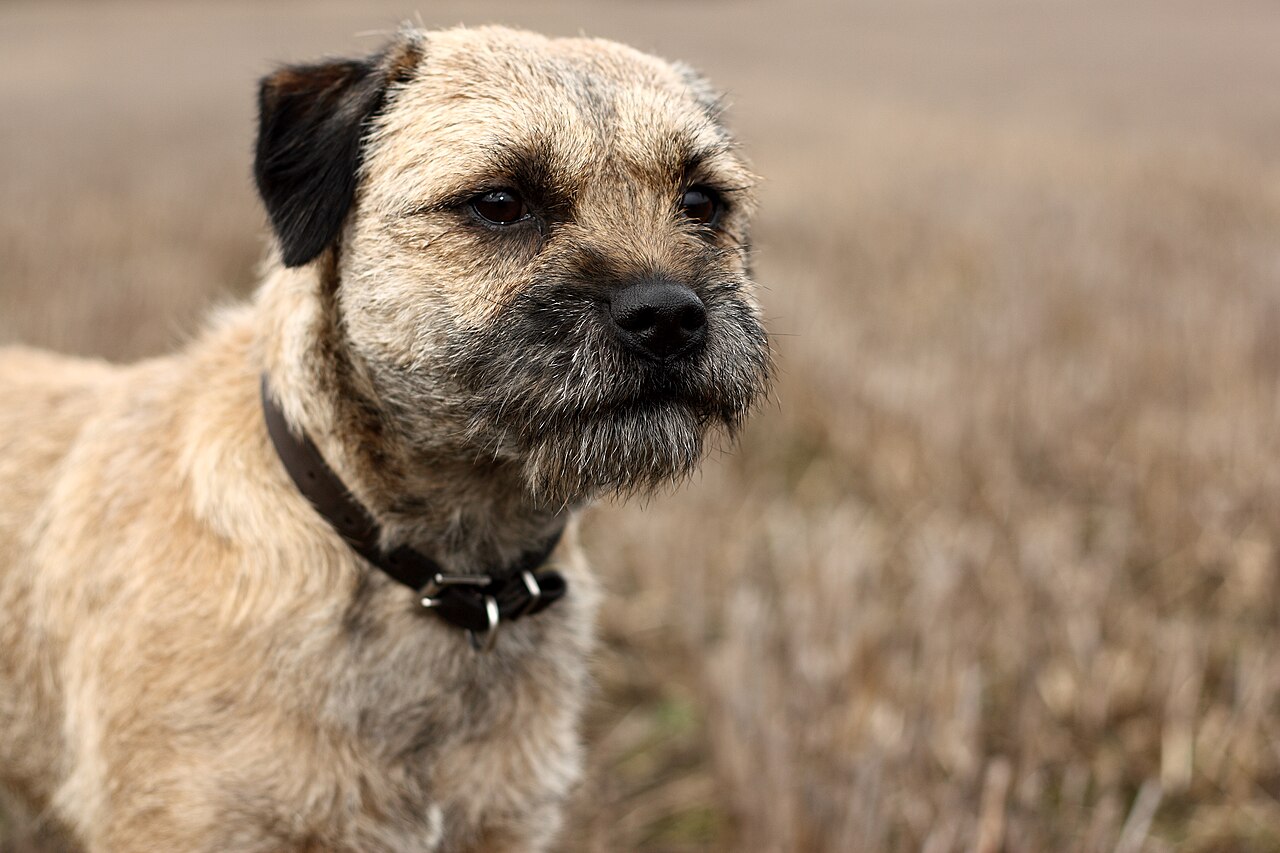
The Border Terrier comes from the hill country between England and Scotland, bred to run with the foxhounds all day and then go to ground after the fox, and it is still one of the most genuinely working terriers on the register. Its otter-shaped head and harsh, weatherproof coat are functional first and cosmetic second.
Borders are unusually tolerant of other dogs for a terrier, which is why hunts could kennel them with hounds, and that easy nature has made them a popular family dog. Dogs weigh about 6 to 7 kg, in red, grizzle and tan, blue and tan, or wheaten. A Border stud should be narrow enough to be spanned behind the shoulders by two hands, which is the traditional test that it can follow a fox underground.
The Border Terrier has one DNA test every stud owner should be able to show: spongiform leucoencephalomyelopathy, the shaking puppy syndrome, which appears in the first weeks of life. Ask too about canine epileptoid cramping syndrome, sometimes called Spike's disease, which runs in the breed and is linked to gluten sensitivity, and about a current eye certificate and hip scores.
Health & breeding
We check every hip, elbow, eye and DNA result you give us against the Royal Kennel Club’s public records by hand, and we record who checked it and when. The Royal Kennel Club’s public records may not include all the screening a dog has had, so a dog with no Royal Kennel Club record showing is not necessarily untested.
Breed Right’s summary — under The Royal Kennel Club Health Standard
Health tests for the Border Terrier
This panel is Breed Right’s summary of the testing that matters for the breed under The Royal Kennel Club Health Standard. The Health Standard is the Royal Kennel Club’s guidance for breeders, not a registration rule. It describes tests to ask about — it is not a report on any individual dog. The Royal Kennel Club’s public records may not include all the screening a dog has had, so a dog with no Royal Kennel Club record showing is not necessarily untested.
Good Practice — the Royal Kennel Club’s minimum before breeding
The tests the Royal Kennel Club says breeders should, at a minimum, complete before breeding.
| Test | Type | Scheme | What’s involved |
|---|---|---|---|
| DNA test — SLEM (Spongiform Leucoencephalomyelopathy) | DNA test | Laboratory | The result printed on the laboratory certificate. |
Breed hip median
Breed median 8 (BVA Hip Dysplasia Scheme breed statistics 2025 — 5 years, 13 dogs scored — indicative only, from a small sample). Lower is better. Source · How hip scores work
At stud now
Border Terrier stud dogs
No Border Terrier studs are listed right now
When a Border Terrier on the Royal Kennel Club Breed Register is listed at stud, it will appear here.
Also available
Border Terrier litters
No Border Terrier litters are listed right now
Litters appear here as breeders list them. Check back soon, or browse other breeds.