Bull Terrier
The Bull Terrier was refined in Birmingham in the 1860s by James Hinks into the egg-headed white gladiator of the show ring, and coloured varieties followed in the twentieth…
About the Bull Terrier
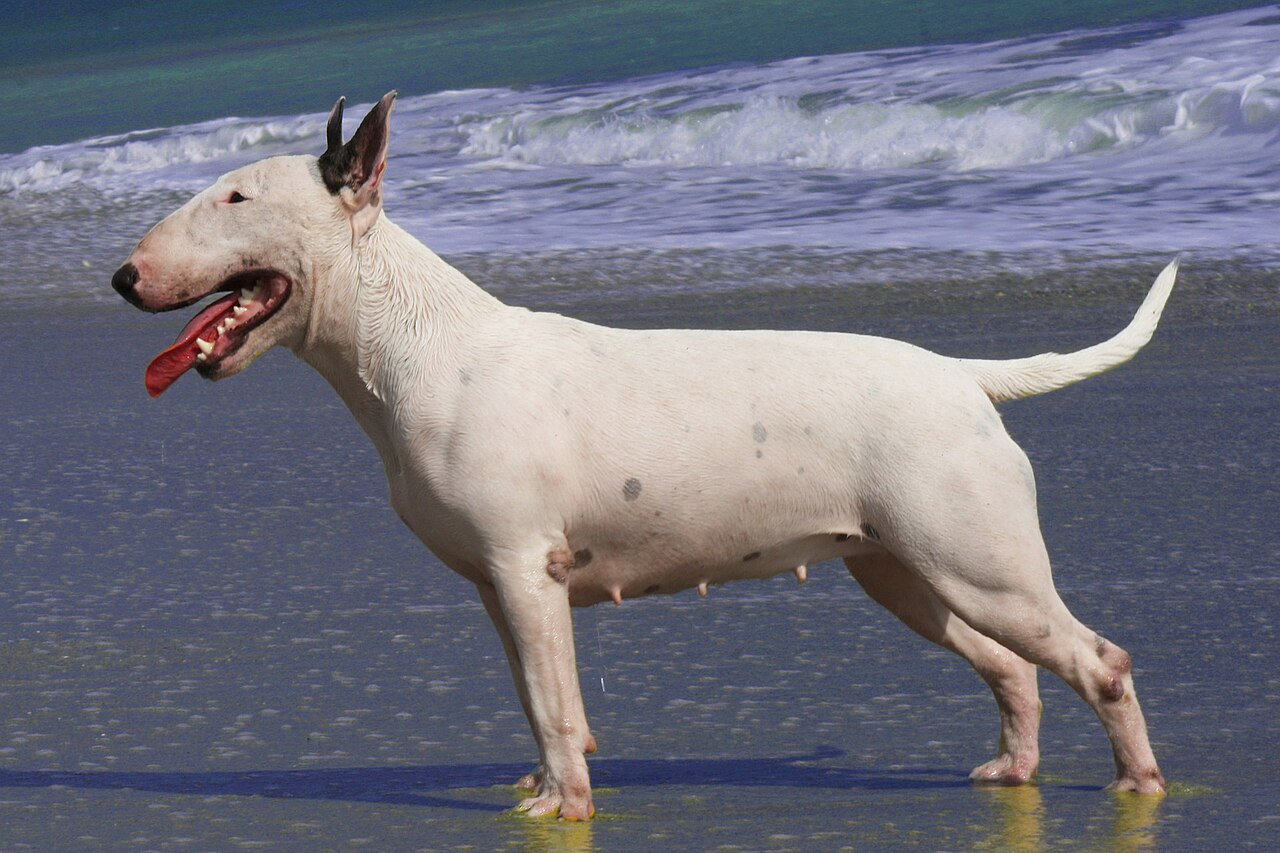
The Bull Terrier was refined in Birmingham in the 1860s by James Hinks into the egg-headed white gladiator of the show ring, and coloured varieties followed in the twentieth century. It is the only breed with that distinctive down-faced, filled-in profile, and no other terrier is quite so much of a character.
Dogs have no height limit in the standard but typically stand about 53 to 56 cm and are heavily muscled. The Miniature Bull Terrier is a separate breed and the two cannot be interbred on the register. Bull Terriers are affectionate and playful but powerful and inclined to obsessive behaviours if under-exercised, and a stud that is calm, sociable and free of spinning or tail-chasing is the one to look for.
Screening in the Bull Terrier is unusual in leaning on the kidneys and heart rather than the joints. Ask for a urine protein-to-creatinine ratio test, since hereditary nephritis is a serious concern in the breed, and for a cardiac examination, ideally by echocardiography. A BAER hearing test is essential in whites and wise in all colours. Patella examination and a current eye certificate complete the list.
Health & breeding
We check every hip, elbow, eye and DNA result you give us against the Royal Kennel Club’s public records by hand, and we record who checked it and when. The Royal Kennel Club’s public records may not include all the screening a dog has had, so a dog with no Royal Kennel Club record showing is not necessarily untested.
Breed Right’s summary — under The Royal Kennel Club Health Standard
Health tests for the Bull Terrier
This panel is Breed Right’s summary of the testing that matters for the breed under The Royal Kennel Club Health Standard. The Health Standard is the Royal Kennel Club’s guidance for breeders, not a registration rule. It describes tests to ask about — it is not a report on any individual dog. The Royal Kennel Club’s public records may not include all the screening a dog has had, so a dog with no Royal Kennel Club record showing is not necessarily untested.
Best Practice — further tests it recommends
Completing these as well as the Good Practice tests is what the Royal Kennel Club calls Best Practice.
| Test | Type | Scheme | What’s involved |
|---|---|---|---|
| Hearing test — BAER (RKC BAER Scheme) | Screening scheme | RKC | Per ear: hearing or deaf, as certified. |
Breed club schemes listed in the Health Standard
Run by the breed club, not the Royal Kennel Club, which does not record their results. The Standard lists them as schemes to be aware of.
| Test | Type | Scheme | What’s involved |
|---|---|---|---|
| Heart testing (breed club scheme) | Other | Breed club | The club scheme’s own result, e.g. murmur grade. |
| Kidney testing (breed club scheme) | Other | Breed club | e.g. urine protein:creatinine ratio. |
Breed hip median
Too few dogs of this breed have been scored (BVA Hip Dysplasia Scheme breed statistics 2025 — 5 years: 2 dogs) to give a meaningful breed median. Source · How hip scores work
At stud now
Bull Terrier stud dogs
No Bull Terrier studs are listed right now
When a Bull Terrier on the Royal Kennel Club Breed Register is listed at stud, it will appear here.
Also available
Bull Terrier litters
No Bull Terrier litters are listed right now
Litters appear here as breeders list them. Check back soon, or browse other breeds.