Dogue de Bordeaux
The Dogue de Bordeaux is the old French mastiff of the south-west, used on estates as a guard and formerly for baiting and for holding large game, and it carries the broadest head…
About the Dogue de Bordeaux
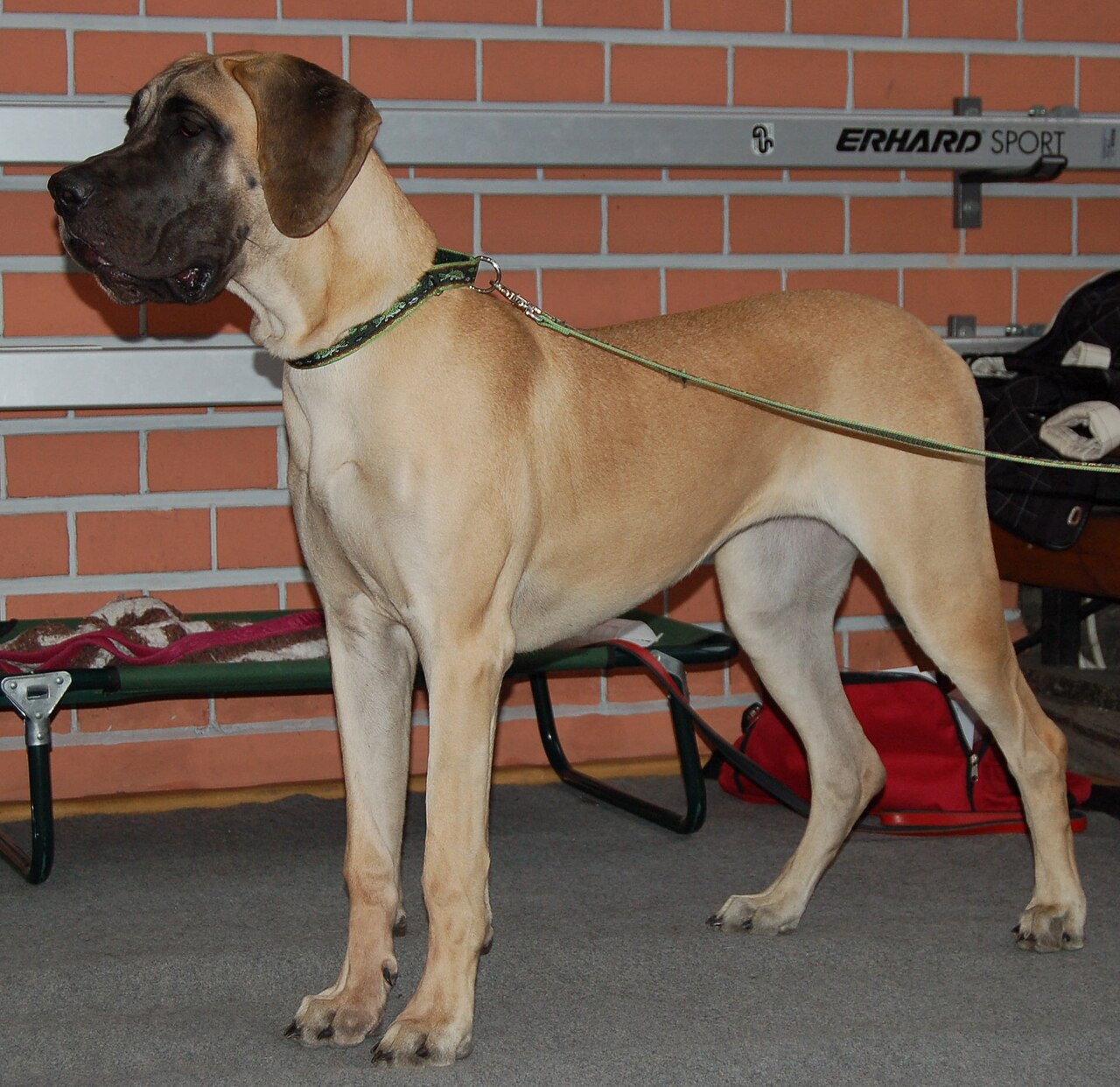
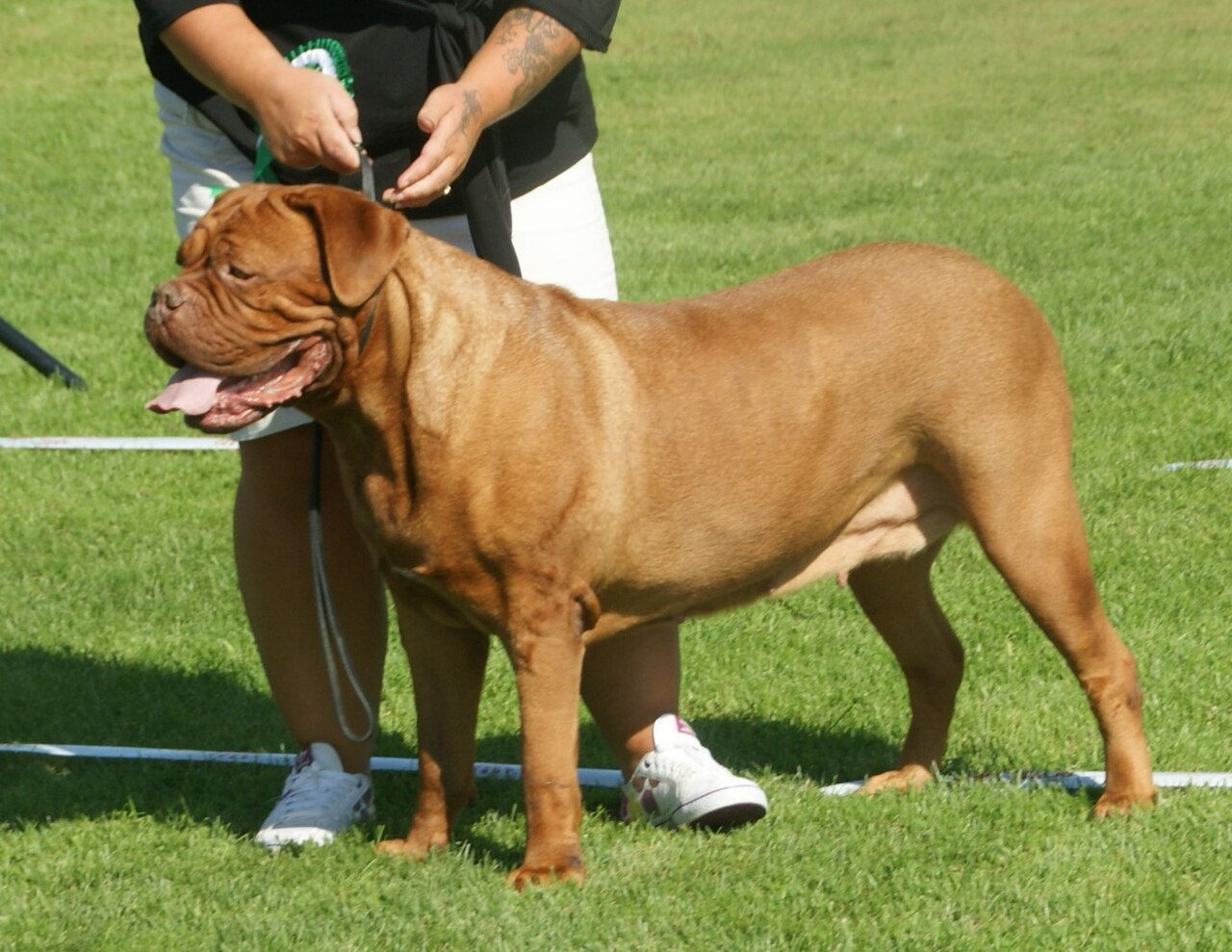
The Dogue de Bordeaux is the old French mastiff of the south-west, used on estates as a guard and formerly for baiting and for holding large game, and it carries the broadest head in proportion to its body of any breed. It nearly disappeared in the twentieth century, and modern numbers rest on a small rebuilt population.
Dogs stand 60 to 68 cm and weigh from 50 kg, in shades of fawn from mahogany to isabella, with a red or black mask. The face is short and heavily wrinkled, so breathing has to be assessed honestly: a stud should breathe quietly at rest, recover quickly after a short walk, and have open nostrils. Excessive wrinkle and an over-short muzzle are among the points the Royal Kennel Club's Breed Watch draws attention to.
Heart disease is the single biggest question, with both dilated cardiomyopathy and aortic stenosis found in the breed, so ask for a cardiac examination by a cardiologist rather than a general listen. Hip and elbow scores matter in a dog this heavy, and so does a current eye certificate. Lifespan is short even for a giant, often around five to eight years, so the ages and causes of death in the line tell you more than anything else on paper.
Health & breeding
We check every hip, elbow, eye and DNA result you give us against the Royal Kennel Club’s public records by hand, and we record who checked it and when. The Royal Kennel Club’s public records may not include all the screening a dog has had, so a dog with no Royal Kennel Club record showing is not necessarily untested.
Breed Right’s summary — under The Royal Kennel Club Health Standard
Health tests for the Dogue de Bordeaux
This panel is Breed Right’s summary of the testing that matters for the breed under The Royal Kennel Club Health Standard. The Health Standard is the Royal Kennel Club’s guidance for breeders, not a registration rule. It describes tests to ask about — it is not a report on any individual dog. The Royal Kennel Club’s public records may not include all the screening a dog has had, so a dog with no Royal Kennel Club record showing is not necessarily untested.
Good Practice — the Royal Kennel Club’s minimum before breeding
The tests the Royal Kennel Club says breeders should, at a minimum, complete before breeding.
| Test | Type | Scheme | What’s involved |
|---|---|---|---|
| Hip score (BVA/KC) | Screening scheme | BVA/KC | Total of both hips, 0–106. Lower is better. |
| Elbow grading (BVA/KC) | Screening scheme | BVA/KC | Grade 0–3. The dog is graded on the worse of the two elbows. |
| Eye testing (BVA/KC/ISDS) | Screening scheme | BVA/KC/ISDS | Result printed on the eye certificate. |
Breed hip median
Breed median 12 (BVA Hip Dysplasia Scheme breed statistics 2025 — 5 years, 68 dogs scored). Lower is better. Source · How hip scores work
At stud now
Dogue de Bordeaux stud dogs
No Dogue de Bordeaux studs are listed right now
When a Dogue de Bordeaux on the Royal Kennel Club Breed Register is listed at stud, it will appear here.
Also available
Dogue de Bordeaux litters
No Dogue de Bordeaux litters are listed right now
Litters appear here as breeders list them. Check back soon, or browse other breeds.