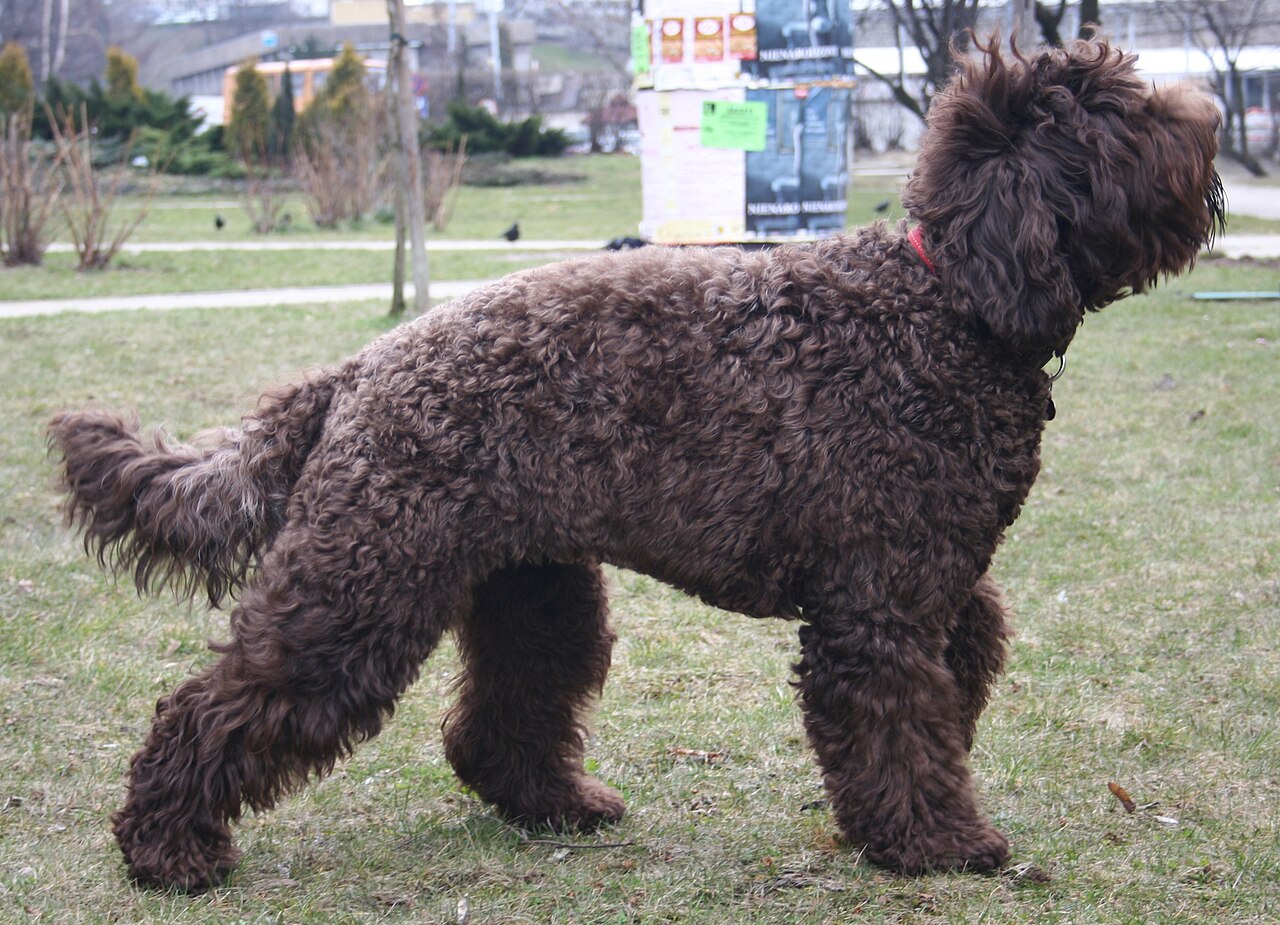
Barbet
The Barbet is the old French water dog, named from barbe for the beard that frames its face, and it stands behind several modern breeds including the poodle and the griffons…
About the Barbet
The Barbet is the old French water dog, named from barbe for the beard that frames its face, and it stands behind several modern breeds including the poodle and the griffons. Paintings from the sixteenth century onwards show dogs of the type pushing through marshes after wildfowl.
The coat is the breed: a dense, woolly, curling fleece that covers the whole animal and needs regular attention if it is not to felt. Dogs stand roughly 58 to 65 cm, in black, brown, fawn or grey, with or without white. A Barbet stud should be athletic underneath all that hair, and running a hand down the ribs and loin will tell you far more than a photograph does.
The breed is recent to the British register and its population here is small. Hip and elbow scores and a current eye certificate are the reasonable requests, and hip dysplasia is the condition continental breeders screen for most consistently. Ask about epilepsy in the family, and about the inbreeding coefficient of the proposed pairing, since a limited founder base makes that figure worth more than usual.
Health & breeding
We check every hip, elbow, eye and DNA result you give us against the Royal Kennel Club’s public records by hand, and we record who checked it and when. The Royal Kennel Club’s public records may not include all the screening a dog has had, so a dog with no Royal Kennel Club record showing is not necessarily untested.
Breed Right’s summary — under The Royal Kennel Club Health Standard
Health tests for the Barbet
This panel is Breed Right’s summary of the testing that matters for the breed under The Royal Kennel Club Health Standard. The Health Standard is the Royal Kennel Club’s guidance for breeders, not a registration rule. It describes tests to ask about — it is not a report on any individual dog. The Royal Kennel Club’s public records may not include all the screening a dog has had, so a dog with no Royal Kennel Club record showing is not necessarily untested.
Best Practice — further tests it recommends
Completing these as well as the Good Practice tests is what the Royal Kennel Club calls Best Practice.
| Test | Type | Scheme | What’s involved |
|---|---|---|---|
| DNA test — prcd-PRA (Progressive Retinal Atrophy) | DNA test | Laboratory | The result printed on the laboratory certificate. |
| Hip score (BVA/KC) | Screening scheme | BVA/KC | Total of both hips, 0–106. Lower is better. |
| Elbow grading (BVA/KC) | Screening scheme | BVA/KC | Grade 0–3. The dog is graded on the worse of the two elbows. |
| Eye testing (BVA/KC/ISDS) | Screening scheme | BVA/KC/ISDS | Result printed on the eye certificate. |
Breed hip median
Breed median 10 (BVA Hip Dysplasia Scheme breed statistics 2025 — 5 years, 39 dogs scored — indicative only, from a small sample). Lower is better. Source · How hip scores work
At stud now
Barbet stud dogs
No Barbet studs are listed right now
When a Barbet on the Royal Kennel Club Breed Register is listed at stud, it will appear here.
Also available
Barbet litters
No Barbet litters are listed right now
Litters appear here as breeders list them. Check back soon, or browse other breeds.