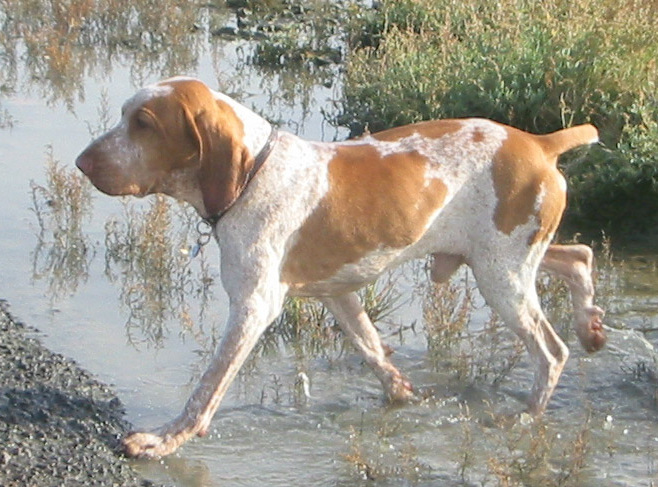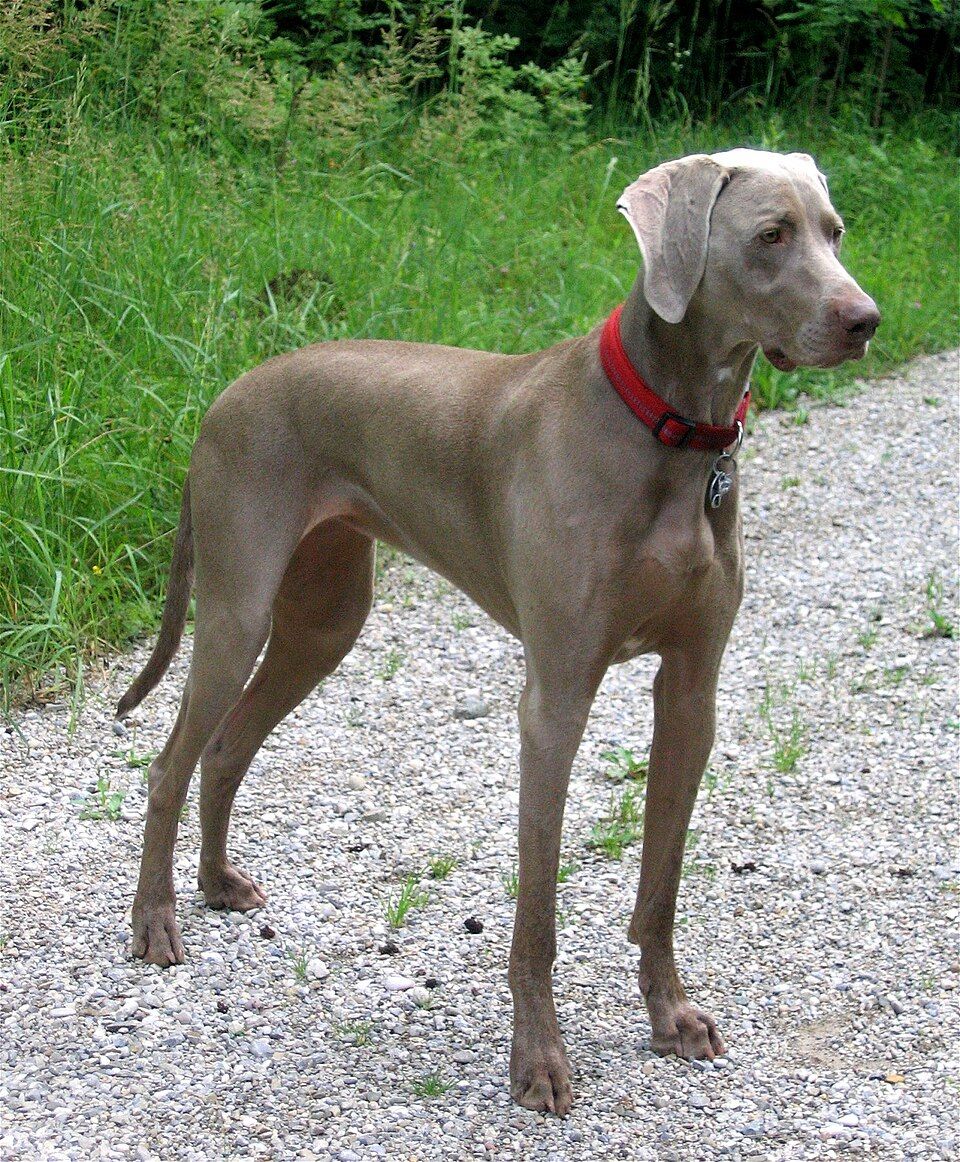
Weimaraner
The Weimaraner, the grey ghost of the Weimar court, was bred by German nobility in the early nineteenth century as a large-game tracking dog and later adapted to birds. Its…
About the Weimaraner
The Weimaraner, the grey ghost of the Weimar court, was bred by German nobility in the early nineteenth century as a large-game tracking dog and later adapted to birds. Its silver-grey coat and amber or blue-grey eyes make it unmistakable, and its temperament is bigger than its looks suggest.
This is a strong-willed, high-drive breed that attaches hard to its people and does not cope well with being left. Weimaraners stand about 59 to 70 cm, with a short, sleek coat; a long-haired variety exists and is registered separately in some countries but shares the same register in the UK. A stud with a stable, confident temperament is the priority, because anxiety and separation problems are common where breeding has been careless.
Screening to ask about includes hip scores and a current eye certificate. Ask too about bloat in the line, which affects this deep-chested breed, and about hypertrophic osteodystrophy in puppies and immune-mediated disease. A DNA test exists for spinal dysraphism, and a stud owner who has used it is being thorough.
Health & breeding
We check every hip, elbow, eye and DNA result you give us against the Royal Kennel Club’s public records by hand, and we record who checked it and when. The Royal Kennel Club’s public records may not include all the screening a dog has had, so a dog with no Royal Kennel Club record showing is not necessarily untested.
Breed Right’s summary — under The Royal Kennel Club Health Standard
Health tests for the Weimaraner
This panel is Breed Right’s summary of the testing that matters for the breed under The Royal Kennel Club Health Standard. The Health Standard is the Royal Kennel Club’s guidance for breeders, not a registration rule. It describes tests to ask about — it is not a report on any individual dog. The Royal Kennel Club’s public records may not include all the screening a dog has had, so a dog with no Royal Kennel Club record showing is not necessarily untested.
Best Practice — further tests it recommends
Completing these as well as the Good Practice tests is what the Royal Kennel Club calls Best Practice.
| Test | Type | Scheme | What’s involved |
|---|---|---|---|
| Hip score (BVA/KC) | Screening scheme | BVA/KC | Total of both hips, 0–106. Lower is better. |
| Elbow grading (BVA/KC) | Screening scheme | BVA/KC | Grade 0–3. The dog is graded on the worse of the two elbows. |
| Eye testing (BVA/KC/ISDS) | Screening scheme | BVA/KC/ISDS | Result printed on the eye certificate. |
Breed hip median
Breed median 9 (BVA Hip Dysplasia Scheme breed statistics 2025 — 5 years, 390 dogs scored). Lower is better. Source · How hip scores work
At stud now
Weimaraner stud dogs
No Weimaraner studs are listed right now
When a Weimaraner on the Royal Kennel Club Breed Register is listed at stud, it will appear here.
Also available
Weimaraner litters
No Weimaraner litters are listed right now
Litters appear here as breeders list them. Check back soon, or browse other breeds.