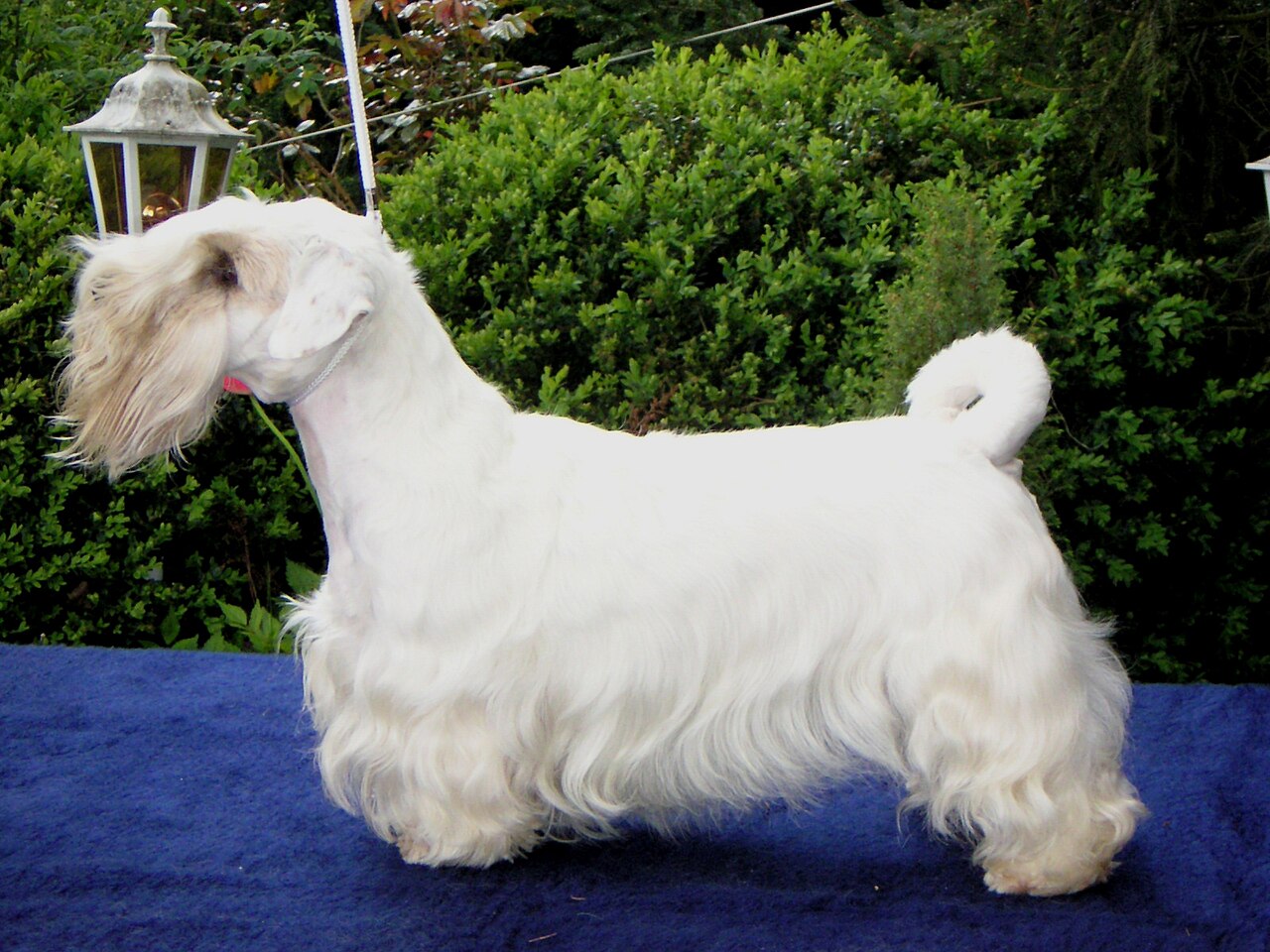
Sealyham Terrier
The Sealyham Terrier was created at Sealyham House in Pembrokeshire by Captain John Edwardes, who wanted a white terrier hard enough to face badger and otter and pale enough that…
About the Sealyham Terrier
The Sealyham Terrier was created at Sealyham House in Pembrokeshire by Captain John Edwardes, who wanted a white terrier hard enough to face badger and otter and pale enough that his hounds would not mistake it for quarry. Fashionable between the wars, it is now among the most vulnerable of all the native breeds.
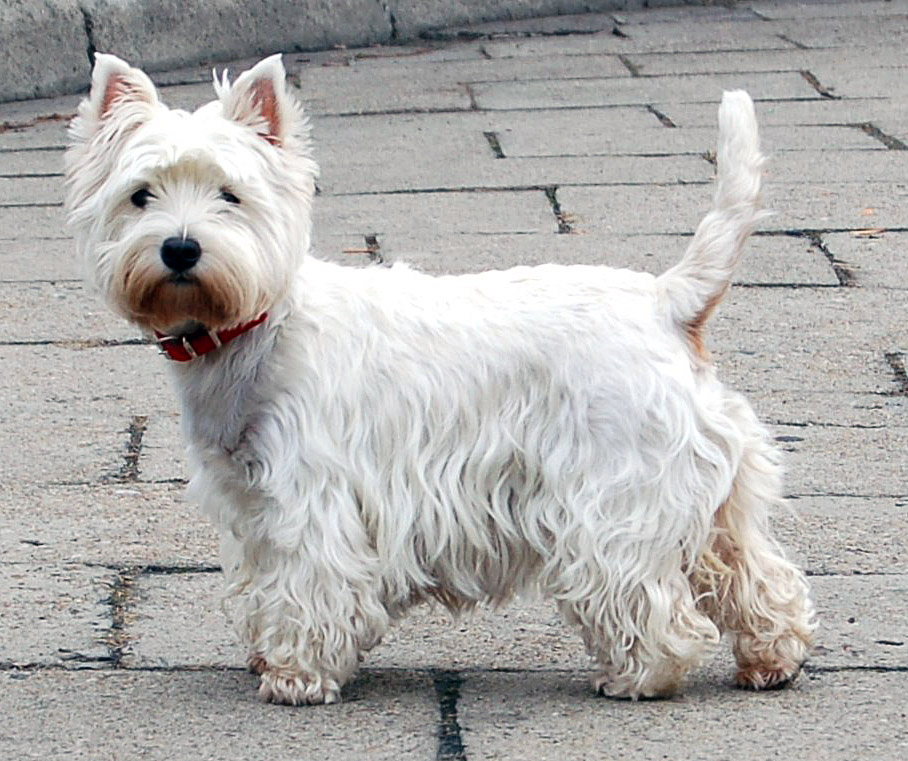
Height is about 31 cm at most, over a long, low, strongly built body of around 8 to 9 kg, with a hard, wiry white coat, often carrying lemon, brown or badger markings on head and ears. The head is large for the size and the jaw powerful. A stud should be substantial without being clumsy, and the coat should feel genuinely harsh rather than soft and profuse.
A DNA test for primary lens luxation exists for this breed and should be produced as a matter of course. An annual eye examination matters separately, because retinal dysplasia has been recorded in Sealyhams and shows on examination rather than on a DNA panel. Add a patella assessment. With so few puppies registered each year, ask how the proposed pairing affects the coefficient of inbreeding, and whether the dog has already sired widely.
Health & breeding
We check every hip, elbow, eye and DNA result you give us against the Royal Kennel Club’s public records by hand, and we record who checked it and when. The Royal Kennel Club’s public records may not include all the screening a dog has had, so a dog with no Royal Kennel Club record showing is not necessarily untested.
Breed Right’s summary — under The Royal Kennel Club Health Standard
Health tests for the Sealyham Terrier
This panel is Breed Right’s summary of the testing that matters for the breed under The Royal Kennel Club Health Standard. The Health Standard is the Royal Kennel Club’s guidance for breeders, not a registration rule. It describes tests to ask about — it is not a report on any individual dog. The Royal Kennel Club’s public records may not include all the screening a dog has had, so a dog with no Royal Kennel Club record showing is not necessarily untested.
Good Practice — the Royal Kennel Club’s minimum before breeding
The tests the Royal Kennel Club says breeders should, at a minimum, complete before breeding.
| Test | Type | Scheme | What’s involved |
|---|---|---|---|
| DNA test — PLL (Primary Lens Luxation) | DNA test | Laboratory | The result printed on the laboratory certificate. |
Best Practice — further tests it recommends
Completing these as well as the Good Practice tests is what the Royal Kennel Club calls Best Practice.
| Test | Type | Scheme | What’s involved |
|---|---|---|---|
| Eye testing (BVA/KC/ISDS) | Screening scheme | BVA/KC/ISDS | Result printed on the eye certificate. |
Breed hip median
Too few dogs of this breed have been scored (BVA Hip Dysplasia Scheme breed statistics 2025 — 15 years: 1 dog) to give a meaningful breed median. Source · How hip scores work
At stud now
Sealyham Terrier stud dogs
No Sealyham Terrier studs are listed right now
When a Sealyham Terrier on the Royal Kennel Club Breed Register is listed at stud, it will appear here.
Also available
Sealyham Terrier litters
No Sealyham Terrier litters are listed right now
Litters appear here as breeders list them. Check back soon, or browse other breeds.