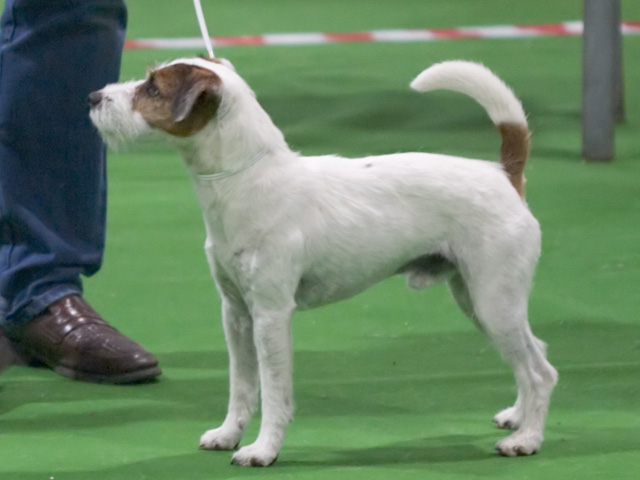
Parson Russell Terrier
The Parson Russell Terrier is the taller, squarer dog bred by the Reverend John Russell himself to run with the hunt in Devon and go to ground when the fox did, and it was…
About the Parson Russell Terrier
The Parson Russell Terrier is the taller, squarer dog bred by the Reverend John Russell himself to run with the hunt in Devon and go to ground when the fox did, and it was recognised by the Royal Kennel Club in 1990, more than a quarter of a century before the shorter-legged Jack Russell. The two are separate breeds and are not interbred on the register.
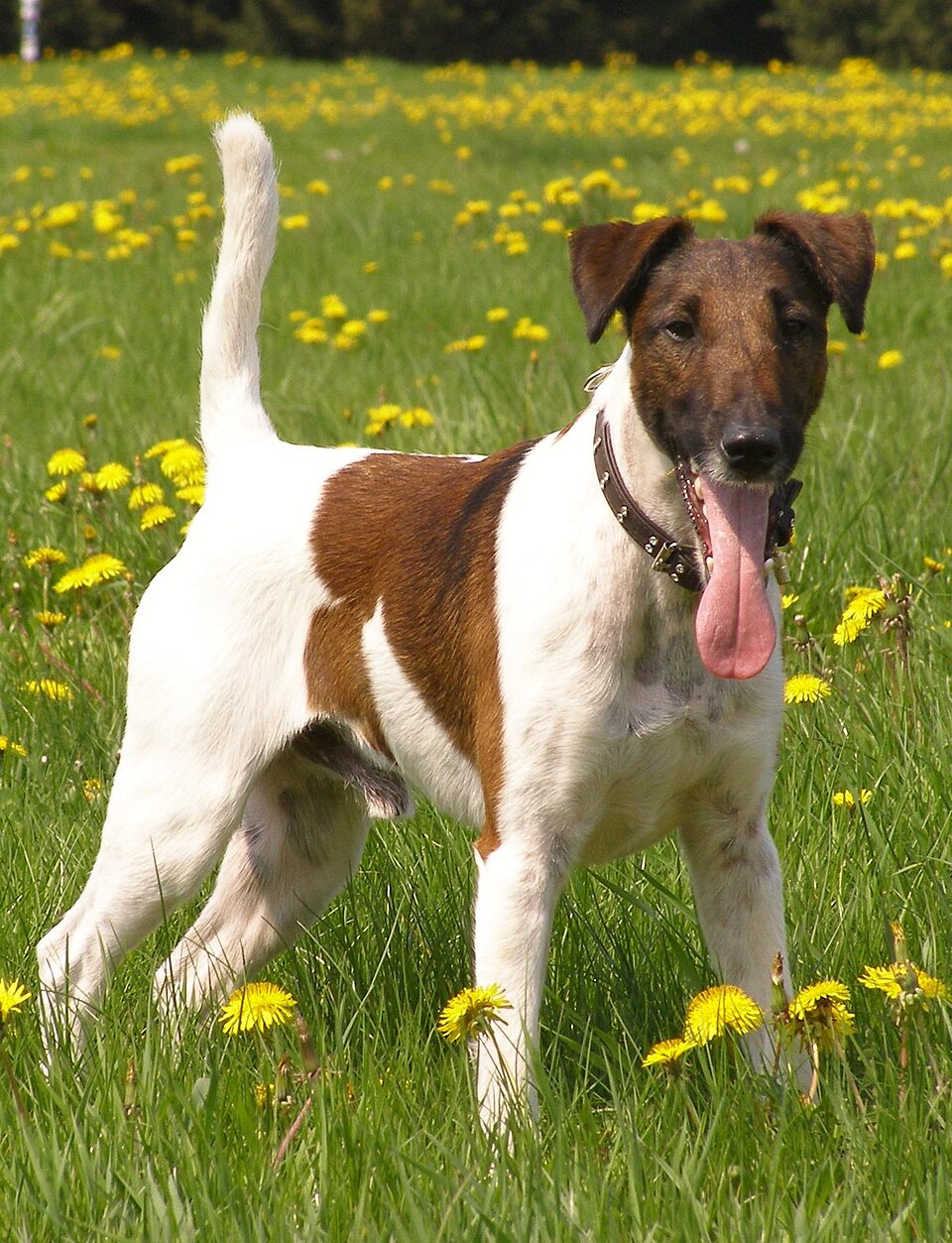
Parsons stand about 33 to 36 cm, predominantly white with tan, lemon or black markings, in smooth, broken or rough coat. The breed is athletic, confident and intelligent, and needs real exercise and something to do; a stud with a bold, even temperament that is easy with other dogs is a good choice, as sharpness can pass down readily in working terriers.
Ask a Parson stud owner for DNA results for primary lens luxation and for spinocerebellar ataxia, both established tests in the breed, and for a BAER hearing test. A current eye certificate and patella examination should be routine. Ask about hip scores, and about Legg-Calvé-Perthes disease in the dog's relatives.
Health & breeding
We check every hip, elbow, eye and DNA result you give us against the Royal Kennel Club’s public records by hand, and we record who checked it and when. The Royal Kennel Club’s public records may not include all the screening a dog has had, so a dog with no Royal Kennel Club record showing is not necessarily untested.
Breed Right’s summary — under The Royal Kennel Club Health Standard
Health tests for the Parson Russell Terrier
This panel is Breed Right’s summary of the testing that matters for the breed under The Royal Kennel Club Health Standard. The Health Standard is the Royal Kennel Club’s guidance for breeders, not a registration rule. It describes tests to ask about — it is not a report on any individual dog. The Royal Kennel Club’s public records may not include all the screening a dog has had, so a dog with no Royal Kennel Club record showing is not necessarily untested.
Good Practice — the Royal Kennel Club’s minimum before breeding
The tests the Royal Kennel Club says breeders should, at a minimum, complete before breeding.
| Test | Type | Scheme | What’s involved |
|---|---|---|---|
| DNA test — LOA (Late-Onset Ataxia) | DNA test | Laboratory | The result printed on the laboratory certificate. |
| DNA test — PLL (Primary Lens Luxation) | DNA test | Laboratory | The result printed on the laboratory certificate. |
Best Practice — further tests it recommends
Completing these as well as the Good Practice tests is what the Royal Kennel Club calls Best Practice.
| Test | Type | Scheme | What’s involved |
|---|---|---|---|
| DNA test — SCA (Spinocerebellar Ataxia) | DNA test | Laboratory | The result printed on the laboratory certificate. |
| Eye testing (BVA/KC/ISDS) | Screening scheme | BVA/KC/ISDS | Result printed on the eye certificate. |
At stud now
Parson Russell Terrier stud dogs
No Parson Russell Terrier studs are listed right now
When a Parson Russell Terrier on the Royal Kennel Club Breed Register is listed at stud, it will appear here.
Also available
Parson Russell Terrier litters
No Parson Russell Terrier litters are listed right now
Litters appear here as breeders list them. Check back soon, or browse other breeds.