Lakeland Terrier
The Lakeland Terrier worked with the fell packs of Cumberland and Westmorland, running with hounds over ground no horse could cross and then squeezing into rock borrans after the…
About the Lakeland Terrier
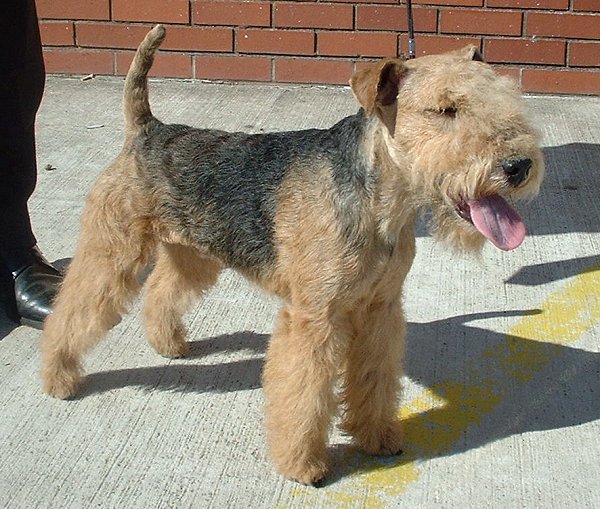
The Lakeland Terrier worked with the fell packs of Cumberland and Westmorland, running with hounds over ground no horse could cross and then squeezing into rock borrans after the fox. Narrowness and stamina were the whole specification, and the breed retains both underneath its show trim.
Dogs stand about 37 cm and weigh around 7.7 kg, with a dense, harsh double coat in black and tan, blue and tan, red, wheaten, liver, blue or black, and a rectangular, well-furnished head. A Lakeland stud should be spannable behind the shoulders and hard in condition. Boldness and friendliness with people are what the standard asks for, and shyness is out of character and best avoided at stud.
Primary lens luxation occurs in this breed, there is a DNA test for it, and an owner should be able to produce the result, because the condition is painful and can cost a dog its sight in middle age. An annual eye examination is still worth doing alongside the DNA result. Ask about Legg-Calve-Perthes disease and about a patella assessment, and ask whether the relatives have had skin or ear trouble, which harsh-coated terriers are prone to.
Health & breeding
We check every hip, elbow, eye and DNA result you give us against the Royal Kennel Club’s public records by hand, and we record who checked it and when. The Royal Kennel Club’s public records may not include all the screening a dog has had, so a dog with no Royal Kennel Club record showing is not necessarily untested.
Breed Right’s summary — under The Royal Kennel Club Health Standard
Health tests for the Lakeland Terrier
This panel is Breed Right’s summary of the testing that matters for the breed under The Royal Kennel Club Health Standard. The Health Standard is the Royal Kennel Club’s guidance for breeders, not a registration rule. It describes tests to ask about — it is not a report on any individual dog. The Royal Kennel Club’s public records may not include all the screening a dog has had, so a dog with no Royal Kennel Club record showing is not necessarily untested.
Best Practice — further tests it recommends
Completing these as well as the Good Practice tests is what the Royal Kennel Club calls Best Practice.
| Test | Type | Scheme | What’s involved |
|---|---|---|---|
| Eye testing (BVA/KC/ISDS) | Screening scheme | BVA/KC/ISDS | Result printed on the eye certificate. |
At stud now
Lakeland Terrier stud dogs
No Lakeland Terrier studs are listed right now
When a Lakeland Terrier on the Royal Kennel Club Breed Register is listed at stud, it will appear here.
Also available
Lakeland Terrier litters
No Lakeland Terrier litters are listed right now
Litters appear here as breeders list them. Check back soon, or browse other breeds.