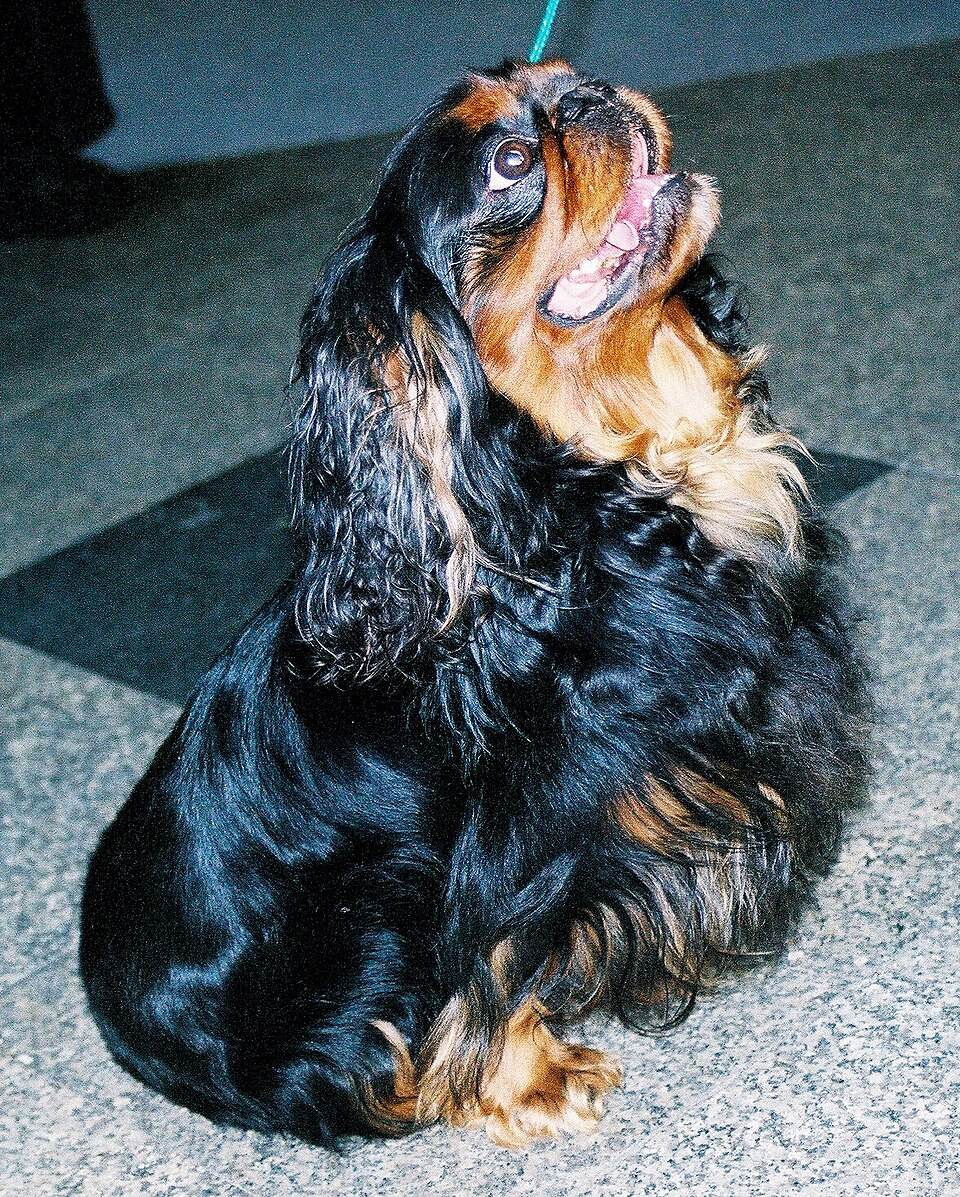
King Charles Spaniel
This is the older of Britain's two toy spaniels, the dog that shared the Stuart court with the king it is named after and that was bred over the following centuries towards the…
About the King Charles Spaniel
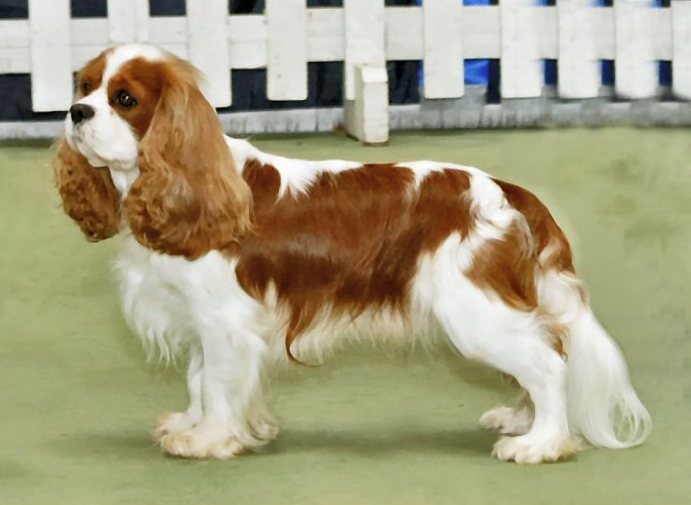
This is the older of Britain's two toy spaniels, the dog that shared the Stuart court with the king it is named after and that was bred over the following centuries towards the domed head and short face it has today. When enthusiasts set out in the 1920s to recreate the longer-nosed spaniel of the old portraits, they made the Cavalier as a separate breed, leaving the King Charles Spaniel as the original.
Weight runs to about 3.6 to 6.3 kg, noticeably smaller than the Cavalier, with a domed skull, a short turned-up muzzle, large dark eyes and long, low-set, heavily feathered ears. The four colours are Blenheim, tricolour, ruby and black and tan. It is a vulnerable native breed with few registrations each year, and the temperament is quieter and more reserved than its better-known relative. Look for a stud with as much muzzle as the standard allows, open nostrils and easy breathing.
Ask for a recent cardiac examination, because mitral valve disease is a serious concern in the toy spaniels. Ask about MRI screening for Chiari-like malformation and syringomyelia, and about a current eye certificate, since eyes of this size and prominence are exposed to injury and ulceration. A patella examination is worth adding, and so is a question about the coefficient of inbreeding in a small population.
Health & breeding
We check every hip, elbow, eye and DNA result you give us against the Royal Kennel Club’s public records by hand, and we record who checked it and when. The Royal Kennel Club’s public records may not include all the screening a dog has had, so a dog with no Royal Kennel Club record showing is not necessarily untested.
Breed Right’s summary — under The Royal Kennel Club Health Standard
Health tests for the King Charles Spaniel
This panel is Breed Right’s summary of the testing that matters for the breed under The Royal Kennel Club Health Standard. The Health Standard is the Royal Kennel Club’s guidance for breeders, not a registration rule. It describes tests to ask about — it is not a report on any individual dog. The Royal Kennel Club’s public records may not include all the screening a dog has had, so a dog with no Royal Kennel Club record showing is not necessarily untested.
Best Practice — further tests it recommends
Completing these as well as the Good Practice tests is what the Royal Kennel Club calls Best Practice.
| Test | Type | Scheme | What’s involved |
|---|---|---|---|
| Eye testing (BVA/KC/ISDS) | Screening scheme | BVA/KC/ISDS | Result printed on the eye certificate. |
| Breathing grading — BOAS (RKC Respiratory Function Grading Scheme) | Screening scheme | RKC | Grade 0–3; 0 is clinically unaffected. |
Breed hip median
Too few dogs of this breed have been scored (BVA Hip Dysplasia Scheme breed statistics 2025 — 5 years: 1 dog) to give a meaningful breed median. Source · How hip scores work
At stud now
King Charles Spaniel stud dogs
No King Charles Spaniel studs are listed right now
When a King Charles Spaniel on the Royal Kennel Club Breed Register is listed at stud, it will appear here.
Also available
King Charles Spaniel litters
No King Charles Spaniel litters are listed right now
Litters appear here as breeders list them. Check back soon, or browse other breeds.