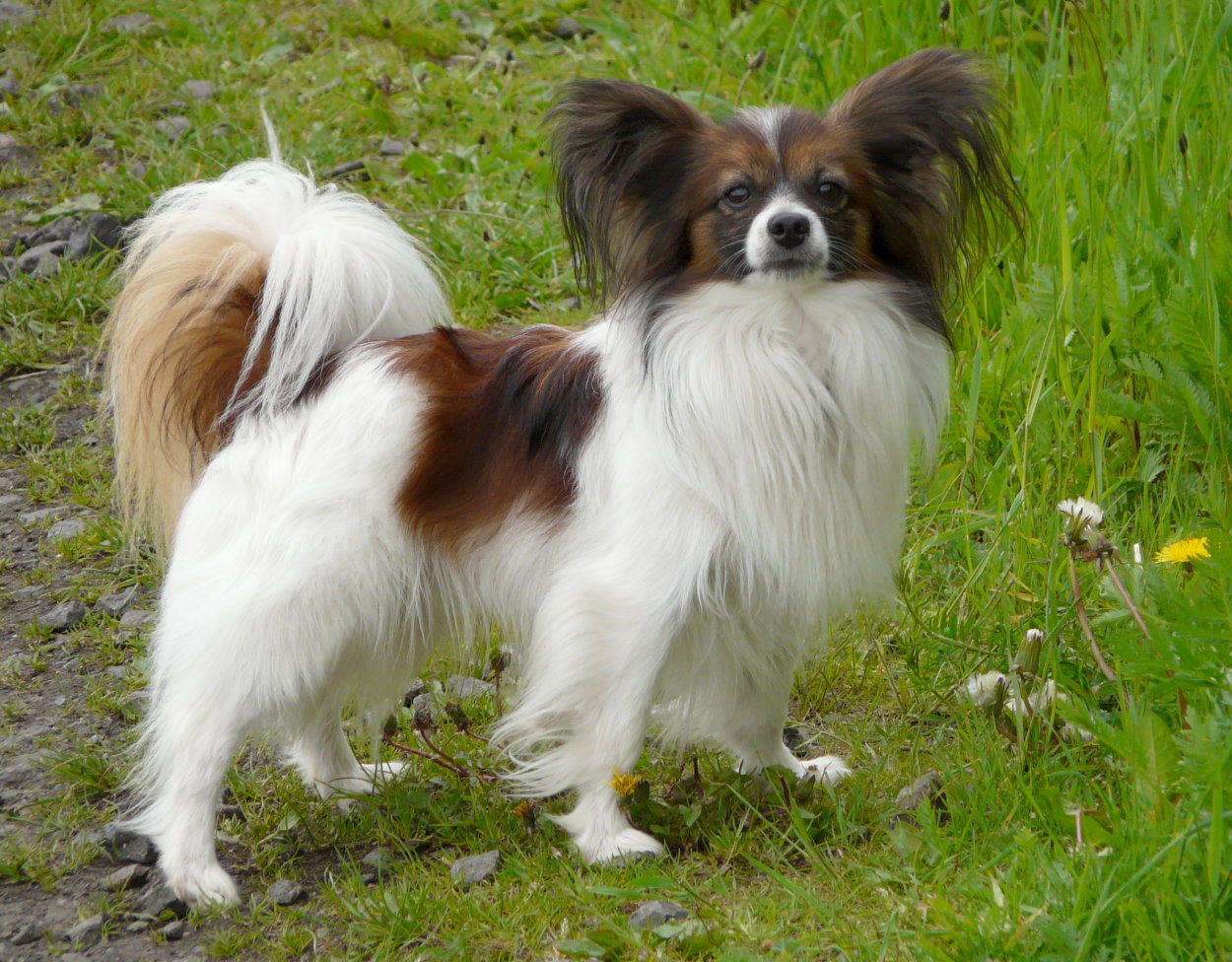
Papillon
Painted repeatedly by European court artists from the Renaissance onwards, the small continental toy spaniel became the Papillon when breeders fixed the erect, fringed ear that…
About the Papillon
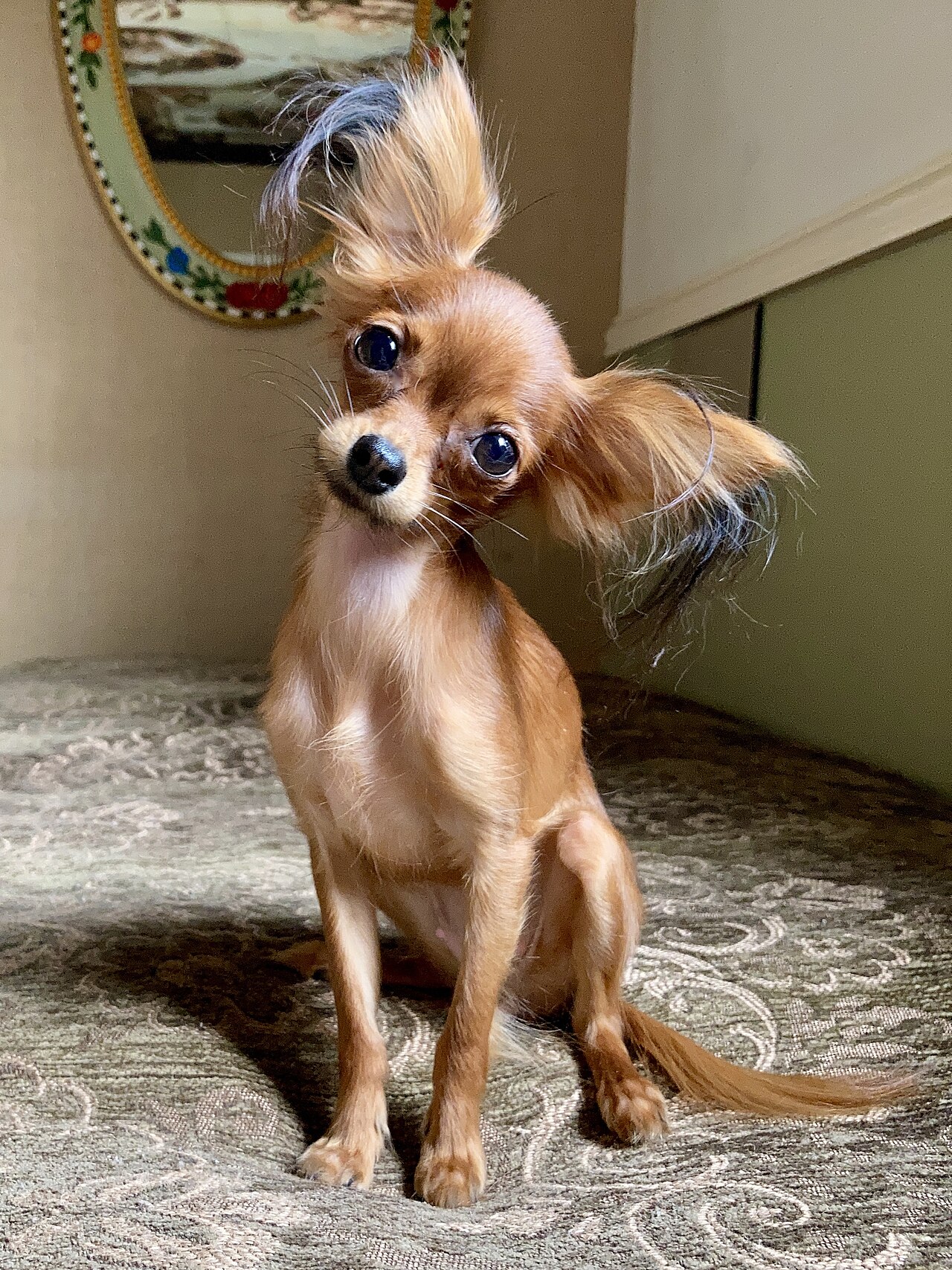
Painted repeatedly by European court artists from the Renaissance onwards, the small continental toy spaniel became the Papillon when breeders fixed the erect, fringed ear that gives the breed its name, the French word for butterfly. The drop-eared form, called the Phalene or moth, is the older of the two and is registered here within the same breed.
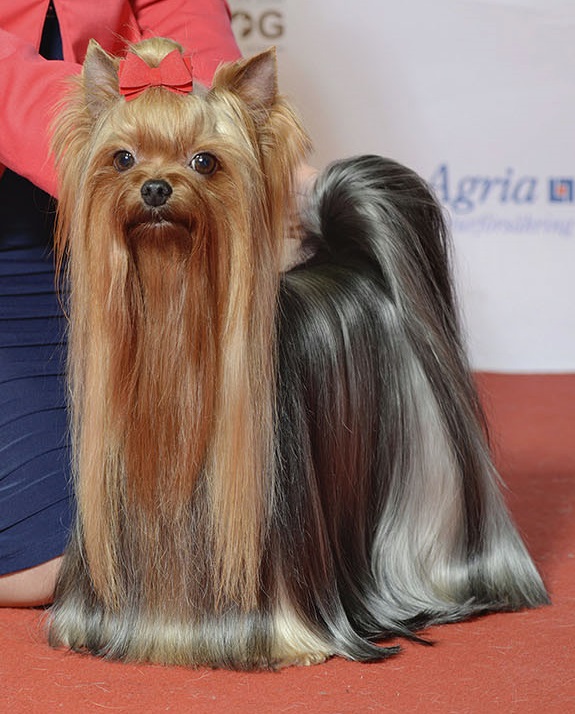
Height sits around 20 to 28 cm, fine-boned but not fragile, with a long, silky, single coat, no undercoat, and heavy fringing on the ears, chest, legs and tail. White with patches of any colour is the pattern, and a symmetrical facial mask is prized. This is one of the most trainable of all the toy breeds and does genuinely well in agility and obedience; a stud should be lively and outgoing, and steady enough to cope with a strange environment.
Ask for a patella examination, the commonest orthopaedic issue in the breed, and for a current eye certificate. The breed clubs use DNA testing for progressive retinal atrophy and for neuroaxonal dystrophy, so ask which tests the owner has run and see the certificates. Dental disease is a serious matter in a jaw this narrow, so look in the dog's mouth. Ask about seizures and about longevity, which is generally good in this breed.
Health & breeding
We check every hip, elbow, eye and DNA result you give us against the Royal Kennel Club’s public records by hand, and we record who checked it and when. The Royal Kennel Club’s public records may not include all the screening a dog has had, so a dog with no Royal Kennel Club record showing is not necessarily untested.
Breed Right’s summary — under The Royal Kennel Club Health Standard
Health tests for the Papillon
This panel is Breed Right’s summary of the testing that matters for the breed under The Royal Kennel Club Health Standard. The Health Standard is the Royal Kennel Club’s guidance for breeders, not a registration rule. It describes tests to ask about — it is not a report on any individual dog. The Royal Kennel Club’s public records may not include all the screening a dog has had, so a dog with no Royal Kennel Club record showing is not necessarily untested.
Good Practice — the Royal Kennel Club’s minimum before breeding
The tests the Royal Kennel Club says breeders should, at a minimum, complete before breeding.
| Test | Type | Scheme | What’s involved |
|---|---|---|---|
| DNA test — Pap-PRA1 (Progressive Retinal Atrophy, Papillon) | DNA test | Laboratory | The result printed on the laboratory certificate. |
Best Practice — further tests it recommends
Completing these as well as the Good Practice tests is what the Royal Kennel Club calls Best Practice.
| Test | Type | Scheme | What’s involved |
|---|---|---|---|
| DNA test — NAD (Neuroaxonal Dystrophy, PLA2G6) | DNA test | Laboratory | The result printed on the laboratory certificate. |
| DNA test — vWD1 (von Willebrand Disease type 1) | DNA test | Laboratory | The result printed on the laboratory certificate. |
| Eye testing (BVA/KC/ISDS) | Screening scheme | BVA/KC/ISDS | Result printed on the eye certificate. |
Breed hip median
Too few dogs of this breed have been scored (BVA Hip Dysplasia Scheme breed statistics 2025 — 5 years: 1 dog) to give a meaningful breed median. Source · How hip scores work
At stud now
Papillon stud dogs
No Papillon studs are listed right now
When a Papillon on the Royal Kennel Club Breed Register is listed at stud, it will appear here.
Also available
Papillon litters
No Papillon litters are listed right now
Litters appear here as breeders list them. Check back soon, or browse other breeds.