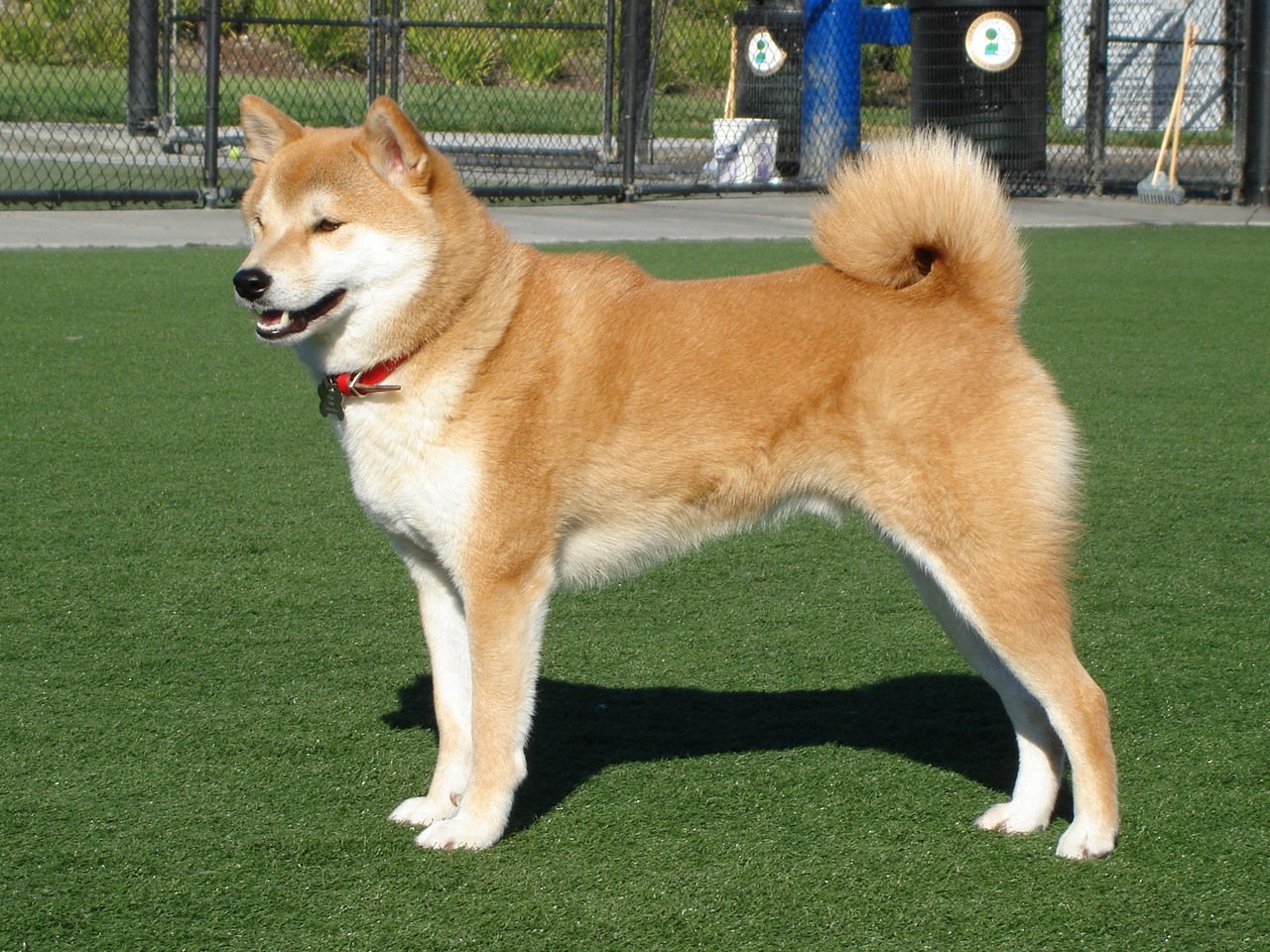
Japanese Shiba Inu
The Japanese Shiba Inu is the smallest of Japan's six native spitz breeds and was kept in the mountains of central Honshu to flush birds and small game out of undergrowth. It came…
About the Japanese Shiba Inu
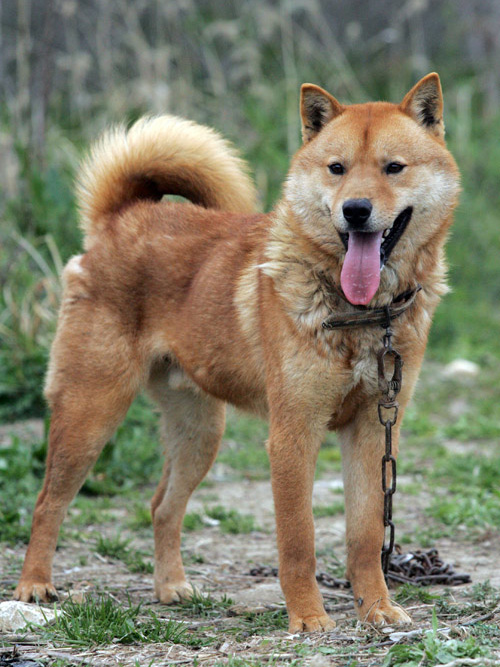
The Japanese Shiba Inu is the smallest of Japan's six native spitz breeds and was kept in the mountains of central Honshu to flush birds and small game out of undergrowth. It came close to disappearing during and after the Second World War and was rebuilt from three surviving regional strains, which is why type is so consistent today.
Dogs stand about 39.5 cm, compact and well muscled, with a stiff, straight outer coat over a soft undercoat, in red, black and tan, or sesame, always with pale urajiro markings underneath. The breed is clean, quiet in the house and famously self-possessed, and a Shiba will not pretend to be pleased to see anybody. A stud should tolerate handling calmly, since resistance to restraint is a common trait and one worth breeding away from.
The DNA test for GM1 gangliosidosis, a fatal storage disease of young dogs, is established here and should be produced without argument. A patella assessment matters in a small, athletic breed, and an annual eye examination is important because glaucoma and progressive retinal atrophy are both recorded. Hip scoring is worth requesting. Allergic skin disease is common, so ask what the stud's skin has been like throughout its life.
Health & breeding
We check every hip, elbow, eye and DNA result you give us against the Royal Kennel Club’s public records by hand, and we record who checked it and when. The Royal Kennel Club’s public records may not include all the screening a dog has had, so a dog with no Royal Kennel Club record showing is not necessarily untested.
Breed Right’s summary — under The Royal Kennel Club Health Standard
Health tests for the Japanese Shiba Inu
This panel is Breed Right’s summary of the testing that matters for the breed under The Royal Kennel Club Health Standard. The Health Standard is the Royal Kennel Club’s guidance for breeders, not a registration rule. It describes tests to ask about — it is not a report on any individual dog. The Royal Kennel Club’s public records may not include all the screening a dog has had, so a dog with no Royal Kennel Club record showing is not necessarily untested.
Good Practice — the Royal Kennel Club’s minimum before breeding
The tests the Royal Kennel Club says breeders should, at a minimum, complete before breeding.
| Test | Type | Scheme | What’s involved |
|---|---|---|---|
| Eye testing (BVA/KC/ISDS) | Screening scheme | BVA/KC/ISDS | Result printed on the eye certificate. |
| Gonioscopy (BVA/KC/ISDS) | Screening scheme | BVA/KC/ISDS | Grade 1–3 on the certificate; 1 is normal or mild. |
Best Practice — further tests it recommends
Completing these as well as the Good Practice tests is what the Royal Kennel Club calls Best Practice.
| Test | Type | Scheme | What’s involved |
|---|---|---|---|
| DNA test — GM1_2 (GM1 Gangliosidosis, Shiba Inu) | DNA test | Laboratory | The result printed on the laboratory certificate. |
| DNA test — GM2_2 (GM2 Gangliosidosis type II, Shiba Inu) | DNA test | Laboratory | The result printed on the laboratory certificate. |
| Hip score (BVA/KC) | Screening scheme | BVA/KC | Total of both hips, 0–106. Lower is better. |
Breed hip median
Breed median 12 (BVA Hip Dysplasia Scheme breed statistics 2025 — 5 years, 9 dogs scored — indicative only, from a small sample). Lower is better. Source · How hip scores work
At stud now
Japanese Shiba Inu stud dogs
No Japanese Shiba Inu studs are listed right now
When a Japanese Shiba Inu on the Royal Kennel Club Breed Register is listed at stud, it will appear here.
Also available
Japanese Shiba Inu litters
No Japanese Shiba Inu litters are listed right now
Litters appear here as breeders list them. Check back soon, or browse other breeds.