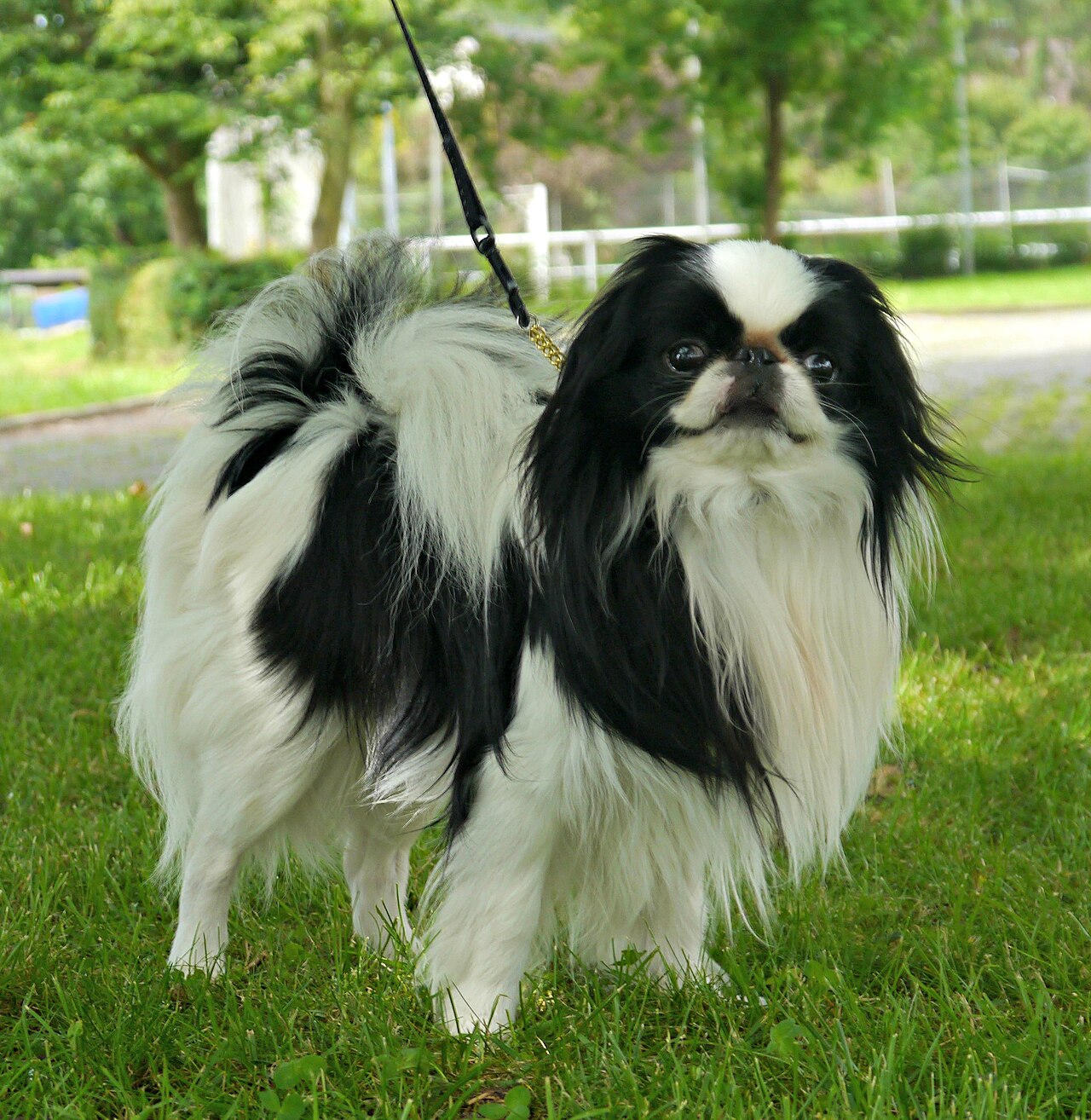
Japanese Chin
Presented as gifts between Chinese and Japanese courts, the Japanese Chin spent centuries as an aristocratic companion and was almost unknown in the West until Commodore Perry's…
About the Japanese Chin
Presented as gifts between Chinese and Japanese courts, the Japanese Chin spent centuries as an aristocratic companion and was almost unknown in the West until Commodore Perry's expedition brought dogs back in the 1850s. Its manner is unlike other toy breeds: light, self-contained and often described as cat-like, right down to a habit of climbing onto furniture and washing its face with a paw.
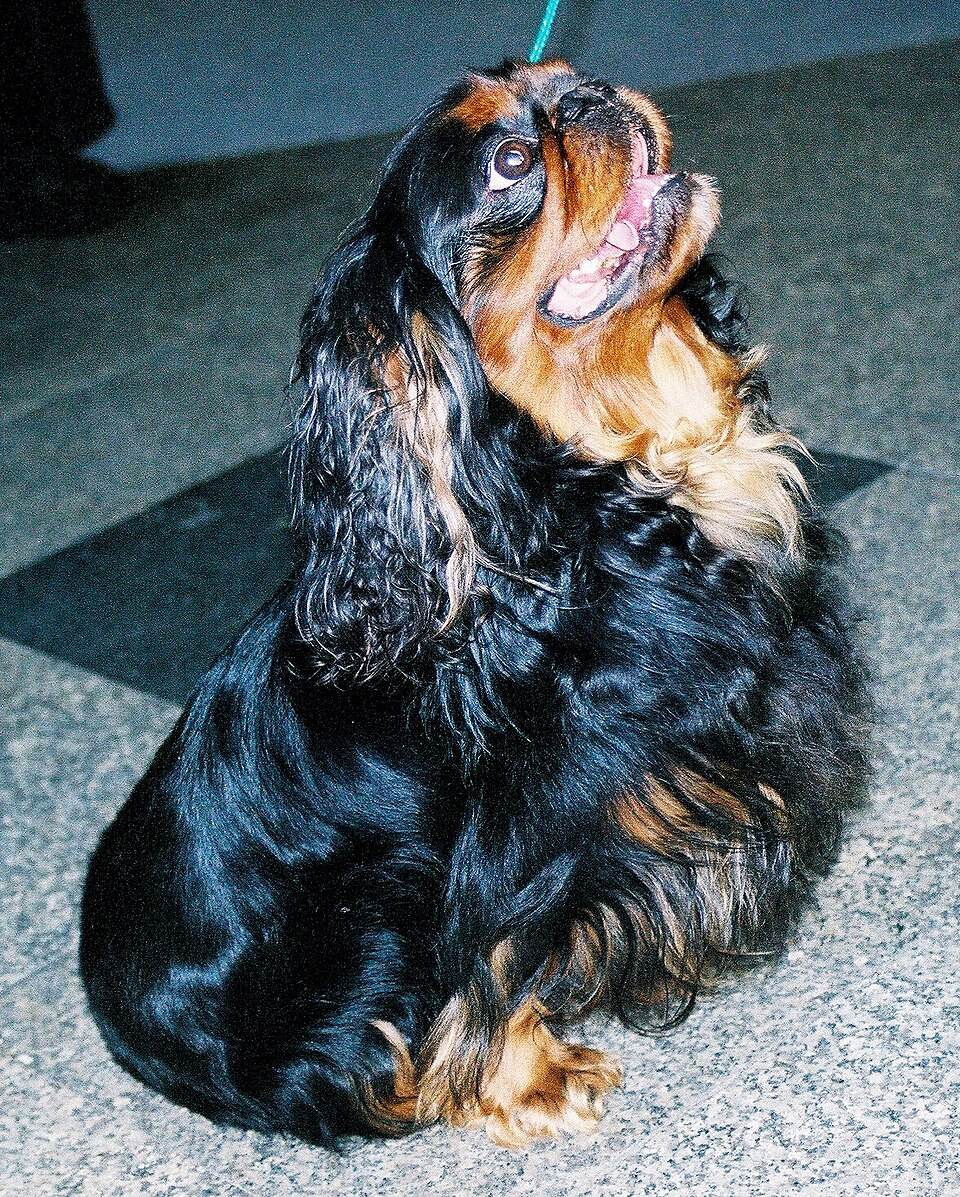
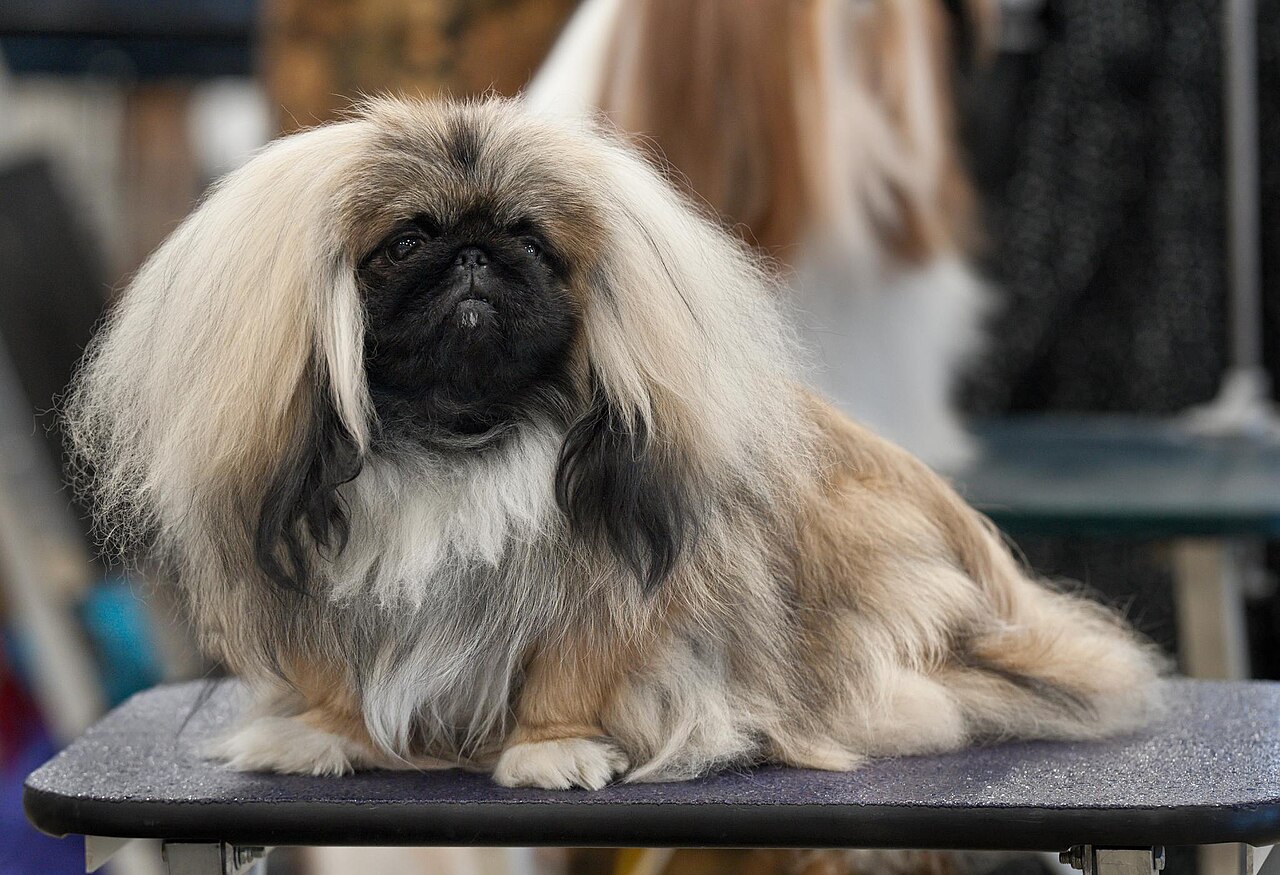
The dog is small and square at about 25 cm, with a broad flat face, large wide-set dark eyes and a profuse silky coat in black and white or red and white, with heavy feathering on the ears, tail and legs. The gait is high-stepping and proud. A stud should have a muzzle with visible length, open nostrils and quiet breathing, and eyes that sit well within the skull rather than prominently outside it.
Ask for a current eye certificate, since corneal ulceration and cataract both occur in a face of this shape, and for a patella examination. Heart murmurs are worth checking with a cardiac examination. The breed has an established DNA test for the neurological condition GM2 gangliosidosis, so ask whether the dog has been tested. Ask too about breathing after exercise, heat tolerance and whelping history in the line.
Health & breeding
We check every hip, elbow, eye and DNA result you give us against the Royal Kennel Club’s public records by hand, and we record who checked it and when. The Royal Kennel Club’s public records may not include all the screening a dog has had, so a dog with no Royal Kennel Club record showing is not necessarily untested.
Breed Right’s summary — under The Royal Kennel Club Health Standard
Health tests for the Japanese Chin
This panel is Breed Right’s summary of the testing that matters for the breed under The Royal Kennel Club Health Standard. The Health Standard is the Royal Kennel Club’s guidance for breeders, not a registration rule. It describes tests to ask about — it is not a report on any individual dog. The Royal Kennel Club’s public records may not include all the screening a dog has had, so a dog with no Royal Kennel Club record showing is not necessarily untested.
Best Practice — further tests it recommends
Completing these as well as the Good Practice tests is what the Royal Kennel Club calls Best Practice.
| Test | Type | Scheme | What’s involved |
|---|---|---|---|
| Eye testing (BVA/KC/ISDS) | Screening scheme | BVA/KC/ISDS | Result printed on the eye certificate. |
| Breathing grading — BOAS (RKC Respiratory Function Grading Scheme) | Screening scheme | RKC | Grade 0–3; 0 is clinically unaffected. |
At stud now
Japanese Chin stud dogs
No Japanese Chin studs are listed right now
When a Japanese Chin on the Royal Kennel Club Breed Register is listed at stud, it will appear here.
Also available
Japanese Chin litters
No Japanese Chin litters are listed right now
Litters appear here as breeders list them. Check back soon, or browse other breeds.