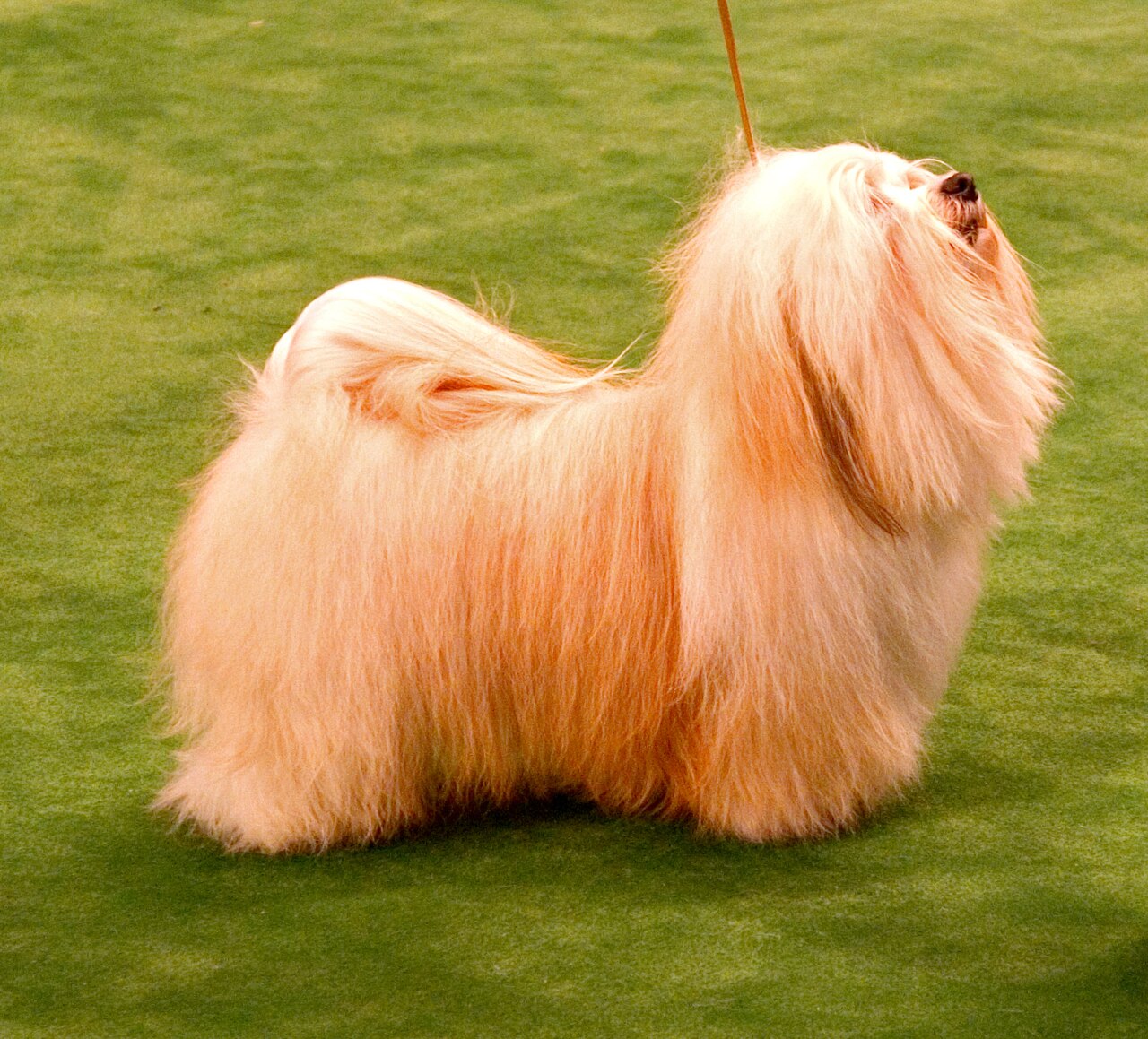
Havanese
Cuba's only native breed grew out of the bichon-type dogs brought by Spanish settlers, and the Havanese became the household companion of the Havana merchant class before it…
About the Havanese
Cuba's only native breed grew out of the bichon-type dogs brought by Spanish settlers, and the Havanese became the household companion of the Havana merchant class before it followed Cuban families abroad in the twentieth century. It is a companion dog with no working past at all, and that is the point of it.
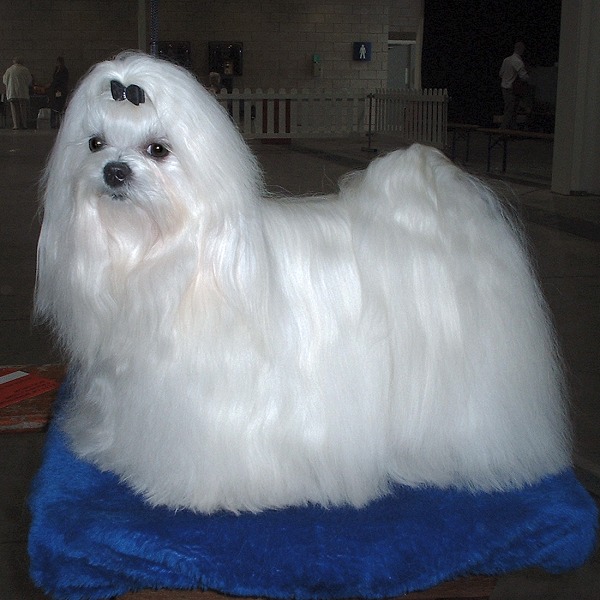
Height sits at about 23 to 27 cm, slightly longer than tall, under a long, soft, wavy double coat that comes in every colour and is sometimes shown corded. Movement is springy and distinctive, with a lively, high-stepping front. The breed is more trainable than most toys and genuinely social; a stud should be outgoing, sound on its feet and free of the nervousness that occasionally appears where dogs have been bred for looks alone.
Ask the owner for a patella examination and for hip scores, since both hip dysplasia and Legg-Calvé-Perthes disease have been recorded in the breed. A current eye certificate matters, as cataract and progressive retinal atrophy occur. Ask about deafness and whether BAER testing has been used in the line. Chondrodysplasia and heart murmurs are reasonable questions, and so is what the breed club currently advises, because the guidance for this breed has developed quickly.
Health & breeding
We check every hip, elbow, eye and DNA result you give us against the Royal Kennel Club’s public records by hand, and we record who checked it and when. The Royal Kennel Club’s public records may not include all the screening a dog has had, so a dog with no Royal Kennel Club record showing is not necessarily untested.
Breed Right’s summary — under The Royal Kennel Club Health Standard
Health tests for the Havanese
This panel is Breed Right’s summary of the testing that matters for the breed under The Royal Kennel Club Health Standard. The Health Standard is the Royal Kennel Club’s guidance for breeders, not a registration rule. It describes tests to ask about — it is not a report on any individual dog. The Royal Kennel Club’s public records may not include all the screening a dog has had, so a dog with no Royal Kennel Club record showing is not necessarily untested.
Good Practice — the Royal Kennel Club’s minimum before breeding
The tests the Royal Kennel Club says breeders should, at a minimum, complete before breeding.
| Test | Type | Scheme | What’s involved |
|---|---|---|---|
| Eye testing (BVA/KC/ISDS) | Screening scheme | BVA/KC/ISDS | Result printed on the eye certificate. |
Best Practice — further tests it recommends
Completing these as well as the Good Practice tests is what the Royal Kennel Club calls Best Practice.
| Test | Type | Scheme | What’s involved |
|---|---|---|---|
| Elbow grading (BVA/KC) | Screening scheme | BVA/KC | Grade 0–3. The dog is graded on the worse of the two elbows. |
Breed club schemes listed in the Health Standard
Run by the breed club, not the Royal Kennel Club, which does not record their results. The Standard lists them as schemes to be aware of.
| Test | Type | Scheme | What’s involved |
|---|---|---|---|
| Patella examination (breed club scheme) | Other | Breed club | Putnam grade 0–4 per stifle. |
Breed hip median
Breed median 9 (BVA Hip Dysplasia Scheme breed statistics 2025 — 5 years, 15 dogs scored — indicative only, from a small sample). Lower is better. Source · How hip scores work
At stud now
Havanese stud dogs
No Havanese studs are listed right now
When a Havanese on the Royal Kennel Club Breed Register is listed at stud, it will appear here.
Also available
Havanese litters
No Havanese litters are listed right now
Litters appear here as breeders list them. Check back soon, or browse other breeds.