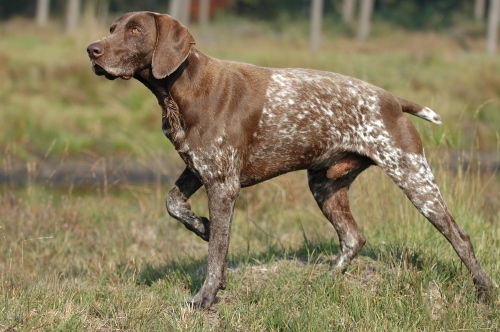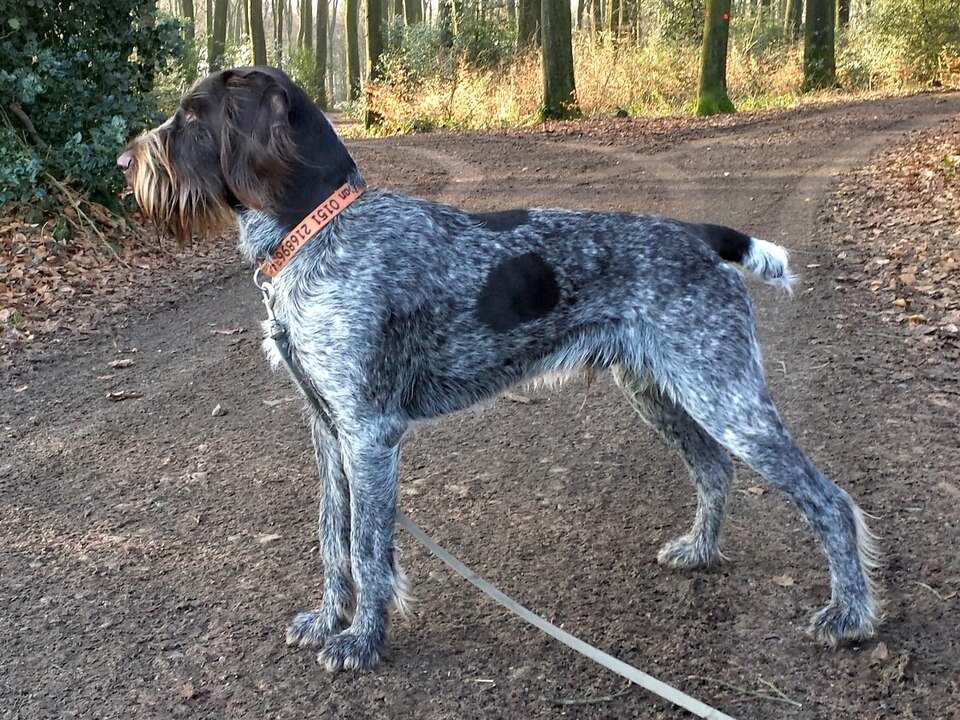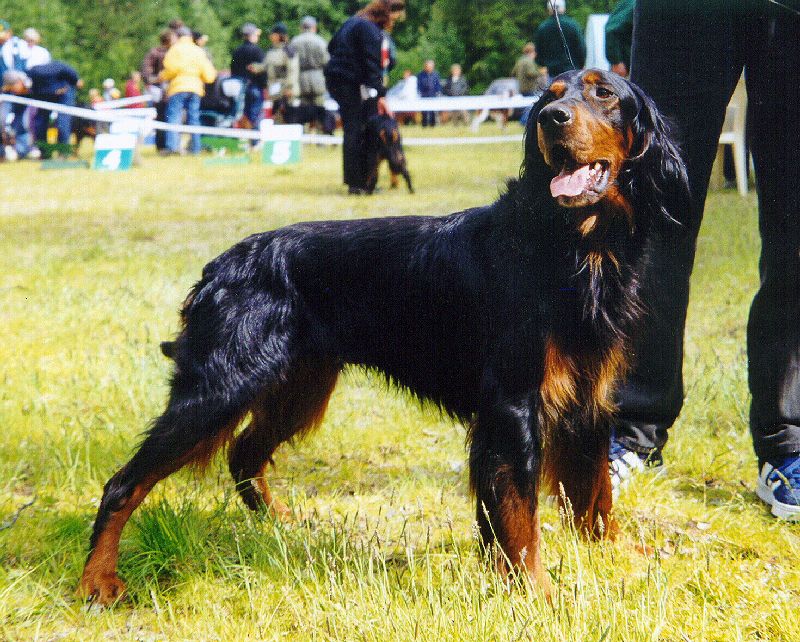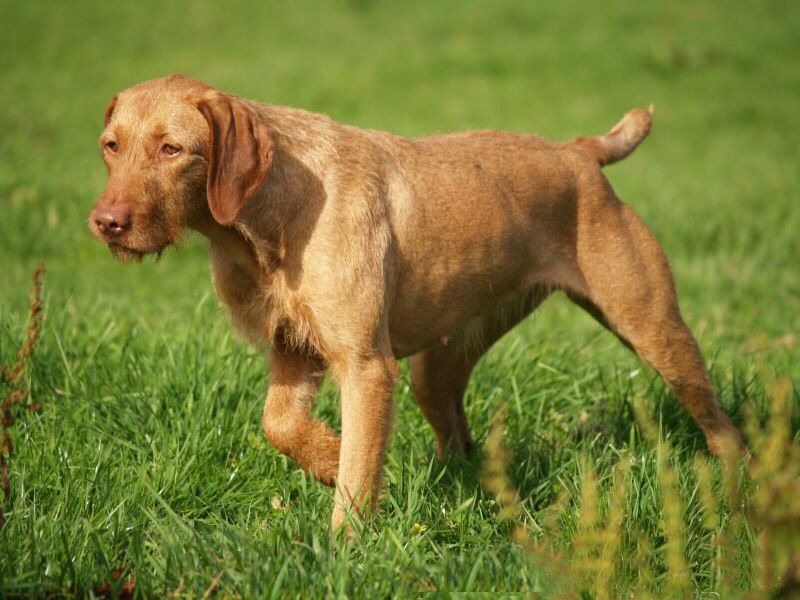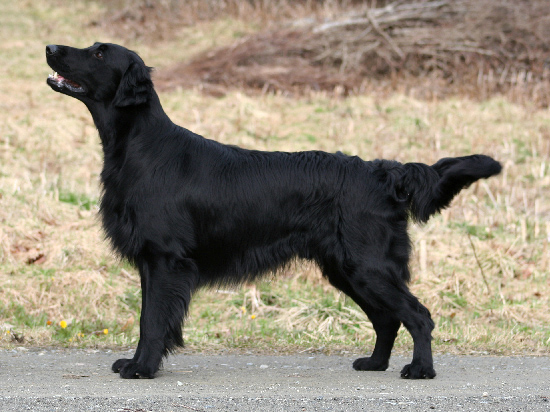
Flat Coated Retriever
The Flat-coated Retriever was the gamekeeper's retriever of Victorian Britain before the Labrador overtook it, and it keeps the old dual-purpose character: a dog that will work…
About the Flat Coated Retriever
The Flat-coated Retriever was the gamekeeper's retriever of Victorian Britain before the Labrador overtook it, and it keeps the old dual-purpose character: a dog that will work all day and then bounce through the house in the evening. Flat-coats are known for a cheerfulness that lasts well past middle age.
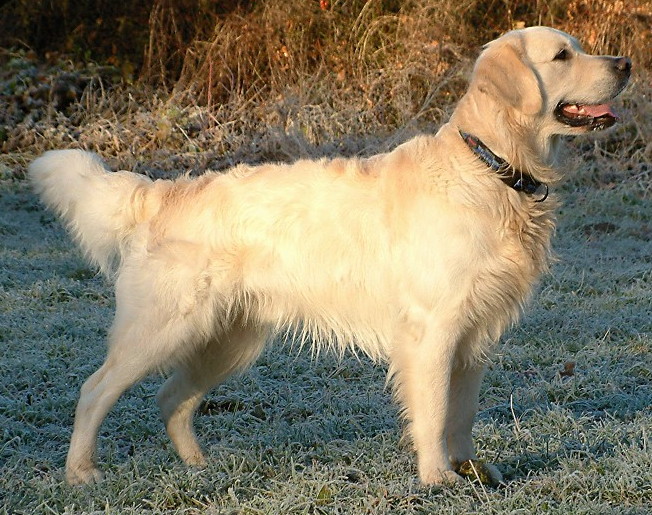
The breed comes in black or liver only, with a fine, flat-lying coat and a distinctive long, clean head. Dogs stand around 59 to 61.5 cm. Because Flat-coats mature late and stay puppyish, a stud that has settled into steady adult manners is a good sign for the temperament of a litter.
The shadow over the breed is cancer, and histiocytic sarcoma in particular; no test exists, so the honest question to a stud owner is about age and cause of death in the dog's close relatives. On the scheme side, ask about hip scores, a current eye certificate with gonioscopy, and patella examination. A stud owner willing to discuss longevity openly is answering the question that matters most in this breed.
Health & breeding
We check every hip, elbow, eye and DNA result you give us against the Royal Kennel Club’s public records by hand, and we record who checked it and when. The Royal Kennel Club’s public records may not include all the screening a dog has had, so a dog with no Royal Kennel Club record showing is not necessarily untested.
Breed Right’s summary — under The Royal Kennel Club Health Standard
Health tests for the Flat Coated Retriever
This panel is Breed Right’s summary of the testing that matters for the breed under The Royal Kennel Club Health Standard. The Health Standard is the Royal Kennel Club’s guidance for breeders, not a registration rule. It describes tests to ask about — it is not a report on any individual dog. The Royal Kennel Club’s public records may not include all the screening a dog has had, so a dog with no Royal Kennel Club record showing is not necessarily untested.
Good Practice — the Royal Kennel Club’s minimum before breeding
The tests the Royal Kennel Club says breeders should, at a minimum, complete before breeding.
| Test | Type | Scheme | What’s involved |
|---|---|---|---|
| Eye testing (BVA/KC/ISDS) | Screening scheme | BVA/KC/ISDS | Result printed on the eye certificate. |
| Gonioscopy (BVA/KC/ISDS) | Screening scheme | BVA/KC/ISDS | Grade 1–3 on the certificate; 1 is normal or mild. |
Best Practice — further tests it recommends
Completing these as well as the Good Practice tests is what the Royal Kennel Club calls Best Practice.
| Test | Type | Scheme | What’s involved |
|---|---|---|---|
| Hip score (BVA/KC) | Screening scheme | BVA/KC | Total of both hips, 0–106. Lower is better. |
| Elbow grading (BVA/KC) | Screening scheme | BVA/KC | Grade 0–3. The dog is graded on the worse of the two elbows. |
Breed hip median
Breed median 7 (BVA Hip Dysplasia Scheme breed statistics 2025 — 5 years, 757 dogs scored). Lower is better. Source · How hip scores work
At stud now
Flat Coated Retriever stud dogs
No Flat Coated Retriever studs are listed right now
When a Flat Coated Retriever on the Royal Kennel Club Breed Register is listed at stud, it will appear here.
Also available
Flat Coated Retriever litters
No Flat Coated Retriever litters are listed right now
Litters appear here as breeders list them. Check back soon, or browse other breeds.