Irish Terrier
The Irish Terrier is one of the oldest terrier breeds and was famous long before the show ring took it up, valued across Ireland as a farm dog, a ratter and a companion, and later…
About the Irish Terrier
The Irish Terrier is one of the oldest terrier breeds and was famous long before the show ring took it up, valued across Ireland as a farm dog, a ratter and a companion, and later as a messenger dog in the trenches. Its nickname, the daredevil, was earned by a complete absence of caution.
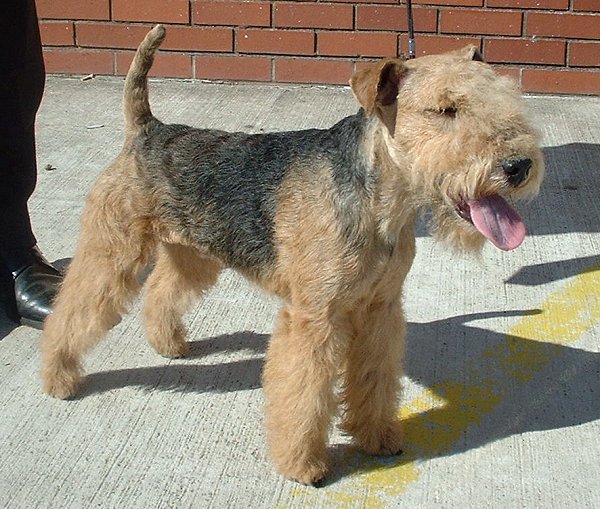
A dog stands about 48 cm, racier and longer in the leg than most terriers, with a harsh, wiry jacket that must be hand-stripped, in a whole colour of red, red wheaten or yellow red. White is permitted only as a small patch on the chest. Irish Terriers are devoted to people and frequently intolerant of other dogs, so one that can be walked past another male without a scene is a genuinely valuable animal at stud.
Two DNA tests are established here and an owner should have both to hand: cystinuria, which causes bladder stones and hits males hardest, and hereditary footpad hyperkeratosis, which thickens and cracks the pads of young dogs. An annual eye examination and hip scoring are sensible additions. Ask about skin and coat quality in the family, and about how the dog behaves with strange dogs, which tells you something no certificate does.
Health & breeding
We check every hip, elbow, eye and DNA result you give us against the Royal Kennel Club’s public records by hand, and we record who checked it and when. The Royal Kennel Club’s public records may not include all the screening a dog has had, so a dog with no Royal Kennel Club record showing is not necessarily untested.
Breed Right’s summary — under The Royal Kennel Club Health Standard
Health tests for the Irish Terrier
This panel is Breed Right’s summary of the testing that matters for the breed under The Royal Kennel Club Health Standard. The Health Standard is the Royal Kennel Club’s guidance for breeders, not a registration rule. It describes tests to ask about — it is not a report on any individual dog. The Royal Kennel Club’s public records may not include all the screening a dog has had, so a dog with no Royal Kennel Club record showing is not necessarily untested.
Best Practice — further tests it recommends
Completing these as well as the Good Practice tests is what the Royal Kennel Club calls Best Practice.
| Test | Type | Scheme | What’s involved |
|---|---|---|---|
| DNA test — HFH (Hereditary Footpad Hyperkeratosis) | DNA test | Laboratory | The result printed on the laboratory certificate. |
Breed hip median
Too few dogs of this breed have been scored (BVA Hip Dysplasia Scheme breed statistics 2025 — 5 years: 3 dogs) to give a meaningful breed median. Source · How hip scores work
At stud now
Irish Terrier stud dogs
No Irish Terrier studs are listed right now
When an Irish Terrier on the Royal Kennel Club Breed Register is listed at stud, it will appear here.
Also available
Irish Terrier litters
No Irish Terrier litters are listed right now
Litters appear here as breeders list them. Check back soon, or browse other breeds.