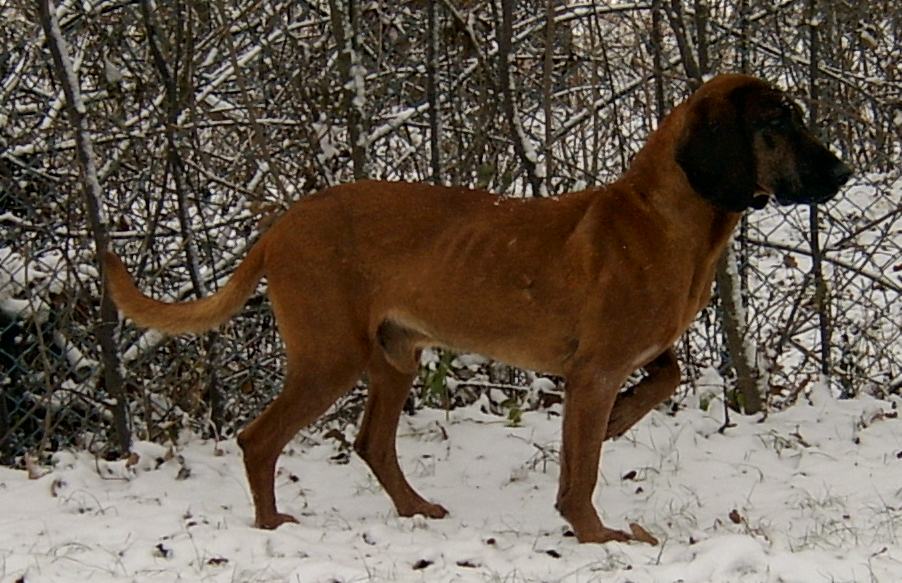
Bavarian Mountain Hound
One job shaped the Bavarian Mountain Hound and it does that job supremely well: following the cold blood trail of a wounded deer through steep forest until the animal is found. In…
About the Bavarian Mountain Hound
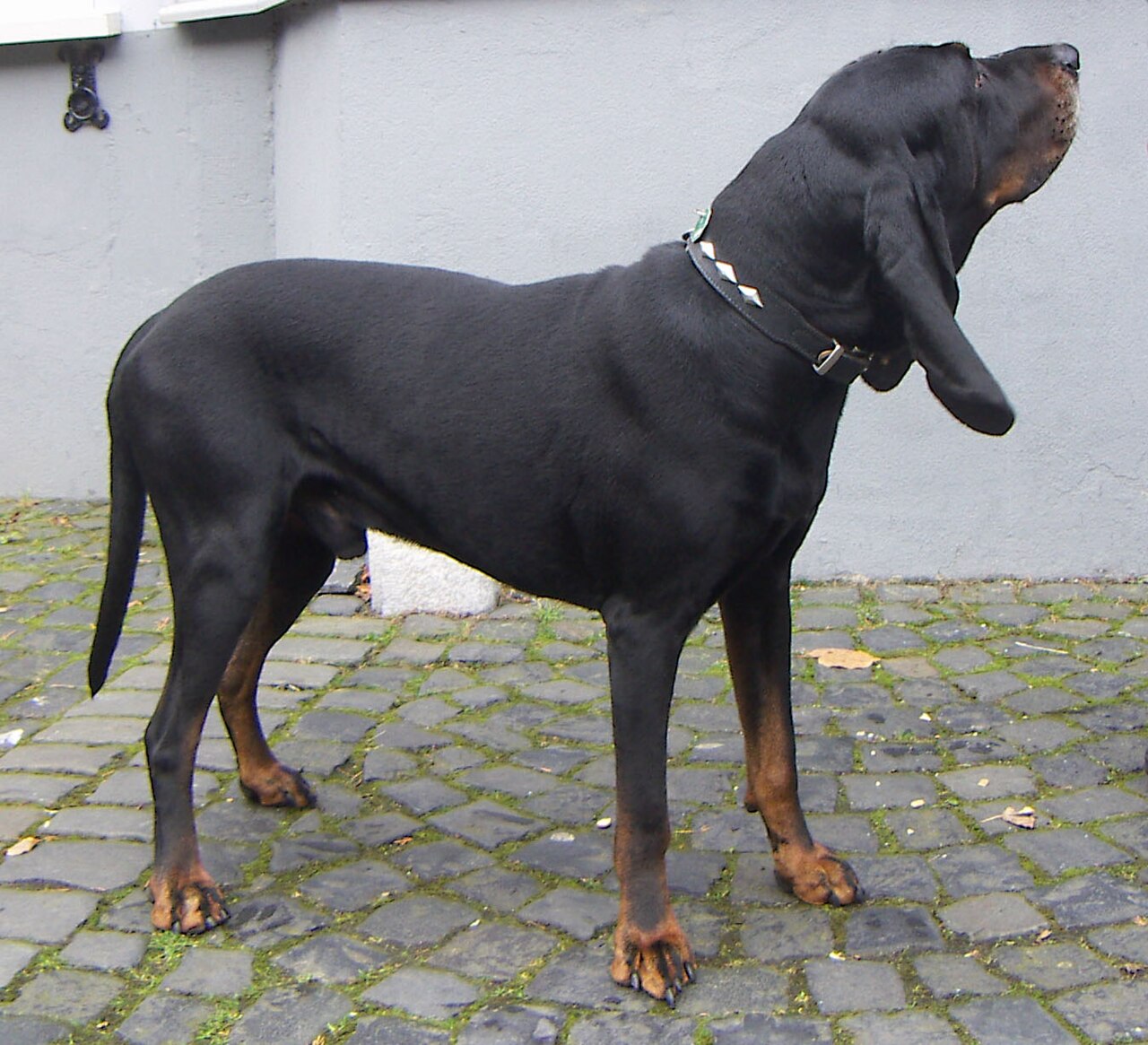
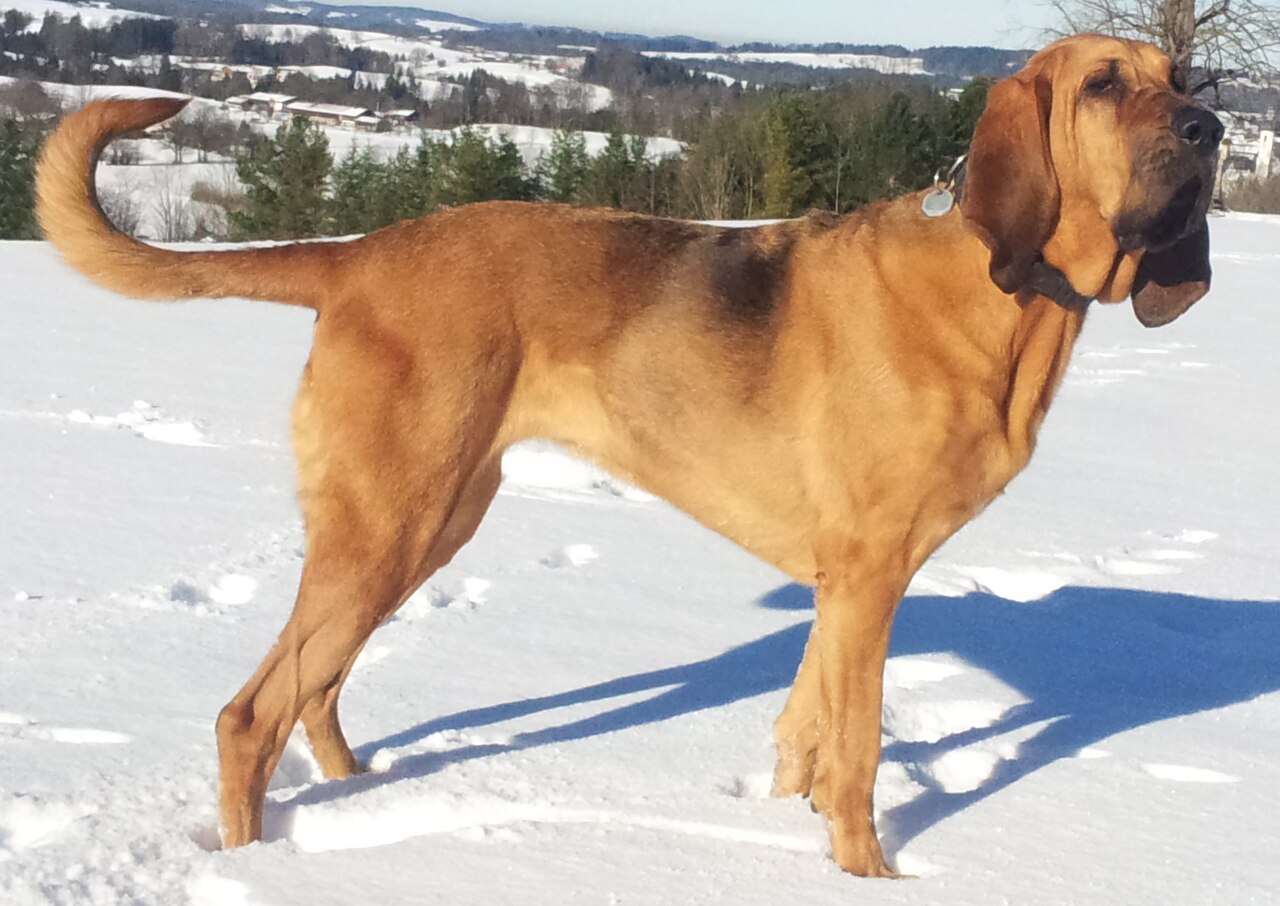
One job shaped the Bavarian Mountain Hound and it does that job supremely well: following the cold blood trail of a wounded deer through steep forest until the animal is found. In Britain the breed sits almost entirely in the hands of deer managers and stalkers, which makes it one of very few hound breeds here whose stud dogs are still picked on working ability before anything else.
Build is medium and light for the mountain but strong with it, around 47 to 52 cm, under a short dense coat in deep red, fawn or brindle, often carrying a darker mask. Temperament gives the breed away: undemonstrative and easy in the house, then wholly absorbed the moment it is put to a line. Noisy or nervy dogs are not typical and are a poor choice to breed from.
There is no long catalogue of inherited disease here, partly because numbers are small everywhere and working selection has stayed strict. Ask for hip scores under the BVA/KC scheme and a current eye certificate, and ask to see the dog's tracking record, because a Bavarian that cannot follow a line has failed at the only thing it exists for. In a population this size, the coefficient of inbreeding for the proposed pairing is a fair and useful question.
Health & breeding
We check every hip, elbow, eye and DNA result you give us against the Royal Kennel Club’s public records by hand, and we record who checked it and when. The Royal Kennel Club’s public records may not include all the screening a dog has had, so a dog with no Royal Kennel Club record showing is not necessarily untested.
Breed Right’s summary — under The Royal Kennel Club Health Standard
Health tests for the Bavarian Mountain Hound
This panel is Breed Right’s summary of the testing that matters for the breed under The Royal Kennel Club Health Standard. The Health Standard is the Royal Kennel Club’s guidance for breeders, not a registration rule. It describes tests to ask about — it is not a report on any individual dog. The Royal Kennel Club’s public records may not include all the screening a dog has had, so a dog with no Royal Kennel Club record showing is not necessarily untested.
Best Practice — further tests it recommends
Completing these as well as the Good Practice tests is what the Royal Kennel Club calls Best Practice.
| Test | Type | Scheme | What’s involved |
|---|---|---|---|
| Hip score (BVA/KC) | Screening scheme | BVA/KC | Total of both hips, 0–106. Lower is better. |
Breed hip median
Breed median 10 (BVA Hip Dysplasia Scheme breed statistics 2025 — 5 years, 36 dogs scored — indicative only, from a small sample). Lower is better. Source · How hip scores work
At stud now
Bavarian Mountain Hound stud dogs
No Bavarian Mountain Hound studs are listed right now
When a Bavarian Mountain Hound on the Royal Kennel Club Breed Register is listed at stud, it will appear here.
Also available
Bavarian Mountain Hound litters
No Bavarian Mountain Hound litters are listed right now
Litters appear here as breeders list them. Check back soon, or browse other breeds.