Bloodhound
Monks at the Abbey of Saint-Hubert in the Ardennes are credited with the ancestors of the Bloodhound, and the breed has spent the thousand years since perfecting one skill…
About the Bloodhound
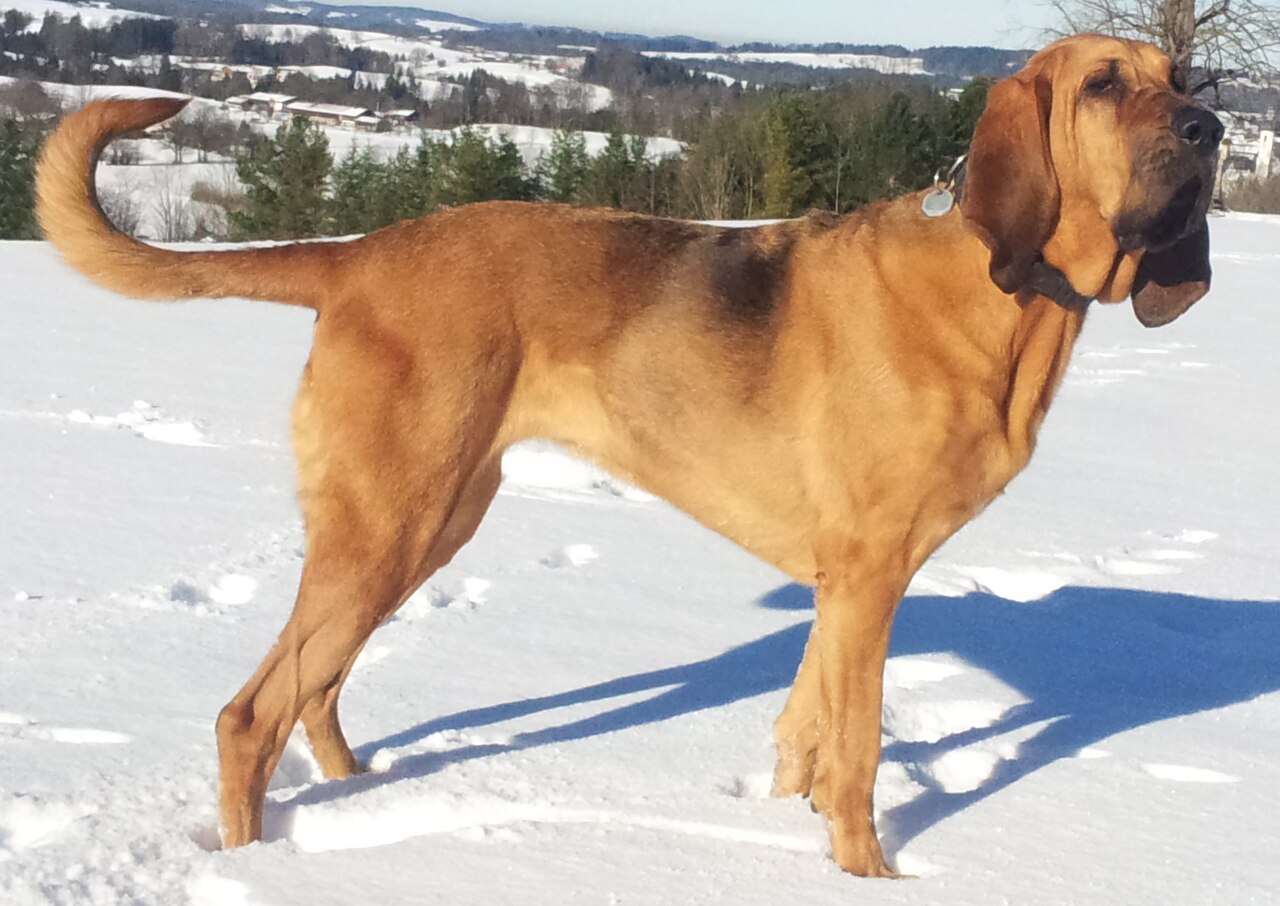
Monks at the Abbey of Saint-Hubert in the Ardennes are credited with the ancestors of the Bloodhound, and the breed has spent the thousand years since perfecting one skill: following a particular trail hours or even days after it was laid. The loose skin, the deep flews and the enormous ears are thought to help gather and hold scent around the nose while the head works close to the ground.
It is a very large hound, dogs standing about 63 to 69 cm and weighing far more than a first-time owner expects, in black and tan, liver and tan, or red. Royal Kennel Club Breed Watch asks breeders to move away from excessive facial skin and loose, drooping eyelids, and a stud that shows a clean eye and a comfortable face is the right choice for a litter. Temperament should be affectionate and unaggressive; all the determination is in the nose.
Screening to ask about starts with hip and elbow scores and a current eye certificate, because entropion and ectropion both occur. Bloat and gastric torsion are a genuine danger in a chest this deep, so ask whether it has happened in the line and how the owner manages feeding. Ear care, and honest information about how long the dog's relatives lived, both belong in the conversation.
Health & breeding
We check every hip, elbow, eye and DNA result you give us against the Royal Kennel Club’s public records by hand, and we record who checked it and when. The Royal Kennel Club’s public records may not include all the screening a dog has had, so a dog with no Royal Kennel Club record showing is not necessarily untested.
Breed Right’s summary — under The Royal Kennel Club Health Standard
Health tests for the Bloodhound
This panel is Breed Right’s summary of the testing that matters for the breed under The Royal Kennel Club Health Standard. The Health Standard is the Royal Kennel Club’s guidance for breeders, not a registration rule. It describes tests to ask about — it is not a report on any individual dog. The Royal Kennel Club’s public records may not include all the screening a dog has had, so a dog with no Royal Kennel Club record showing is not necessarily untested.
Good Practice — the Royal Kennel Club’s minimum before breeding
The tests the Royal Kennel Club says breeders should, at a minimum, complete before breeding.
| Test | Type | Scheme | What’s involved |
|---|---|---|---|
| Hip score (BVA/KC) | Screening scheme | BVA/KC | Total of both hips, 0–106. Lower is better. |
| Elbow grading (BVA/KC) | Screening scheme | BVA/KC | Grade 0–3. The dog is graded on the worse of the two elbows. |
Best Practice — further tests it recommends
Completing these as well as the Good Practice tests is what the Royal Kennel Club calls Best Practice.
| Test | Type | Scheme | What’s involved |
|---|---|---|---|
| Eye testing (BVA/KC/ISDS) | Screening scheme | BVA/KC/ISDS | Result printed on the eye certificate. |
Breed hip median
Breed median 12 (BVA Hip Dysplasia Scheme breed statistics 2025 — 5 years, 18 dogs scored — indicative only, from a small sample). Lower is better. Source · How hip scores work
At stud now
Bloodhound stud dogs
No Bloodhound studs are listed right now
When a Bloodhound on the Royal Kennel Club Breed Register is listed at stud, it will appear here.
Also available
Bloodhound litters
No Bloodhound litters are listed right now
Litters appear here as breeders list them. Check back soon, or browse other breeds.