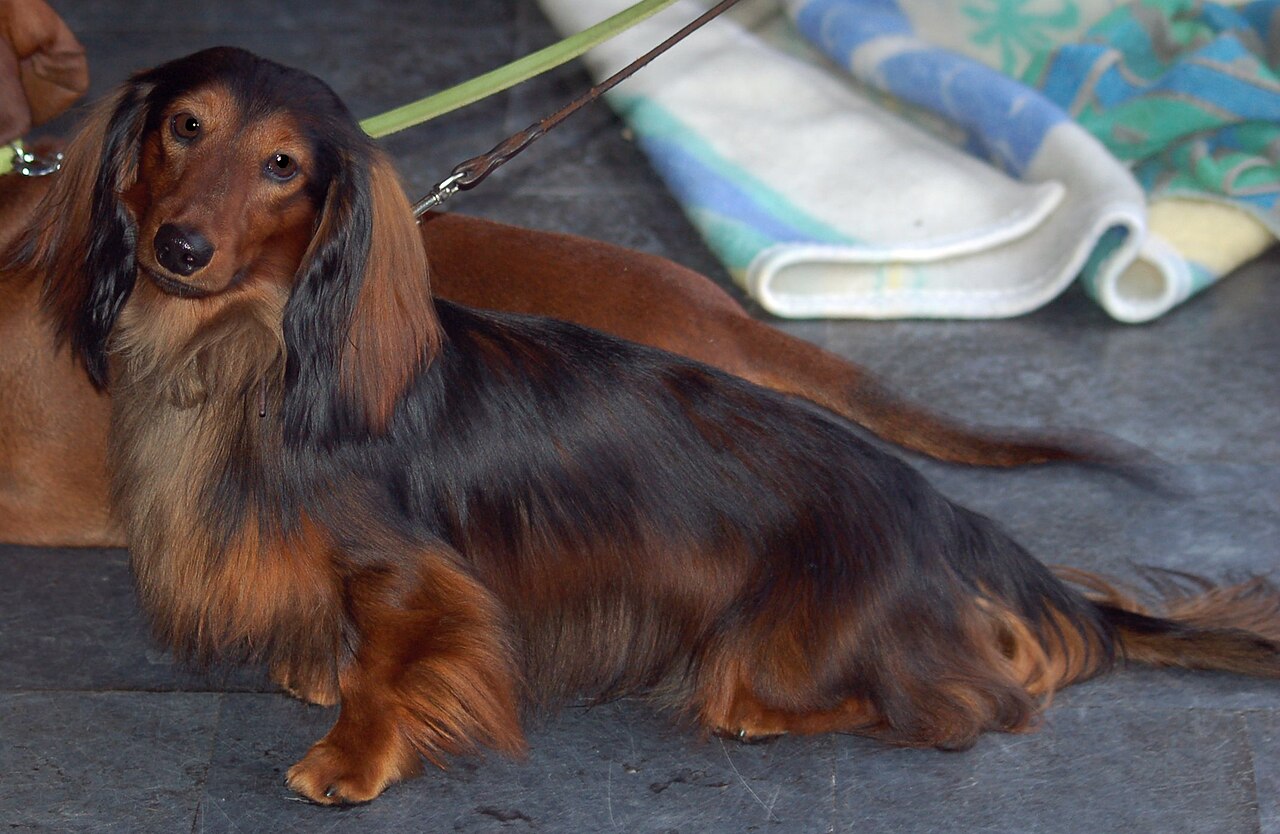
Dachshund (Long Haired)
Long silky hair came into the Dachshund from spaniel crosses, and the Long-haired variety kept the same badger-hunting shape underneath while gaining a coat that protected it in…
About the Dachshund (Long Haired)
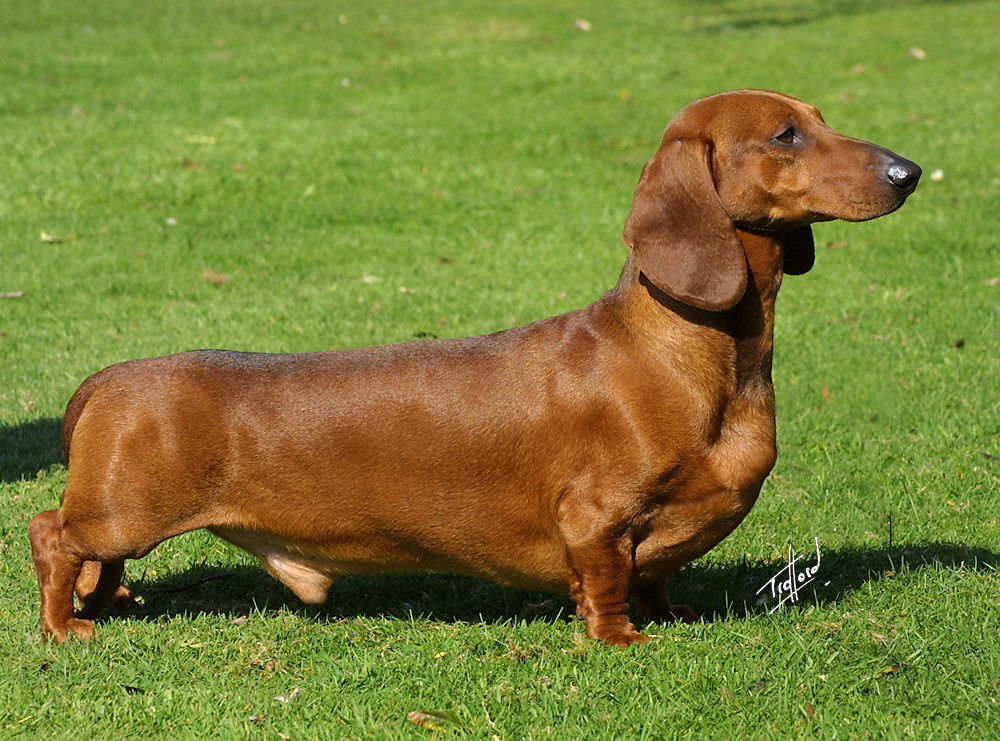
Long silky hair came into the Dachshund from spaniel crosses, and the Long-haired variety kept the same badger-hunting shape underneath while gaining a coat that protected it in cold water and heavy cover. It is often described as the softest of the six varieties, and there is something in that, though nobody should mistake it for a placid dog.
Weight sits at around 9 to 12 kg in the standard size. The coat is straight or slightly waved, longest under the neck, on the underside, behind the legs and on the tail, and it needs regular brushing to stay out of trouble. Colours run from red and cream to black and tan, chocolate, brindle and dapple. Dapple carries a firm rule: two dappled dogs must never be mated together, because the double dose can produce puppies that are deaf, blind or both.
No conversation about a stud in this breed is complete without the spine. The breed council runs an X-ray screening programme that grades disc calcification, and a graded result on a dog over two years old is far more informative than a young back that has simply not failed yet. Ask for that grade, add a current eye certificate, and ask which DNA tests the owner has run and why.
Health & breeding
We check every hip, elbow, eye and DNA result you give us against the Royal Kennel Club’s public records by hand, and we record who checked it and when. The Royal Kennel Club’s public records may not include all the screening a dog has had, so a dog with no Royal Kennel Club record showing is not necessarily untested.
Breed Right’s summary — under The Royal Kennel Club Health Standard
Health tests for the Dachshund (Long Haired)
This panel is Breed Right’s summary of the testing that matters for the breed under The Royal Kennel Club Health Standard. The Health Standard is the Royal Kennel Club’s guidance for breeders, not a registration rule. It describes tests to ask about — it is not a report on any individual dog. The Royal Kennel Club’s public records may not include all the screening a dog has had, so a dog with no Royal Kennel Club record showing is not necessarily untested.
Good Practice — the Royal Kennel Club’s minimum before breeding
The tests the Royal Kennel Club says breeders should, at a minimum, complete before breeding.
| Test | Type | Scheme | What’s involved |
|---|---|---|---|
| IVDD spine screening (RKC scheme, Dachshund Health UK) | Screening scheme | RKC | Grade 0–3 from one X-ray at 24–48 months. |
Best Practice — further tests it recommends
Completing these as well as the Good Practice tests is what the Royal Kennel Club calls Best Practice.
| Test | Type | Scheme | What’s involved |
|---|---|---|---|
| Eye testing (BVA/KC/ISDS) | Screening scheme | BVA/KC/ISDS | Result printed on the eye certificate. |
Breed hip median
Too few dogs of this breed have been scored (BVA Hip Dysplasia Scheme breed statistics 2025 — 5 years: 1 dog) to give a meaningful breed median. Source · How hip scores work
At stud now
Dachshund (Long Haired) stud dogs
No Dachshund (Long Haired) studs are listed right now
When a Dachshund (Long Haired) on the Royal Kennel Club Breed Register is listed at stud, it will appear here.
Also available
Dachshund (Long Haired) litters
No Dachshund (Long Haired) litters are listed right now
Litters appear here as breeders list them. Check back soon, or browse other breeds.