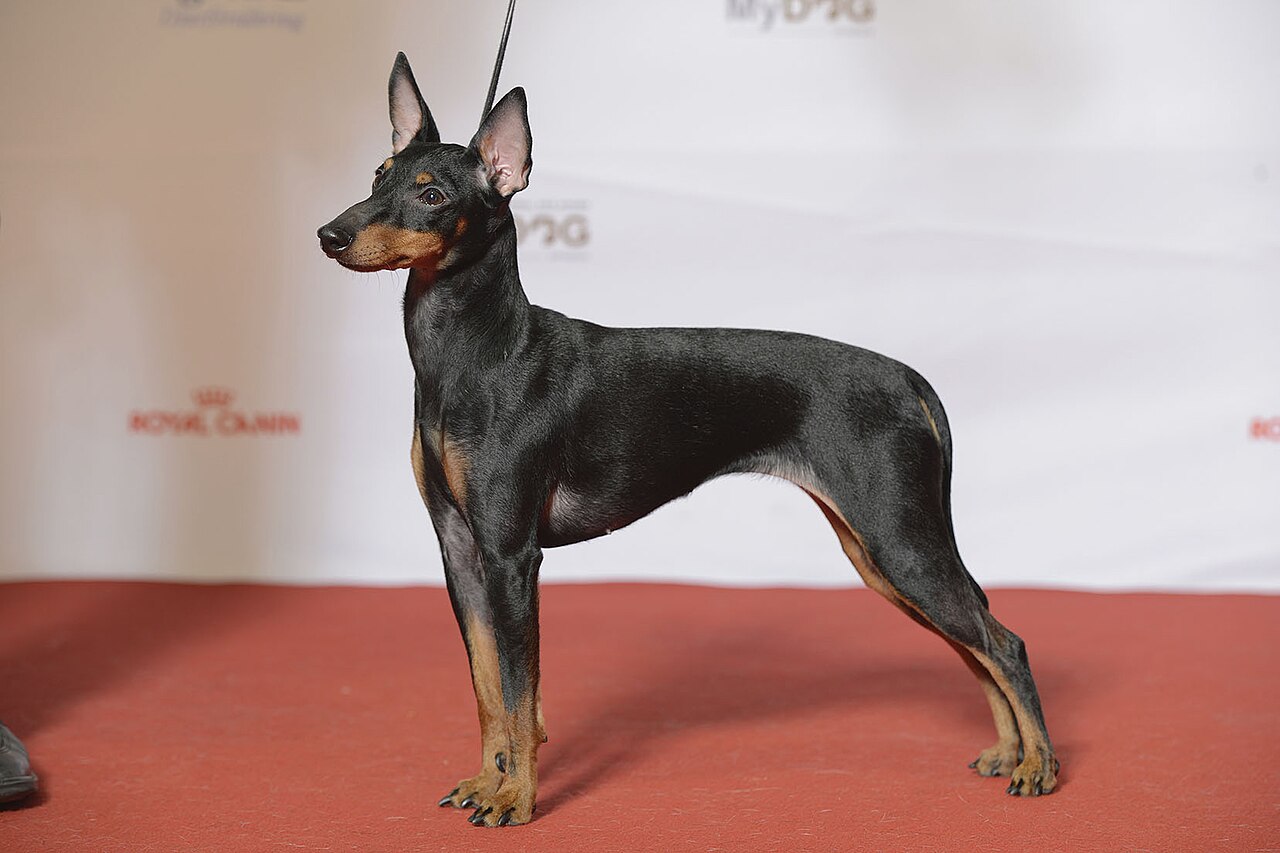
English Toy Terrier (Black & Tan)
Rat pits in Victorian England created a demand for a very small, very fast killing dog, and the English Toy Terrier is the refined descendant of that trade, bred down from the…
About the English Toy Terrier (Black & Tan)
Rat pits in Victorian England created a demand for a very small, very fast killing dog, and the English Toy Terrier is the refined descendant of that trade, bred down from the Manchester Terrier. It is now on the Royal Kennel Club's list of vulnerable native breeds, with annual registrations low enough that every litter matters to the future of the breed.
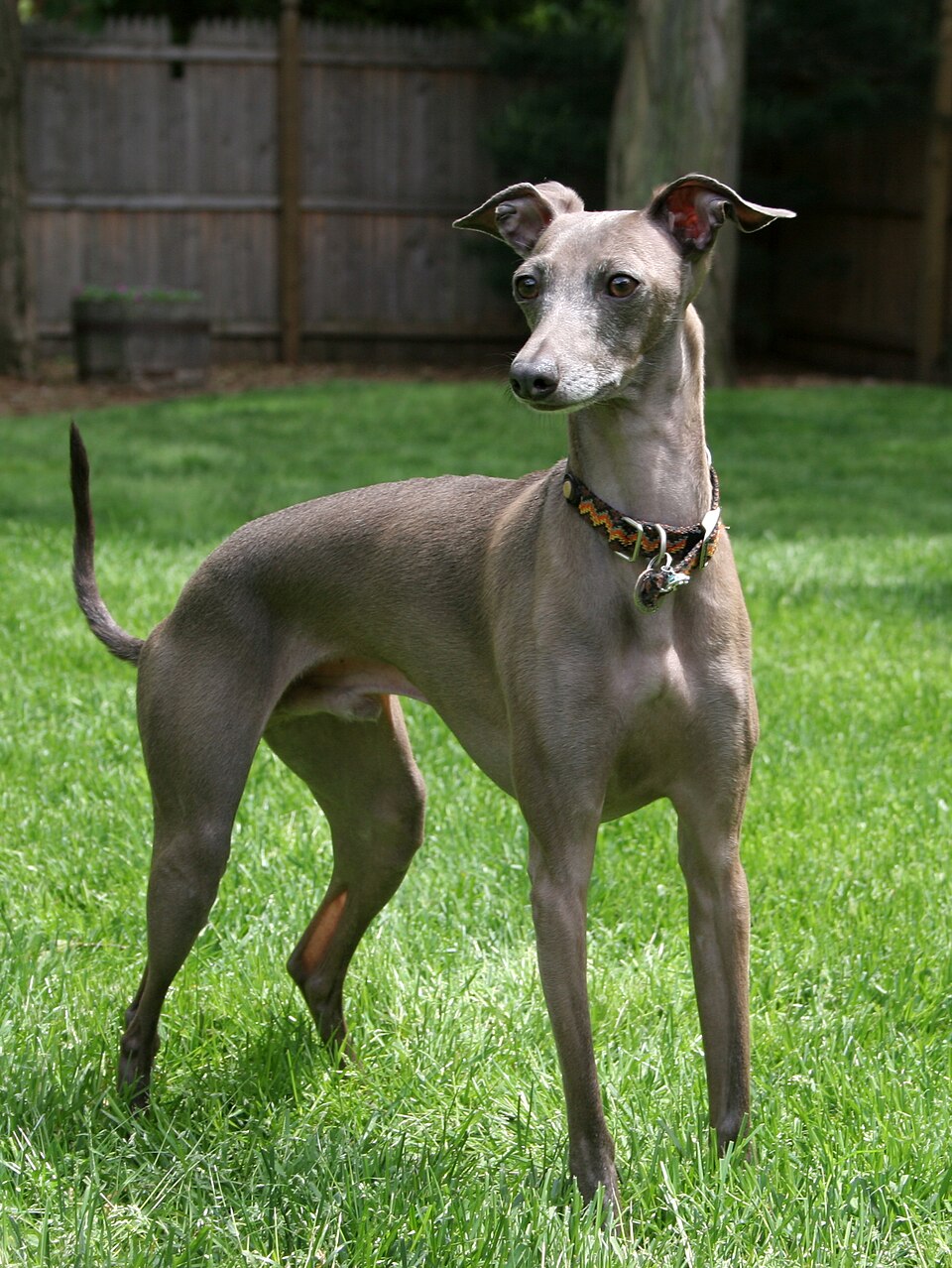
The dog stands about 25 to 30 cm, compact and elegant, with a short glossy black coat and rich mahogany tan markings that the standard describes precisely: thumb marks on the front pasterns, pencilling on the toes, tan inside the ears and above each eye. The ears are the giveaway, small, pointed and carried erect in the shape of a candle flame. A stud should have clean tan markings, a sound front and the bright, inquisitive character the breed is known for.
The most important question in a vulnerable breed is genetic: ask what the coefficient of inbreeding for the proposed mating would be, because the population is small and easily narrowed further. Ask for a patella examination and a current eye certificate. Legg-Calvé-Perthes disease is worth raising, along with the state of the dog's teeth and gums and whatever the breed club currently advises.
Health & breeding
We check every hip, elbow, eye and DNA result you give us against the Royal Kennel Club’s public records by hand, and we record who checked it and when. The Royal Kennel Club’s public records may not include all the screening a dog has had, so a dog with no Royal Kennel Club record showing is not necessarily untested.
Breed Right’s summary — under The Royal Kennel Club Health Standard
Health tests for the English Toy Terrier (Black & Tan)
This panel is Breed Right’s summary of the testing that matters for the breed under The Royal Kennel Club Health Standard. The Health Standard is the Royal Kennel Club’s guidance for breeders, not a registration rule. It describes tests to ask about — it is not a report on any individual dog. The Royal Kennel Club’s public records may not include all the screening a dog has had, so a dog with no Royal Kennel Club record showing is not necessarily untested.
Best Practice — further tests it recommends
Completing these as well as the Good Practice tests is what the Royal Kennel Club calls Best Practice.
| Test | Type | Scheme | What’s involved |
|---|---|---|---|
| DNA test — JDCM (Juvenile Dilated Cardiomyopathy) | DNA test | Laboratory | The result printed on the laboratory certificate. |
| DNA test — Xanthinuria type II | DNA test | Laboratory | The result printed on the laboratory certificate. |
| Eye testing (BVA/KC/ISDS) | Screening scheme | BVA/KC/ISDS | Result printed on the eye certificate. |
Breed club schemes listed in the Health Standard
Run by the breed club, not the Royal Kennel Club, which does not record their results. The Standard lists them as schemes to be aware of.
| Test | Type | Scheme | What’s involved |
|---|---|---|---|
| Patella examination (breed club scheme) | Other | Breed club | Putnam grade 0–4 per stifle. |
At stud now
English Toy Terrier (Black & Tan) stud dogs
No English Toy Terrier (Black & Tan) studs are listed right now
When an English Toy Terrier (Black & Tan) on the Royal Kennel Club Breed Register is listed at stud, it will appear here.
Also available
English Toy Terrier (Black & Tan) litters
No English Toy Terrier (Black & Tan) litters are listed right now
Litters appear here as breeders list them. Check back soon, or browse other breeds.