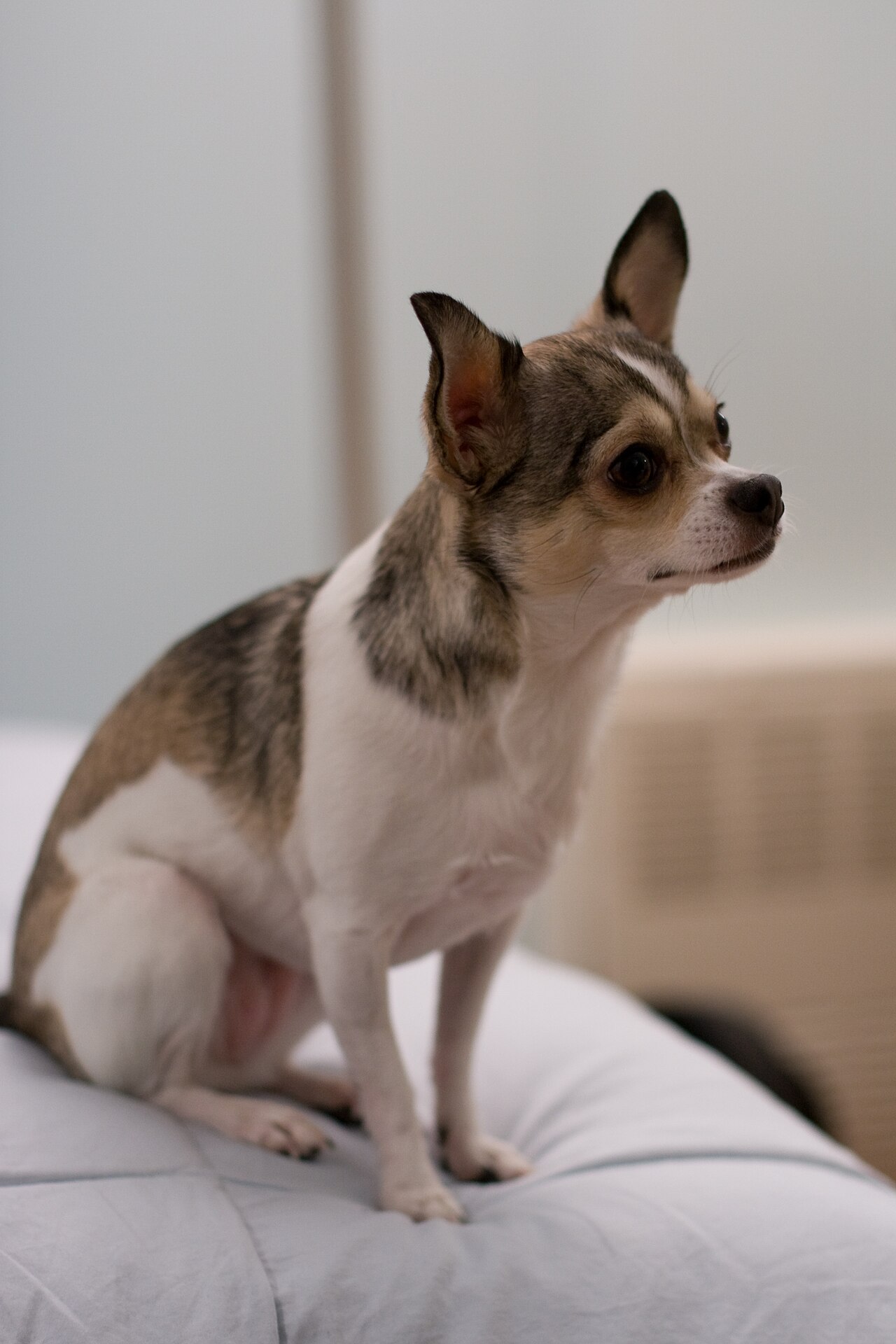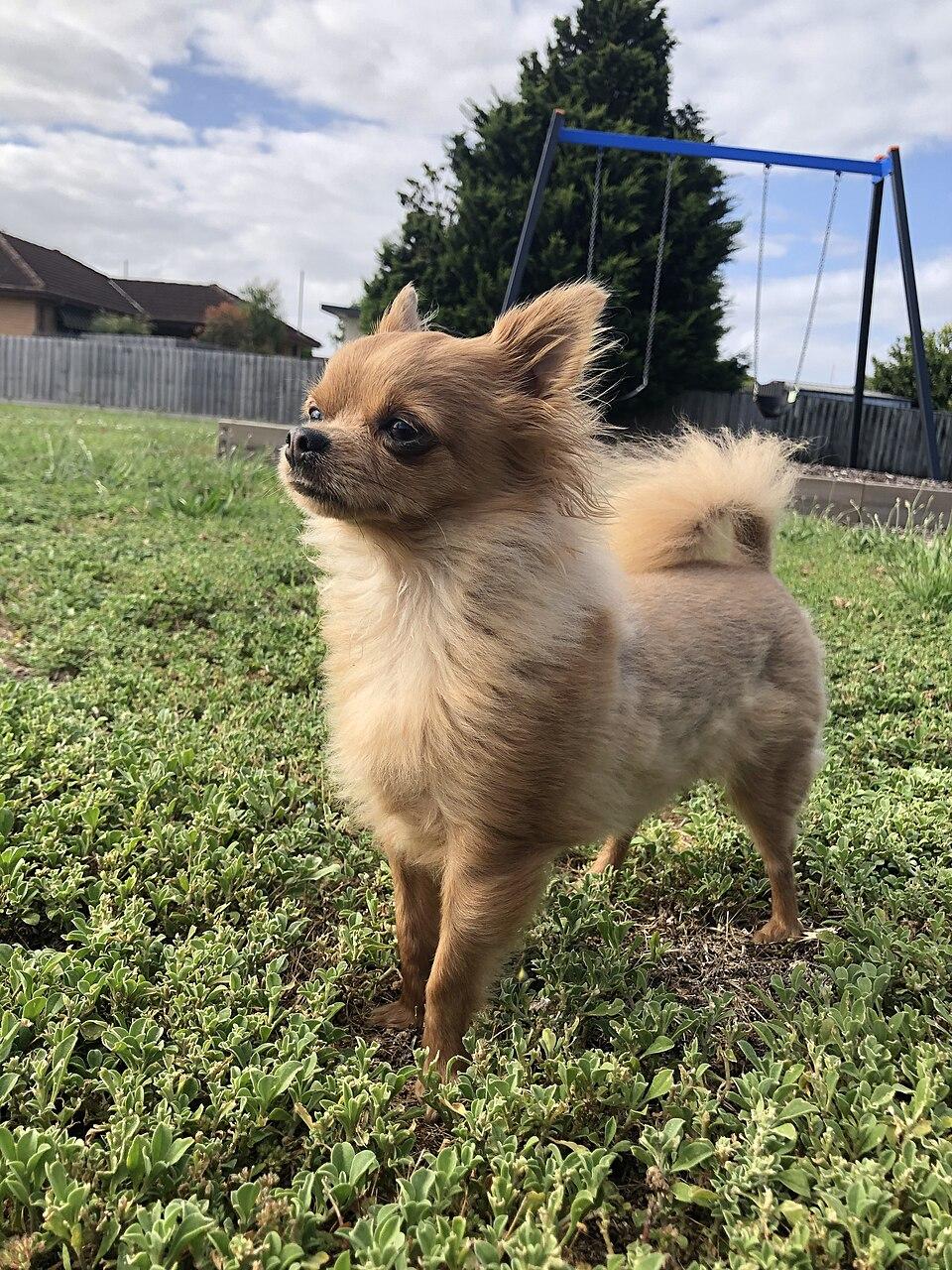
Chihuahua (Long Coat)
Registered in Britain as a separate breed from its smooth-coated relative, the Long Coat Chihuahua differs only in its jacket: the history, the size and the character are shared…
About the Chihuahua (Long Coat)
Registered in Britain as a separate breed from its smooth-coated relative, the Long Coat Chihuahua differs only in its jacket: the history, the size and the character are shared with the smooth, tracing back through Mexico to the little dogs of the pre-Columbian Techichi. The two coats may be interbred in some countries but are shown and registered apart here.
The coat is soft, flat or slightly wavy, with feathering on the ears, legs, feet and tail and a distinct ruff around the neck, and it should never be so heavy that the outline disappears. Weight goes up to 2.7 kg, with the standard preferring 1.8 to 2.7 kg and warning breeders away from chasing extreme smallness. Choose a stud towards the sounder end of that range, with a closed fontanelle, a correct bite and an outgoing manner, rather than the tiniest dog offered.
Health enquiries should cover a patella examination, since slipping kneecaps are the breed's most frequent structural problem, and a heart check, because mitral valve disease and patent ductus arteriosus both occur. Ask for a current eye certificate. Hydrocephalus and open fontanelles are worth a direct question about previous litters, and so is whelping history in the female line, since caesareans are not unusual in a breed this size.
Health & breeding
We check every hip, elbow, eye and DNA result you give us against the Royal Kennel Club’s public records by hand, and we record who checked it and when. The Royal Kennel Club’s public records may not include all the screening a dog has had, so a dog with no Royal Kennel Club record showing is not necessarily untested.
Breed Right’s summary — under The Royal Kennel Club Health Standard
Health tests for the Chihuahua (Long Coat)
This panel is Breed Right’s summary of the testing that matters for the breed under The Royal Kennel Club Health Standard. The Health Standard is the Royal Kennel Club’s guidance for breeders, not a registration rule. It describes tests to ask about — it is not a report on any individual dog. The Royal Kennel Club’s public records may not include all the screening a dog has had, so a dog with no Royal Kennel Club record showing is not necessarily untested.
Best Practice — further tests it recommends
Completing these as well as the Good Practice tests is what the Royal Kennel Club calls Best Practice.
| Test | Type | Scheme | What’s involved |
|---|---|---|---|
| Eye testing (BVA/KC/ISDS) | Screening scheme | BVA/KC/ISDS | Result printed on the eye certificate. |
| Breathing grading — BOAS (RKC Respiratory Function Grading Scheme) | Screening scheme | RKC | Grade 0–3; 0 is clinically unaffected. |
Breed hip median
Too few dogs of this breed have been scored (BVA Hip Dysplasia Scheme breed statistics 2025 — 5 years: 1 dog) to give a meaningful breed median. Source · How hip scores work
At stud now
Chihuahua (Long Coat) stud dogs
No Chihuahua (Long Coat) studs are listed right now
When a Chihuahua (Long Coat) on the Royal Kennel Club Breed Register is listed at stud, it will appear here.
Also available
Chihuahua (Long Coat) litters
No Chihuahua (Long Coat) litters are listed right now
Litters appear here as breeders list them. Check back soon, or browse other breeds.