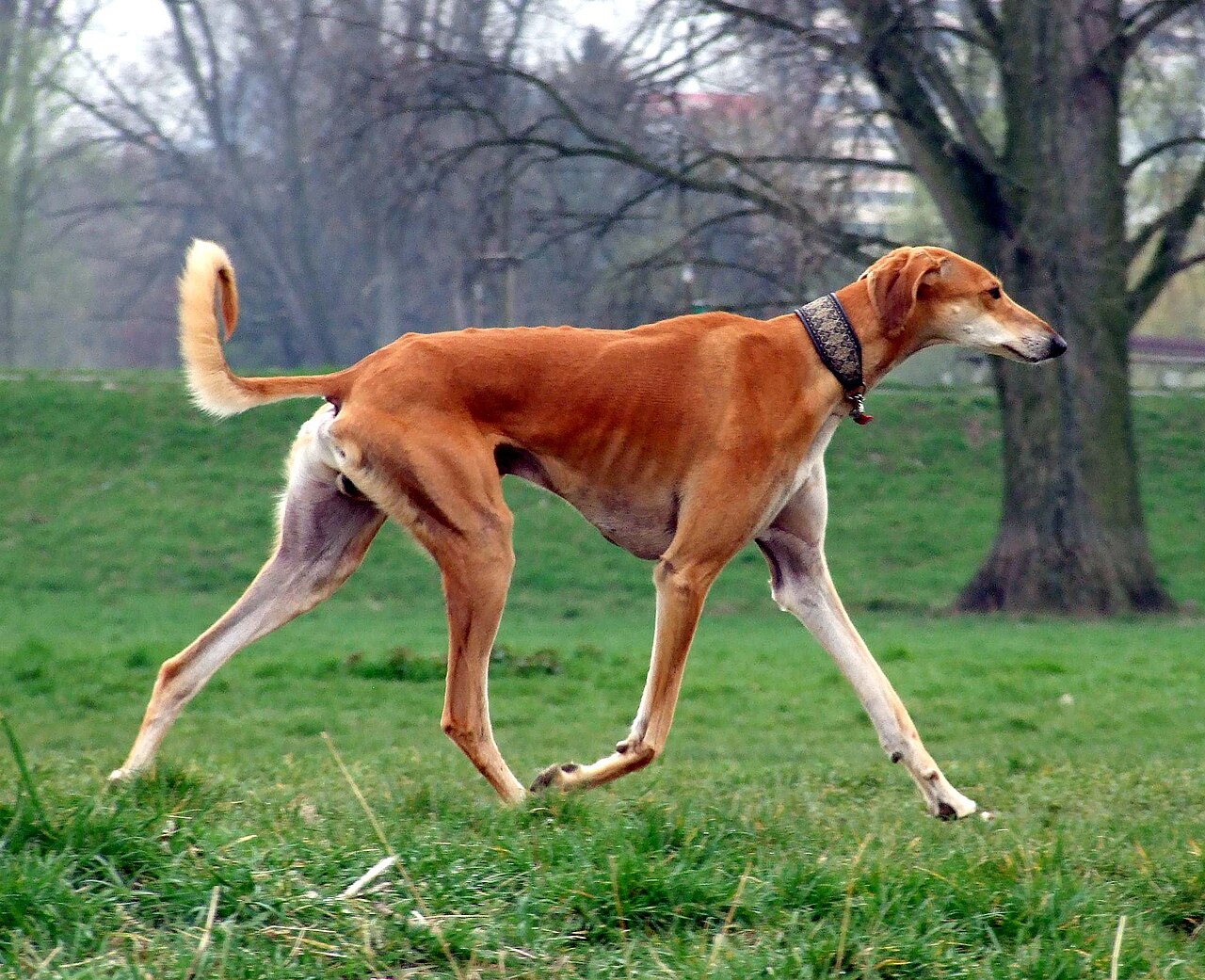
Saluki
Bedouin tribes across the Middle East kept the Saluki for thousands of years to course gazelle and hare, often hunting alongside a falcon, and the dogs were valued to a degree few…
About the Saluki
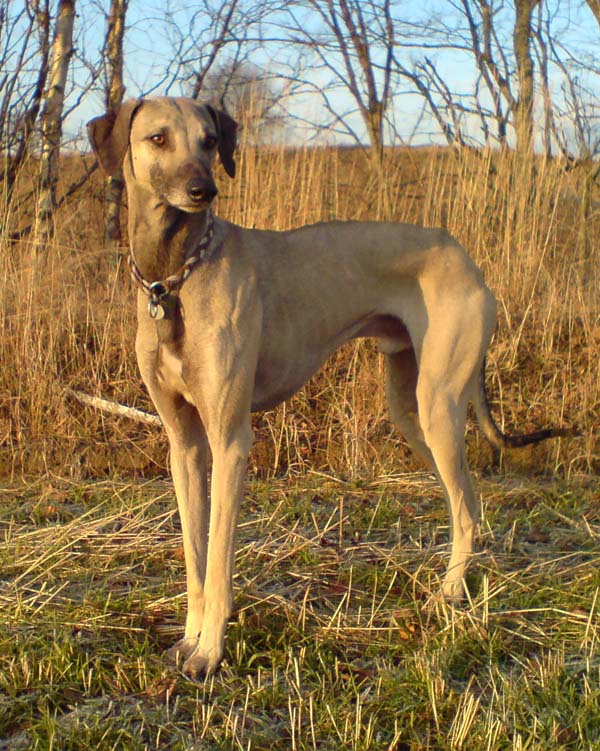
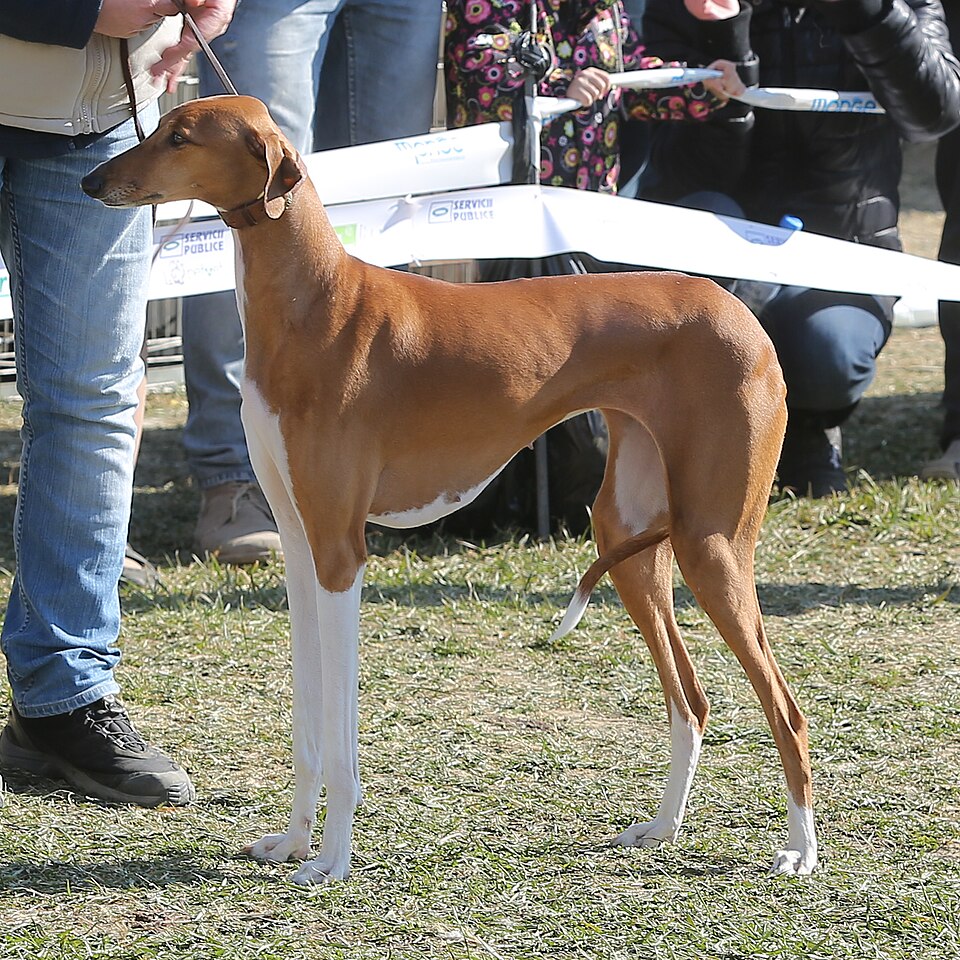
Bedouin tribes across the Middle East kept the Saluki for thousands of years to course gazelle and hare, often hunting alongside a falcon, and the dogs were valued to a degree few other breeds have ever known, travelling inside the tent rather than outside it. Type varies with the region the line came from, and old desert strains still stand behind many British pedigrees.
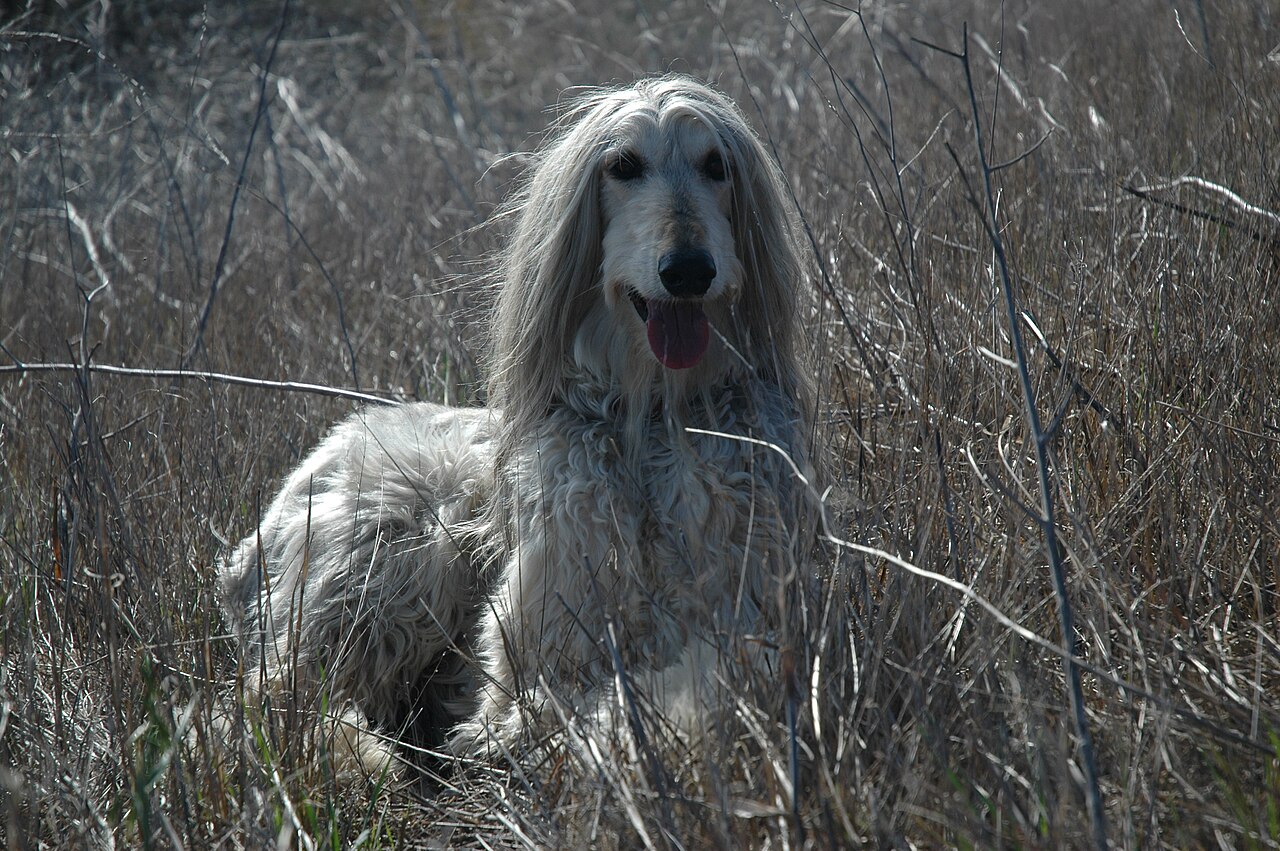
Dogs stand around 58 to 71 cm, narrow, deep-chested and elegant, with a smooth coat and, in the feathered variety, silky fringing on the ears, tail and the backs of the legs. Almost any colour is permitted. The character is quiet and undemonstrative, affectionate with its own people and distant with everyone else; a stud that is calm and confident away from home is worth noting, since nervousness is a real risk in this breed and passes on readily.
Ask for a cardiac examination and a current eye certificate. Thyroid function is worth raising, as hypothyroidism appears here. There is no test for the cancers that shorten some sighthound lines, so ask plainly how long the dog's parents and grandparents lived and what took them. Salukis metabolise certain anaesthetics differently from other breeds, and a good owner will mention it to a puppy buyer without being asked.
Health & breeding
We check every hip, elbow, eye and DNA result you give us against the Royal Kennel Club’s public records by hand, and we record who checked it and when. The Royal Kennel Club’s public records may not include all the screening a dog has had, so a dog with no Royal Kennel Club record showing is not necessarily untested.
Breed Right’s summary — under The Royal Kennel Club Health Standard
Health tests for the Saluki
This panel is Breed Right’s summary of the testing that matters for the breed under The Royal Kennel Club Health Standard. The Health Standard is the Royal Kennel Club’s guidance for breeders, not a registration rule. It describes tests to ask about — it is not a report on any individual dog. The Royal Kennel Club’s public records may not include all the screening a dog has had, so a dog with no Royal Kennel Club record showing is not necessarily untested.
Best Practice — further tests it recommends
Completing these as well as the Good Practice tests is what the Royal Kennel Club calls Best Practice.
| Test | Type | Scheme | What’s involved |
|---|---|---|---|
| DNA test — Sal-NCL (Neuronal Ceroid Lipofuscinosis, Saluki) | DNA test | Laboratory | The result printed on the laboratory certificate. |
Breed hip median
Too few dogs of this breed have been scored (BVA Hip Dysplasia Scheme breed statistics 2025 — 5 years: 1 dog) to give a meaningful breed median. Source · How hip scores work
At stud now
Saluki stud dogs
No Saluki studs are listed right now
When a Saluki on the Royal Kennel Club Breed Register is listed at stud, it will appear here.
Also available
Saluki litters
No Saluki litters are listed right now
Litters appear here as breeders list them. Check back soon, or browse other breeds.